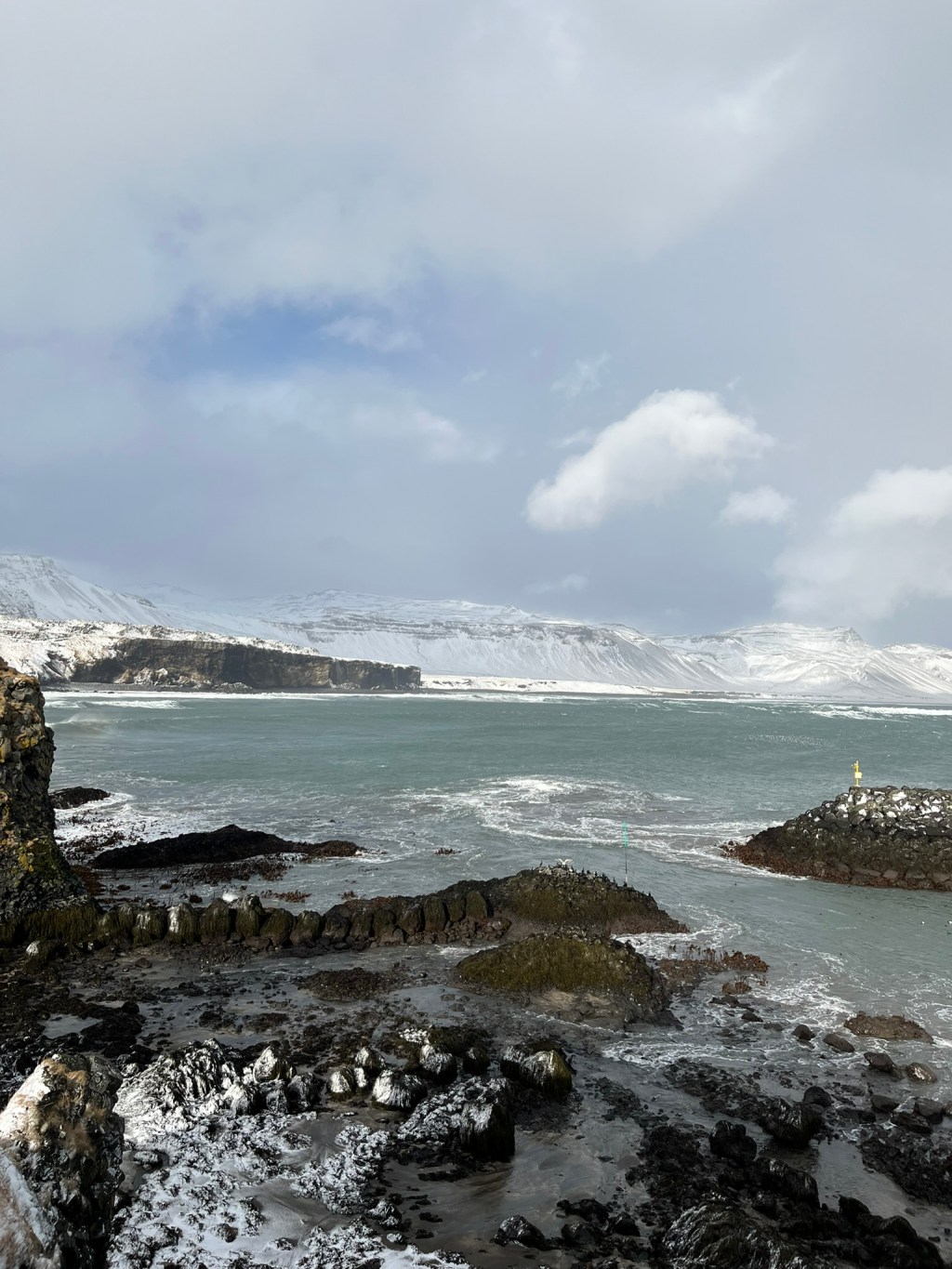
Today we went to four different places that depicted the differing scenery of Iceland. We explored the Snaefellsnes Peninsula in western Iceland. Our first stop was Hraunfossar or “Lava Falls”. These waterfalls get their name because they run through the Hallmundarhraun lava field. The water is from the Langjökull Glacier, hence it’s blue tint.
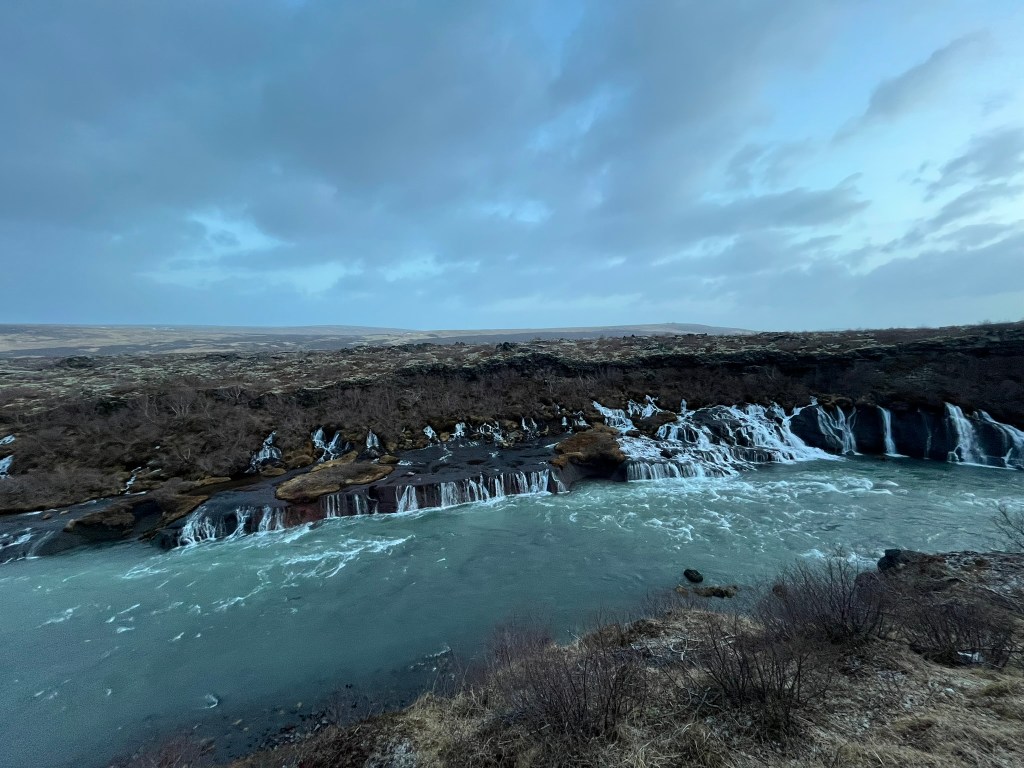
The second stop was Ytri tunga. The beach was very rocky and it’s sand had bigger grains than beaches I’ve been to in the US. The ocean had strong waves and winds. Ytri Tunga is also known as one of the best seal-watching spots in Iceland. Thankfully, we were able to see native grey seals in the waves!
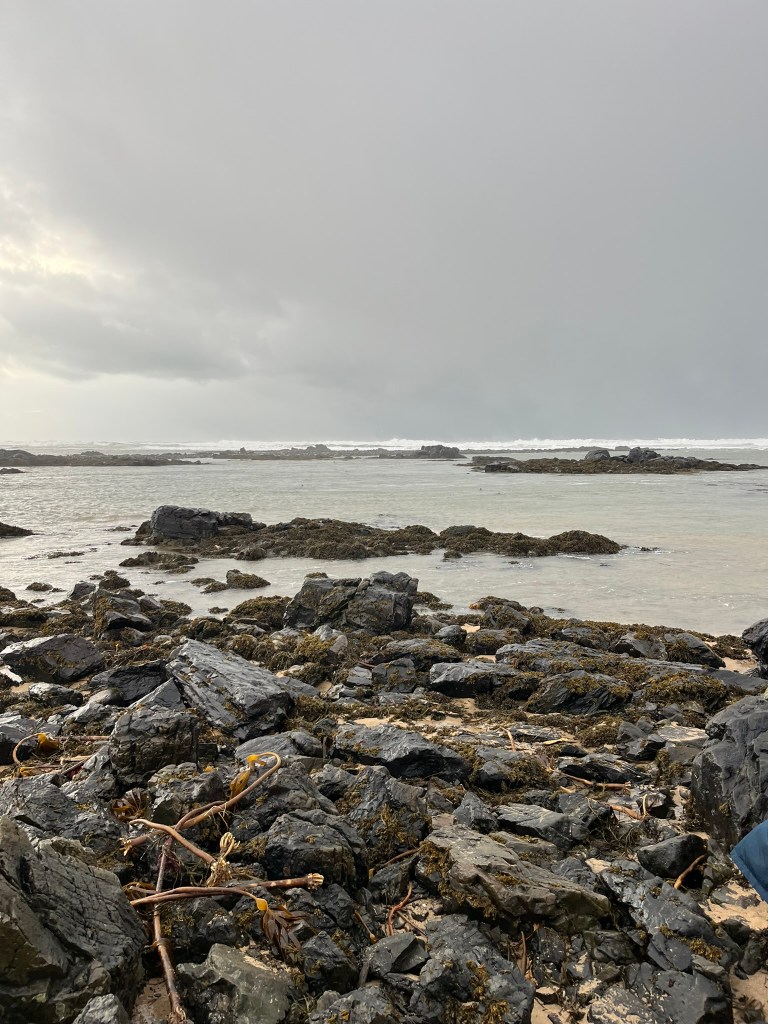
Our third stop was Armarstapi and Hellnar. The cliffs were very high up. Admittedly, I didn’t get a great look at the scene as I was focused on not being blown away by the wind! But what I did manage to see was that the beach was once again very rocky. The rocks were large, black stones. As mentioned before, this is unlike most beaches I’ve been to in America. The only other time I’ve seen rocky beaches was in Canada, which was also due to glacial movement.
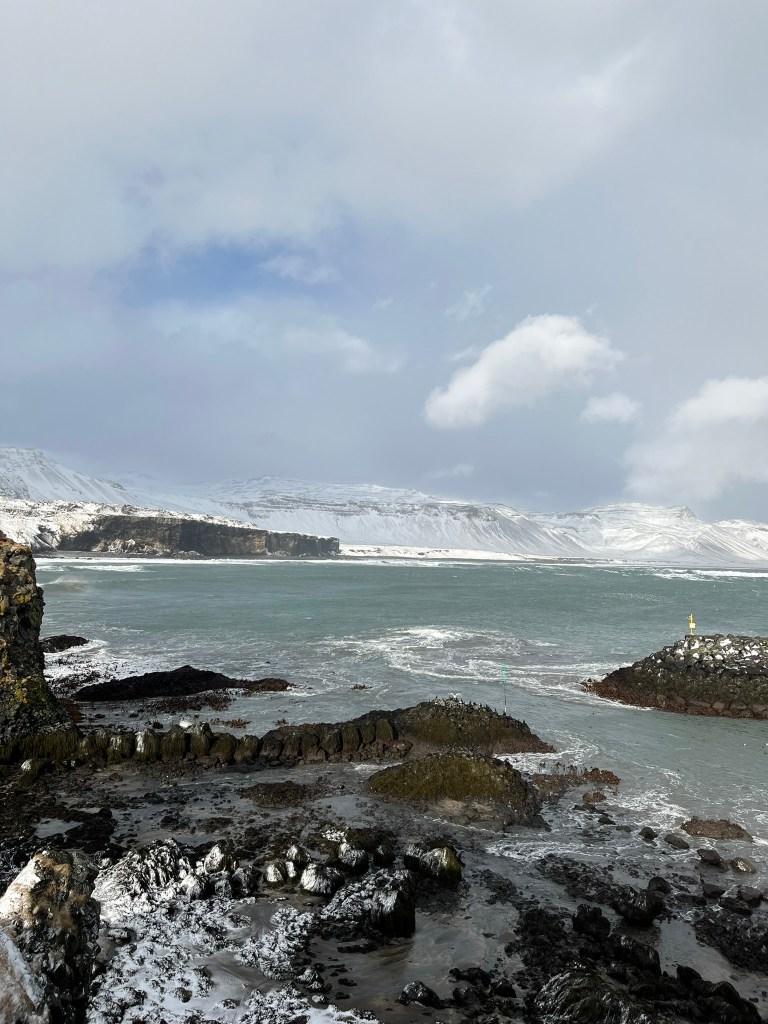
Our fourth and final stop was Malariff lighthouse. This national park was a cliff on the edge of the Atlantic Ocean. A large volcanic formation (basically a mountain) served as the backdrop for the park. Our tour guide stated that Vikings would launch their boats here to go to Greenland.
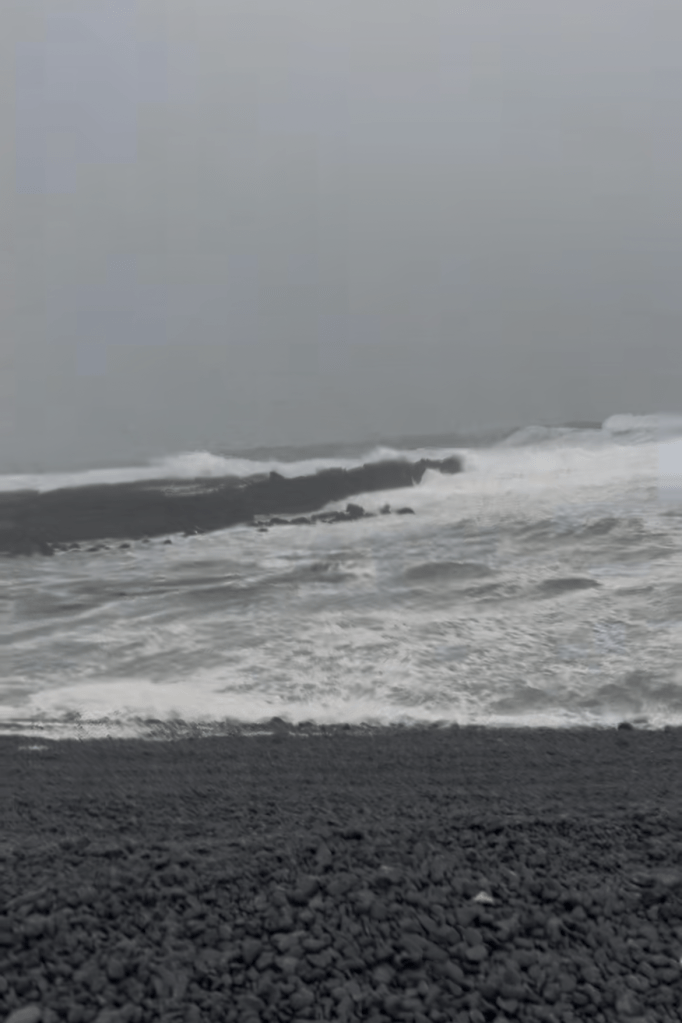
This landscape was definitely was more dramatic than what we’ve seen in Iceland so far. The mountains were very large and extremely tall. The sea and other bodies of water were much more violent due to the strong winds as well. There is also an extreme lack of trees compared to America. Our tour guide stated that the Icelandic is working on a reforestation initiative to change this, though.
Throughout the day, I was continuously thinking about the difficulty the Vikings (or any pre-17th century Icelander) went through in order to survive. The winds were so strong on the ocean, I wondered how a wooden ship could manage to get over the large swells. I also thought about the difficult journey on foot through the fields of Iceland. The ground is bumpy due to the water retention in the soil.
The island is about 20 million years old. Volcanic activity occurs along where two tectonic plates are splitting apart (i.e. Reykjanes peninsula, Westman Islands, and Snæfellsnes volcanic belt). They are splitting apart east-west along the Mid-Atlantic Ridge.
Overall, today was an exciting day full of new adventures and experiences (including trying fermented shark!).
 Swanson School of Engineering