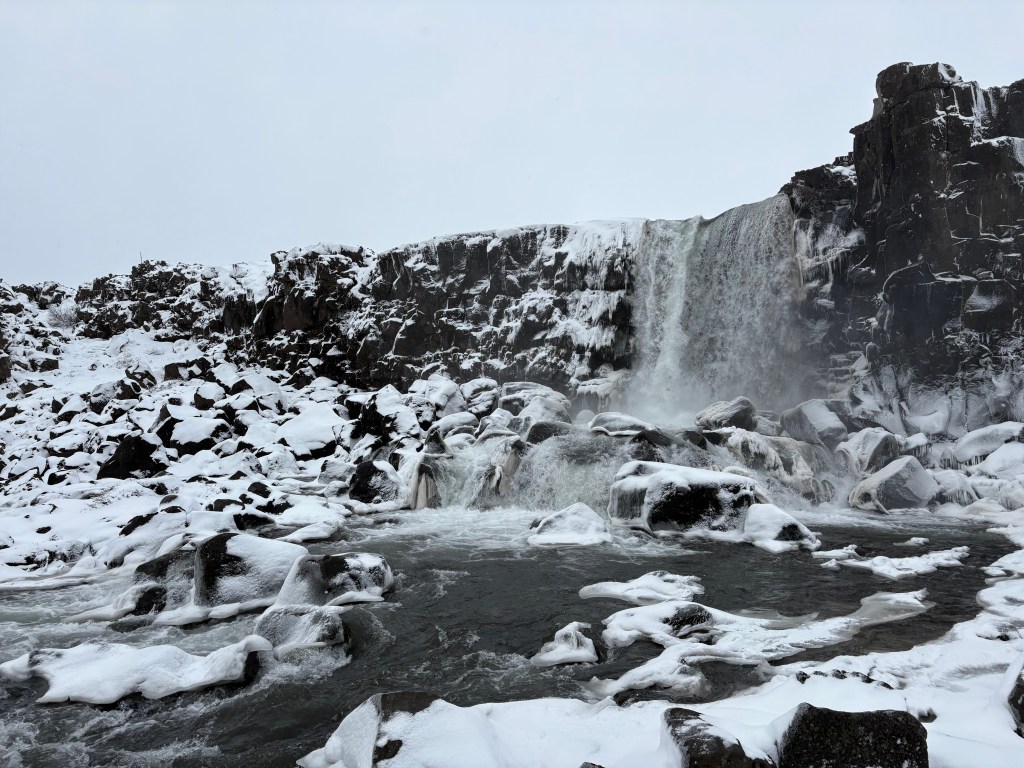
Today started off with a long drive to Þingvellir National Park. When we arrived, we started with a history lesson on the geology of the surrounding land. We then headed outside and spent some time at the overlook of the valley below, where we were able to see the separation of the tectonic plates. With the separation of the plates, the valley below and the lake within it slowly became deeper and deeper. Even surrounding areas of the park have been affected by this, as one of the walkways heading down toward the valley collapsed, leading the park to build a walkway over the top of the now unusable one.

As we made our way through the park, we passed a couple of really interesting spots that had a significant connection to the history and development of Iceland. The first was a spot in the mountain where chieftains would talk to their supporters. They spoke into the mountain, and the mountain face would echo their voices to the people behind them. This allowed the chieftains to reach a much larger audience, as the mountain face acted almost like a speaker we’d use today.
The second spot we passed was the pool where witches were drowned. It was strange to think that we were looking into a body of water where, thousands of years ago, people had been murdered. Our final sight within the national park was a waterfall, which played a very important role in deciding whether Iceland should continue to lead and govern its territory with the beliefs and morals of Paganism or switch over to Christianity. In the year 1000 AD, the man making this decision spent over a day sitting next to this waterfall and ultimately decided that Christianity would become the new governing religion of Iceland.
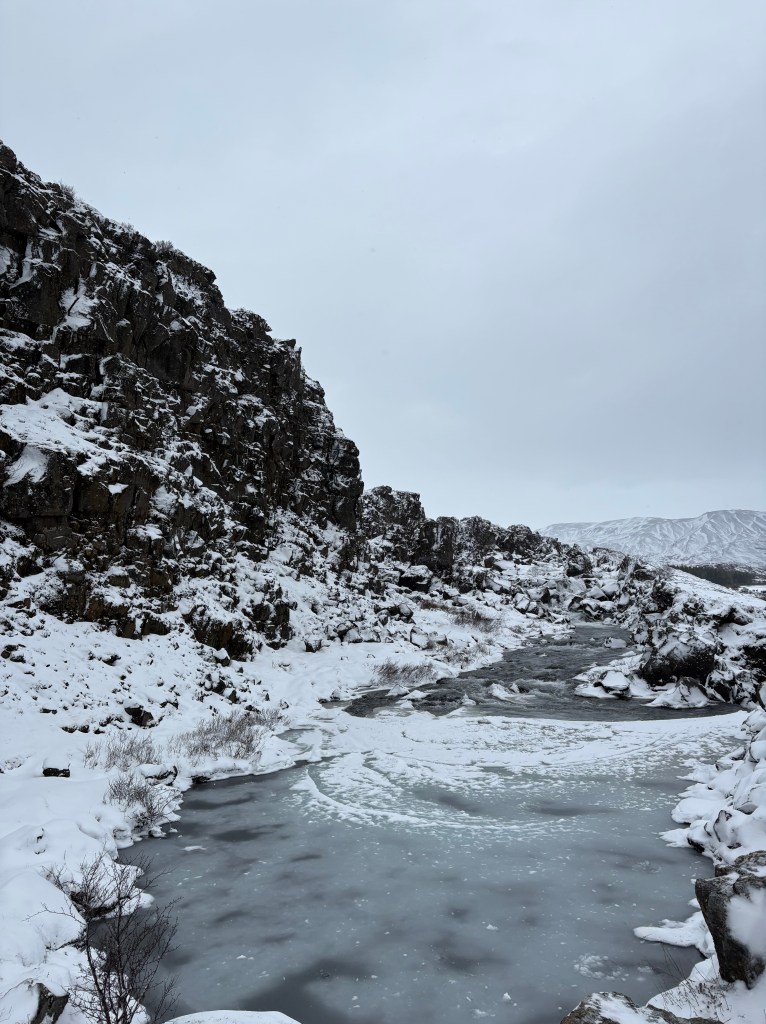
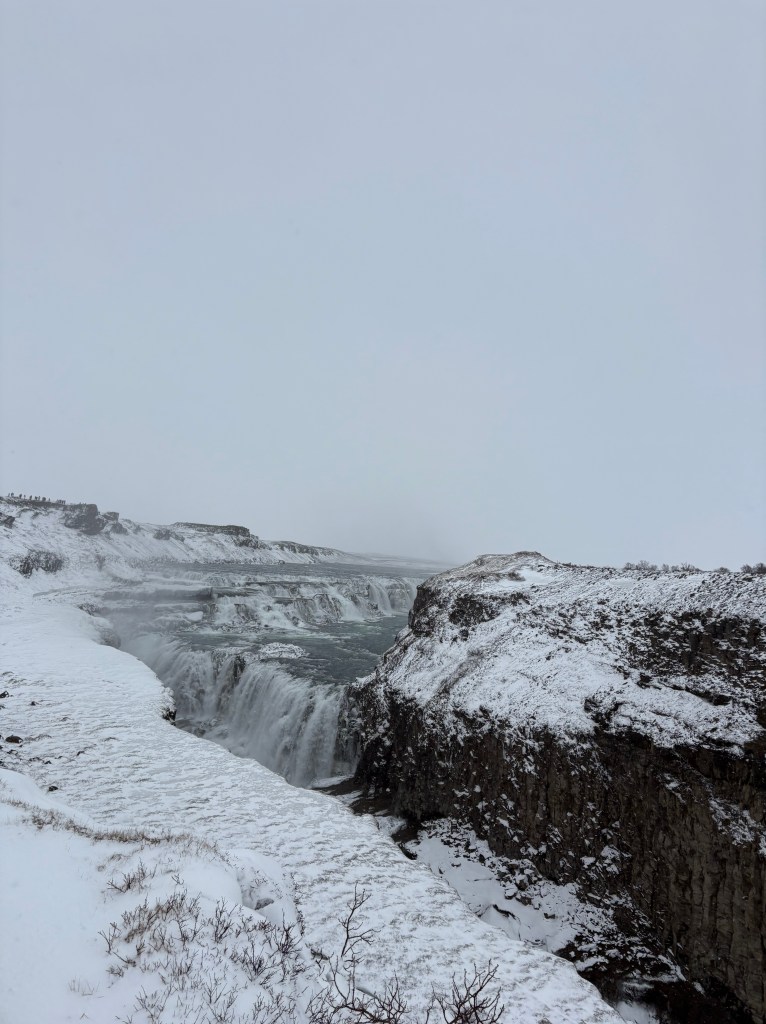
After the national park, we made a couple of different stops for some small hikes and sightseeing around the Golden Circle. We first stopped at Gullfoss Falls, where we were able to catch two different viewpoints of this amazing waterfall. One was an overlook, and the other was a short hike down a bit closer to the waterfall. Unfortunately, the path that brings you close to the base of the waterfall was closed due to icy conditions.
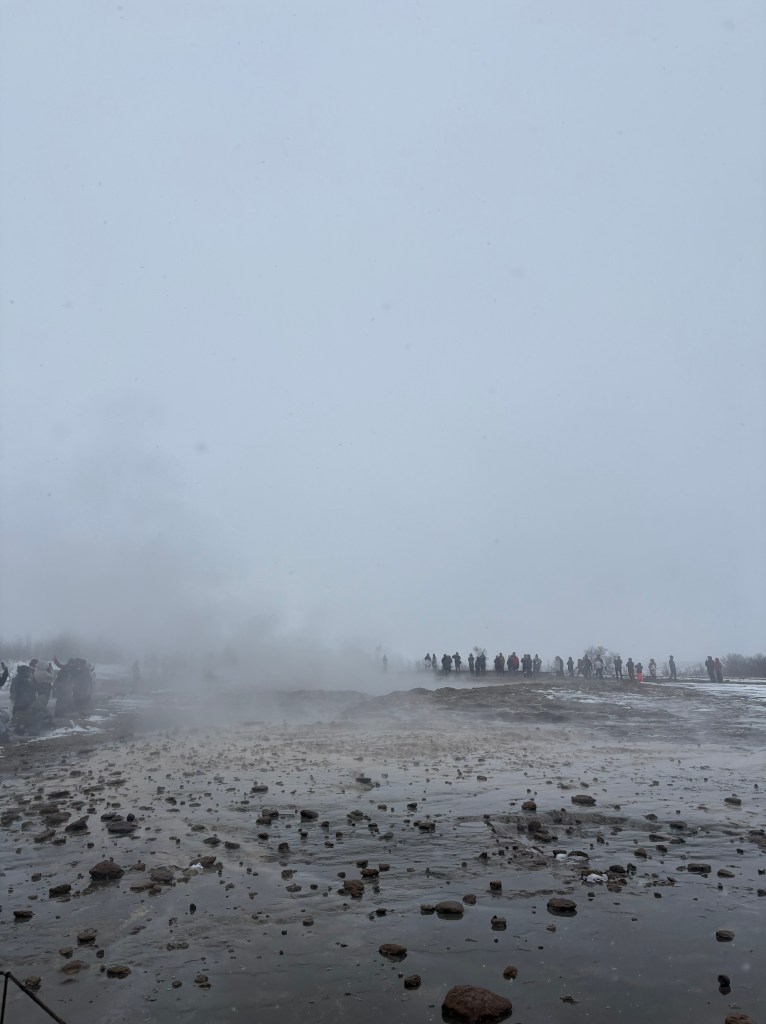
Once we were done there, we hopped on a quick bus ride over to see the geysers. It was really cool because we were able to hike up to the top of the mountain and get an amazing view of one of the geysers erupting.
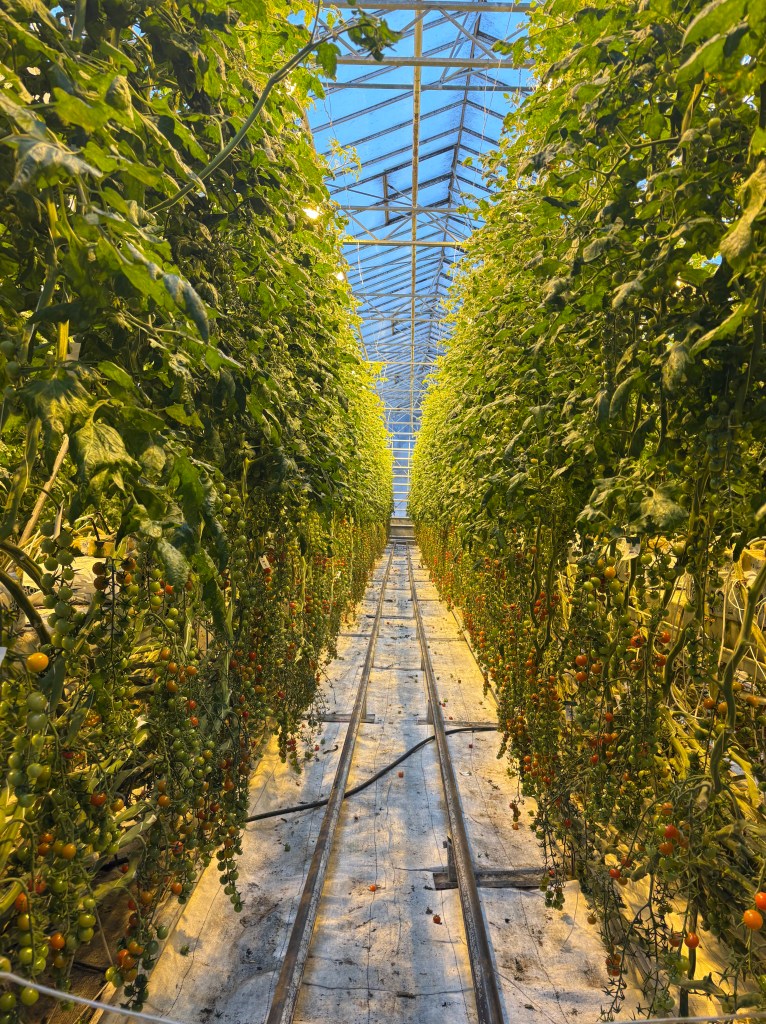
Our final stop of the day, and definitely my favorite, was Friðheimar Greenhouse. We got to see firsthand how farms in Iceland use geothermal energy to effectively and efficiently grow food despite the harsh weather and growing conditions. In this specific greenhouse, they were growing all different kinds of tomatoes, with thousands of tomato vines throughout the greenhouse.
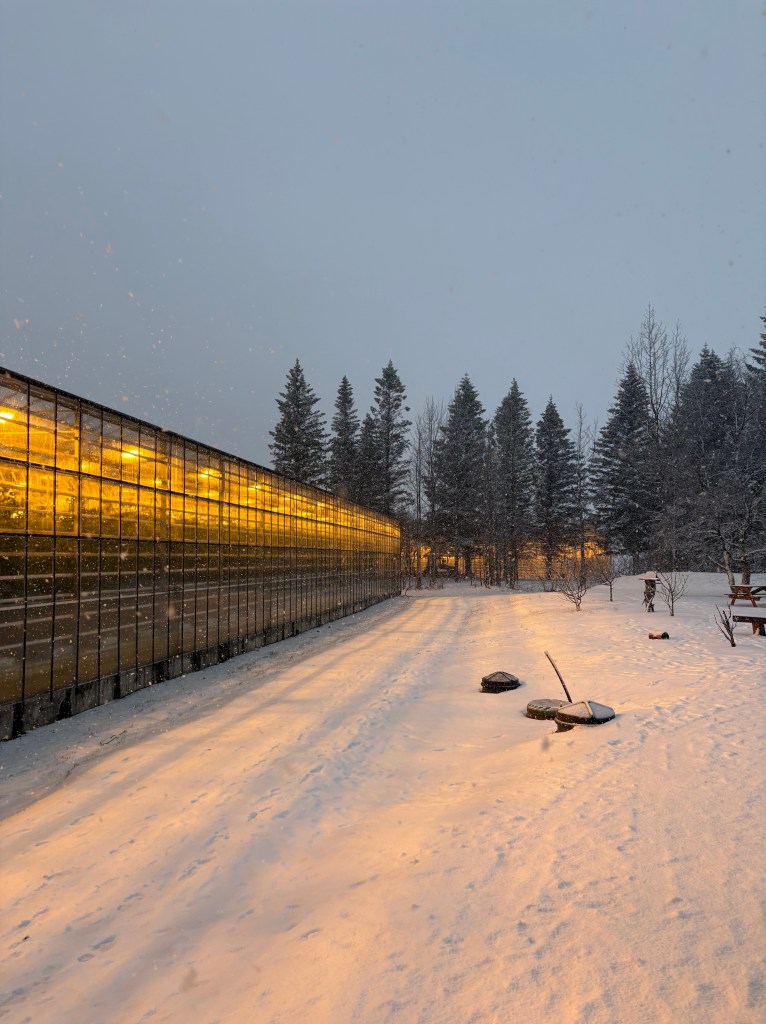
They are the largest producers of tomatoes in Iceland, which, as you can imagine, takes a lot of energy to mimic the natural growing conditions of these plants. However, because they use a form of renewable geothermal energy, they are able to create a perfect growing environment for the tomatoes in a very inexpensive way.
They pump the geothermally heated water through pipes in the greenhouse, and the pipes radiate heat into the space. This is very efficient because the farm doesn’t need to put a lot of energy into heating the greenhouse as the water is naturally heated by the earth. This gives farmers an amazing alternative for farming and growing food in Iceland, especially in winter.
In a place where it would be very difficult to grow food, even in summer, farmers can produce food year-round while using a very effective energy source to do so.
In closing, today was a very insightful day. I learned a lot about both the history of Iceland and the important engineering techniques used in the agricultural industry. I’m really excited to keep learning more throughout my trip and can’t wait to see what else this journey holds for me.
 Swanson School of Engineering