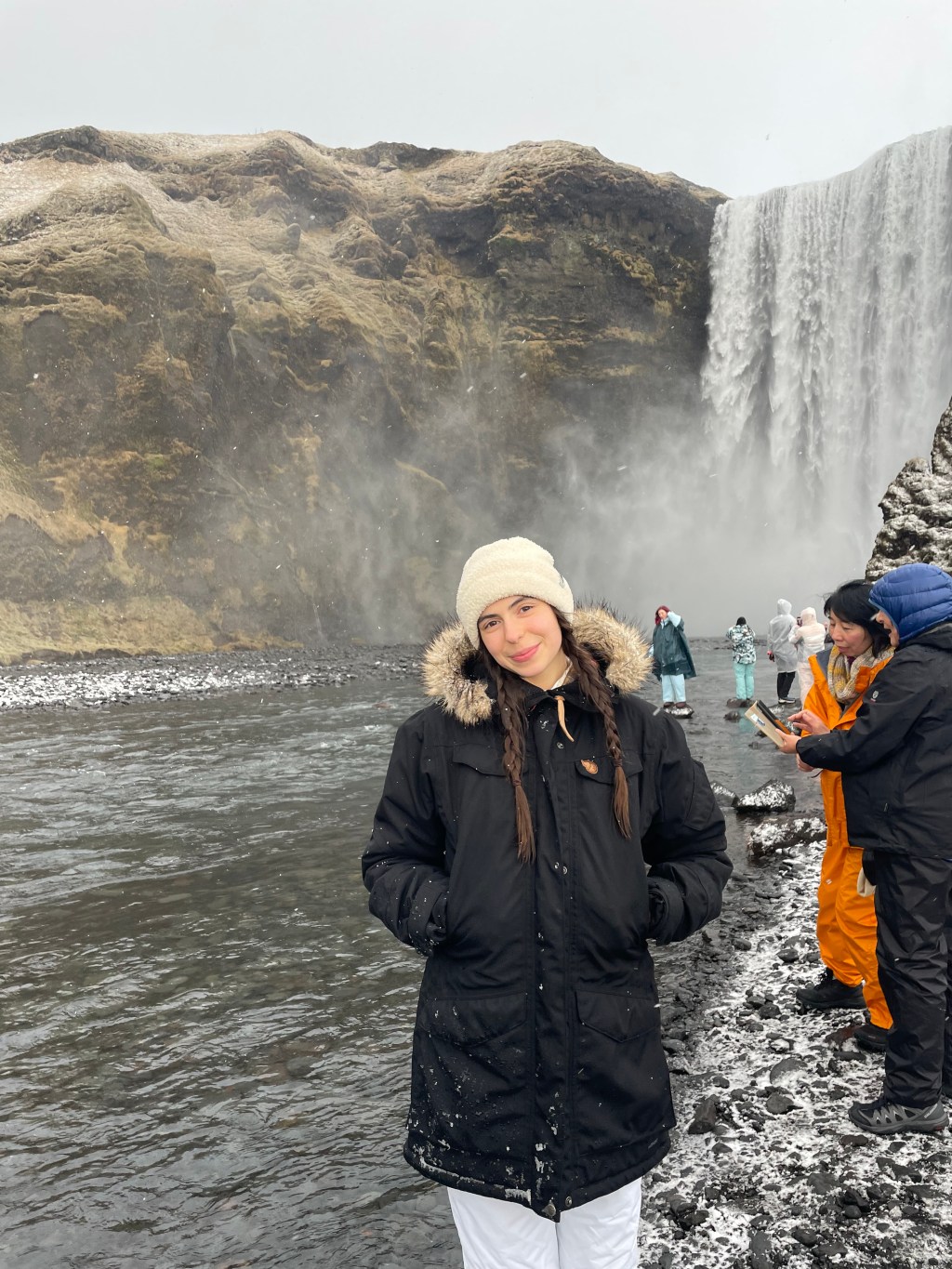
Tourists at locations like the Skogafoss waterfall can significantly impact the local ecosystem, causing land degradation, air and noise pollution, littering, trampling, and altering natural habitats. This environmental damage often stems from creating unofficial paths as visitors navigate the natural scenery. For example, our tour guide mentioned the day prior, many visitors ignore these paths and leave tracks in the snow. The tracks suggest that people are allowed to travel that route. Therefore, other visitors will follow and stray off the designated track. Taking photos or accessing views are not visible from the main path. As we were hiking, the Skogafoss waterfall path, stairs, and ropes guided tourists. However, many fellow visitors ignored the guides to get closer views or to take photos.
Since it is difficult to have staff constantly monitor these areas, many of these actions go unchecked, further harming the natural environment. Without proper regulation, the park’s cleanliness and protection will slowly deteriorate. The most effective way to preserve these environments is by ensuring they remain undisturbed. National investment in parks can maintain the environment. A way to implement stricter measures is by hiring park rangers who can enforce regulations that prevent environmental degradation.
My experience and the views at the Skogafoss waterfall were stunning. As I climbed the worn-out stairs, I realized how the infrastructure built to make these attractions accessible also negatively impacts the environment.
 Swanson School of Engineering