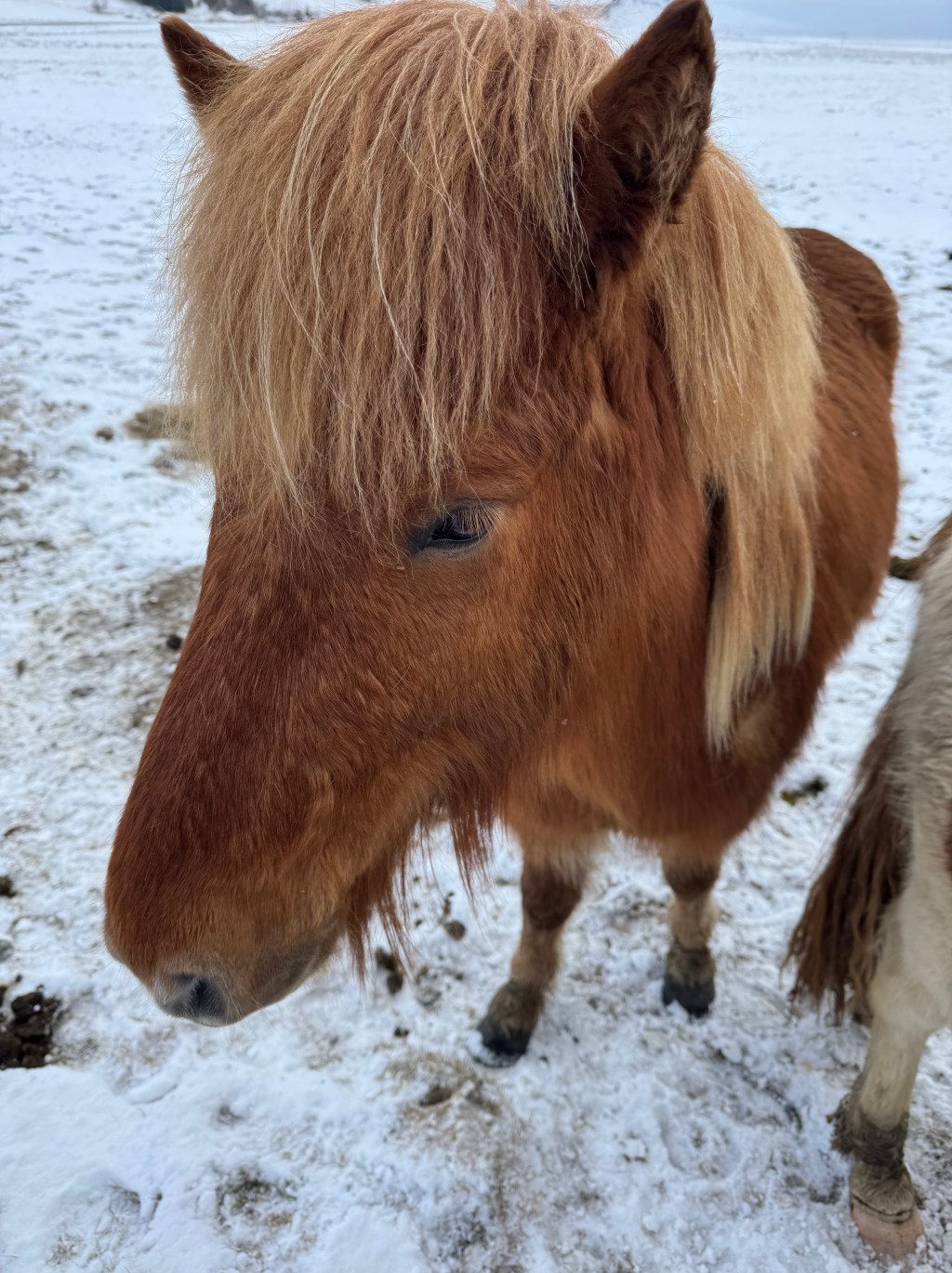
Today, we discussed a method of breeding and mass meat production called Blood Mare farming when we stopped to see some Icelandic horses. In this method, blood is drawn from a pregnant horse, and a hormone called Pregnant Mare Serum Gonadotropin (PMSG) is extracted from the horse. This hormone is then injected into another animal (like a pig) to increase the production of animal-specific meat (pork in this case).
The sow is injected with PMSG immediately after giving berth, allowing them to induce estrus and the pregnancy cycle to repeat again quickly. This is done to increase the size of litters and allows for the sow to give berth more times in a shorter time period. PMSG has boosted the pregnancy cycle in sows to almost 2-3 times a year. This is widely used in the United States, Canada, Iceland, and Germany to name a few countries which create a nice profit in the meat industry, it’s noted that Iceland makes $3.4 million US dollars a year from this practice and Germany indicated they administer 2.1 million doses yearly.
This method has been frowned upon by the world and even investigated to ensure the safety and protection of the livestock and horses participating. Numerous reports of horses being abused and placed into boxes where the needle was inserted into the jugular vein have arose from animal welfare campaigns and submitted to agencies like the European Free Trade Authority (EFTA) and European Surveillance Authority (ESA). These agencies have called for Iceland to stop these practices and accused them of breaching EEA conduct of animals being used for scientific purposes, plus the abusive treatment to the horses.
With the emergence of alternatives to PMSG, the call to ban these practices has never been stronger. Alternatives include 36 synthetic compounds created in Germany that simulate the same effects as PMSG but don’t require blood withdrawal from horses. Still, Iceland today continues the blood mare farm practice as the farmers that participate claim that the horses are fine and any other alternatives or synthetic substitutes will damage and hurt the horse. Others argue that the use of PMSG is cruel to the horses and the livestock as these farms simply want more pregnancies annually and larger litters per berth cycle.
 Swanson School of Engineering