Today, we explored the south eastern part of the island, which included Jökulsárlón Glacier Lagoon/Diamond beach and many other sights. The lagoon and beach are part of the same general area as the lagoon is fed by the glacier and the beach is at the exit point of the flow of the lagoon. The “diamonds” are fragmented glaciers that shrank enough to be able to flow through the out-spout before being pushed back onto the beach by the waves. The lagoon is the deepest lake in Iceland at a depth of 200-300 meters(~650-980 feet) and was fully formed by the weight of the glacier and its retreat up the surround mountains. This provided fantastic views/spectacles for our afternoon.
However, something you won’t see in the region is development besides the few tourist areas. This is due to the regions incredibly harsh terrain and volatility. The larger collective glacier covers the largest volcano on the island and a few of the other very large volcanoes. This is advantageous as it helps prevent or limit eruptions, but that does not mean there isn’t still repercussions. The land is covered in black sand and rock making it incredibly difficult for vegetation to grow. Worse, if an eruption does occur, the huge quantities of ice melted release incredibly powerful floods.
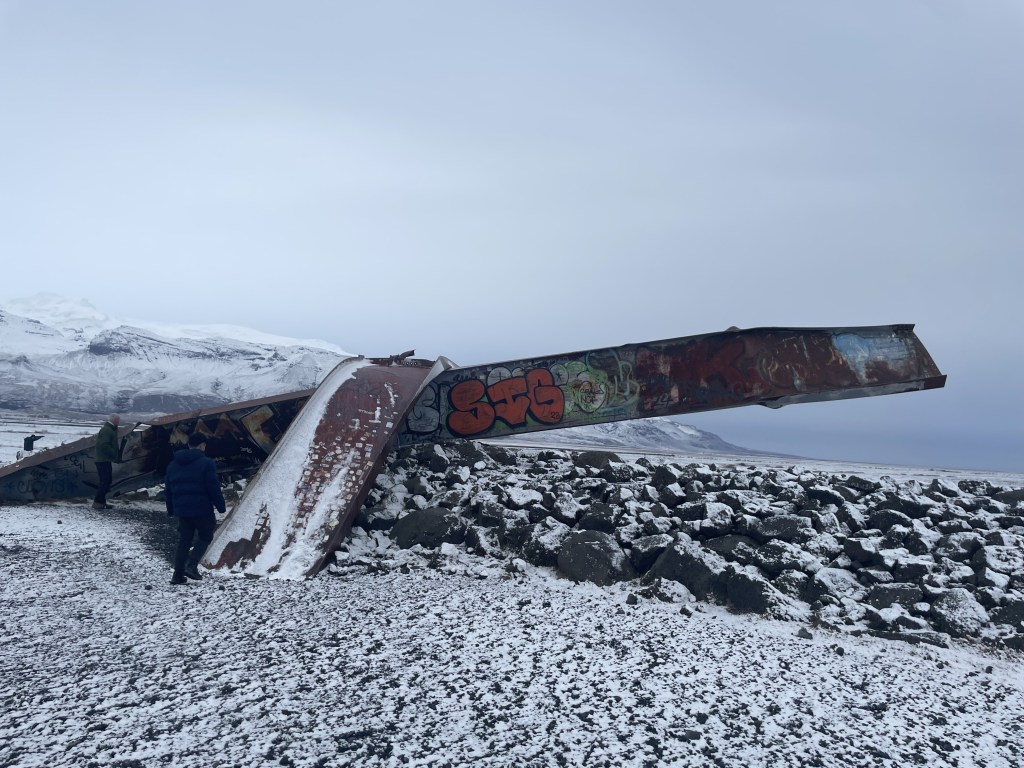
Engineers have had to adapt to this when constructing roads, bridges, and other infrastructure as it is a matter of when, not if an eruption occurs. This has included building large berms of the sand for the roads and funneling the water under bridges to attempt to control the flow and reduce damage. This has proven a challenge as seen in the picture above as the severity of the flood depends on the violence of the eruption and simply the composition of the ground. The sand and rock is the opposite of ideal material when constructing flood resistant infrastructure. This has been somewhat addressed by making the roads incredibly easy in the event of damage or destruction. However, the bridges are what link the island via the Ring road, so they are reinforced much more earnestly. Renewable engineering is crucial in reducing the risk/severity of these dramatic events. Using clean energy when mixing the material for the new roads as well as powering the measurement equipment monitoring elements of the glacier/volcano. Use of renewable energy is crucial in reducing the thinning of the glaciers and increasing the risk of eruption in the region.
 Swanson School of Engineering