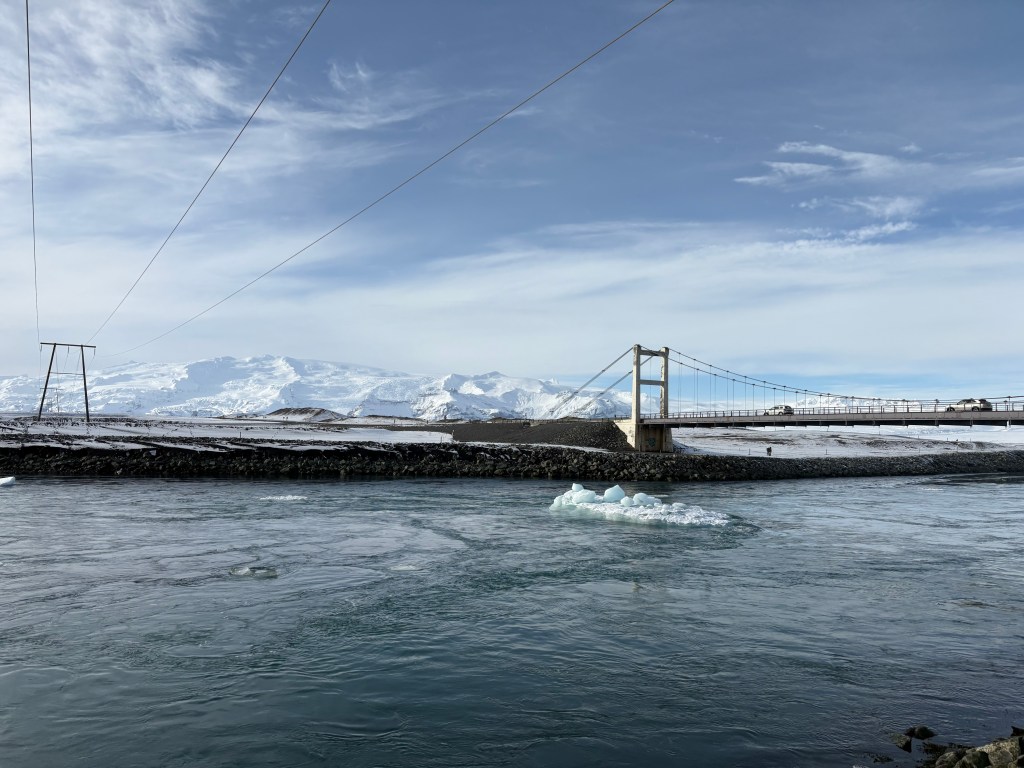
Today was a great day as we were given the opportunity to learn more about the many problems engineers in Iceland are faced with and the solutions with which they deal with them. Iceland’s unique geological landscape creates many significant engineering challenges due to its volcanic activity, seismic events, glacial flooding, and rapidly changing weather. Many of these natural events can cause serious damage to both the landscape and surrounding infrastructure within Iceland.
To address these challenges to preserve both the natural beauty and infrastructure of the country, Icelandic engineers have developed solutions for constructing more resilient roadways, bridges, and safety measures around the country. For example, many of the bridges are now built raised above the natural land to allow any excess water from glacial floods to flow underneath the bridge rather than destroying it. One of the places we visited today had the beams of a bridge that was destroyed by a glacial flood. Supposedly, the water got up to 50 cubic meters per second, causing massive damage to the bridge and the area around it. Therefore, raising the bridges will help prevent such destruction to the bridges. Furthermore, there are also barriers and flood channels created along the roads in areas of high risk for glacial floods that can help change the direction of the water away from the roads.
With the number of high-risk natural events that could cause such destruction, Icelanders have to be very careful as to where they choose to build and what they choose to build. Many areas of Iceland that we drove through today barely had any buildings besides farms. This was because we were in an area of very high risk for glacial flooding. Also, with the increase in global temperatures, these types of things are becoming much more of a concern because these types of events will occur much more often.
In conclusion, Icelandic engineers are faced with tough problems to try and minimize damage to their infrastructure by coming up with solutions that are both practical and feasible. With the increase in global warming, engineers are working even harder to ensure that their solutions will not only work but last a long time with the amount of volcanic and seismic activity. It was great learning about these things today, and I can’t wait for tomorrow!
 Swanson School of Engineering