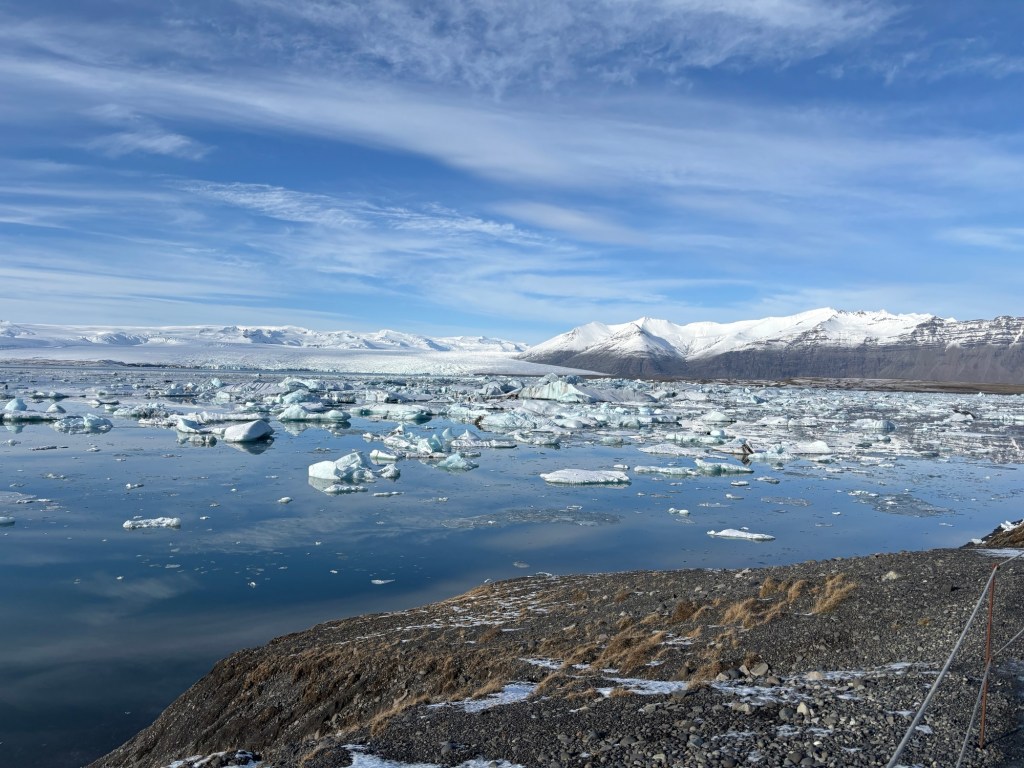
Southern Iceland is a landscape shaped by glaciers, volcanoes, and extreme weather constantly changing the landscape, making it both breathtaking and a challenge for engineers. Today, as we traveled through this incredible region, I saw firsthand how Icelandic infrastructure adapts to the environment while maintaining its sustainability. One of the most striking geological features (and one of my personal favorites) we encountered was the hexagonal basalt columns along an icy trail. These formations, created by cooling lava, are a reminder of Iceland’s volcanic nature. They also influence engineering! Similar structures to these appear in reinforced concrete designs due to their strength and load distribution properties. As we continued, we visited Skaftafell, home to a stunning glacier. Glacial movement constantly reshapes the land, making road construction and maintenance more of a challenge. Engineers here must design roads that can withstand floods from glaciers when they melt, a major challenge given Iceland’s unpredictable weather and volcanic activity. At Jökulsárlón Glacier Lagoon and Diamond Beach, the sheer amount of ice washing onto the shore was unreal. However, this beauty comes with multiple risks. Coastal infrastructure must withstand powerful waves, ice movements, and rising sea levels. Sustainable engineering solutions, such as reinforced embankments and natural flood defenses, help protect these fragile areas. Later, we stopped at Hof, where we saw a small church and cemetery. Many traditional Icelandic buildings use turf insulation, a technique that dates back centuries and remains relevant today for eco-friendly construction. Our final stop was an interesting hole formation, likely created by melting ice. This highlights yet another challenge for engineers. When permafrost melts, the ground can become unstable, so engineers use special building methods like adjustable supports or geothermal heating to keep structures safe. Today’s adventures showed how engineers in Iceland must work with nature rather than against it, creating solutions that respect this beautiful land while ensuring and maintaining long-term sustainability.
- Comment
- Reblog
-
Subscribe
Subscribed
Already have a WordPress.com account? Log in now.
 Swanson School of Engineering