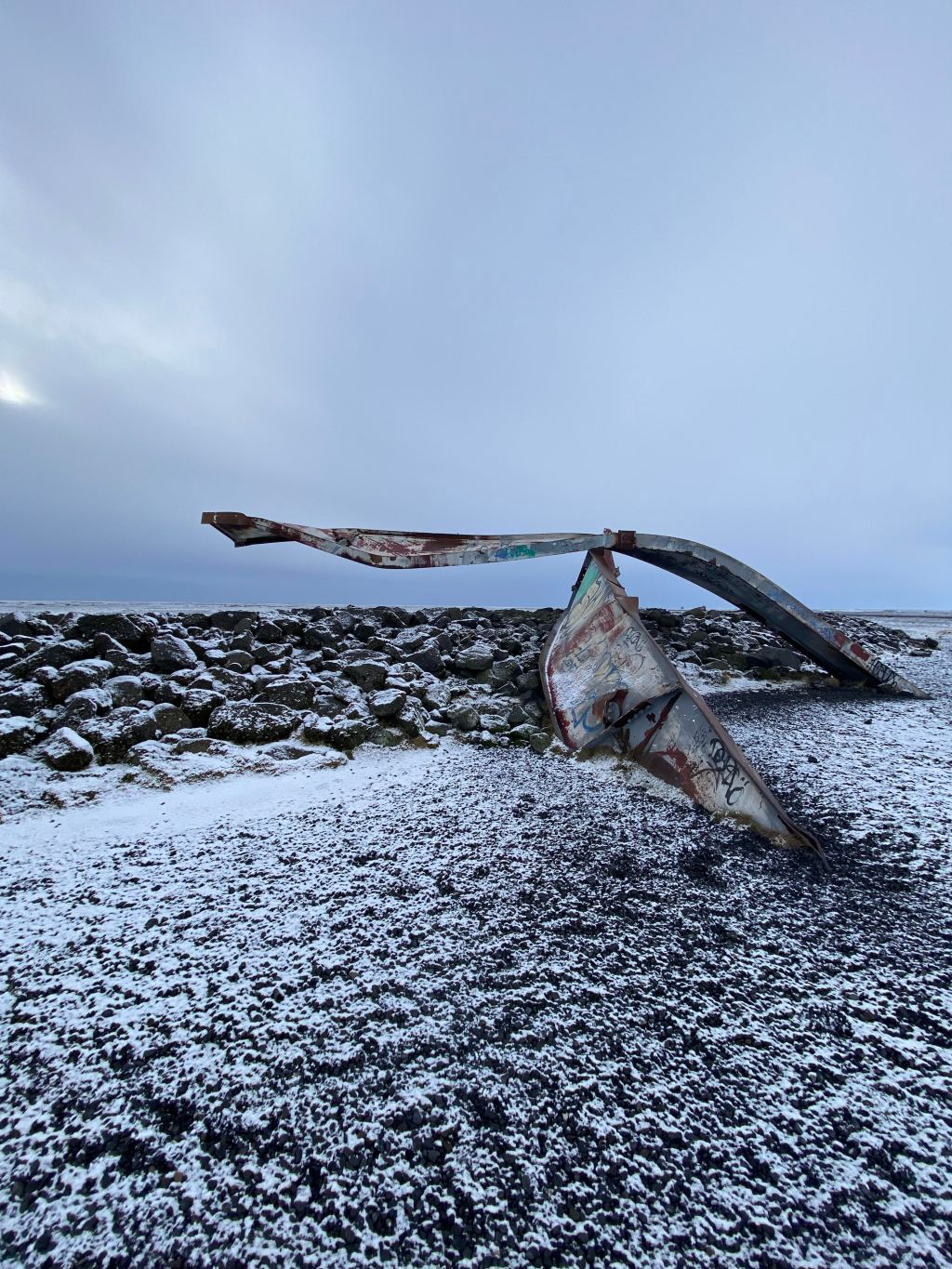
Some twisted I-beams are all that remain of a bridge that was once mangled by a glacial flood and volcanic activity a part of the Skeiðará Bridge Monument. A visit to this monument was a part of today’s busy itinerary. It is very evident that the southern region of Iceland has a dynamic geological environment, facing risk of volcanic activity, glacial floods, and coastal erosion. This unique geological environment presents many engineering challenges and has influenced how engineers must construct infrastructure to withstand the immense forces of nature.
The risk of glacial floods is ever present in this region of Iceland, and engineers have undergone great measures in order to ensure that the infrastructure in this region can withstand such events. Specifically, in this region, bridges are built with strong foundations with high clearance above the ground, in order to ensure that the roadway will not collapse due to a glacial flood. Furthermore, due to the risk of volcanic and seismic activities, engineers design roads to be made out of strengthened asphalt or gravel (in regions where roads need to be repaired quickly after being damaged). Finally, towns have had retaining walls built around them to prevent lava from overcoming the infrastructure and to redirect the lava flow.
These solutions are innovative methods of dealing with the unique environment that exists in Southern Iceland and emphasizes the need for creative problem solving in the field of engineering.
 Swanson School of Engineering