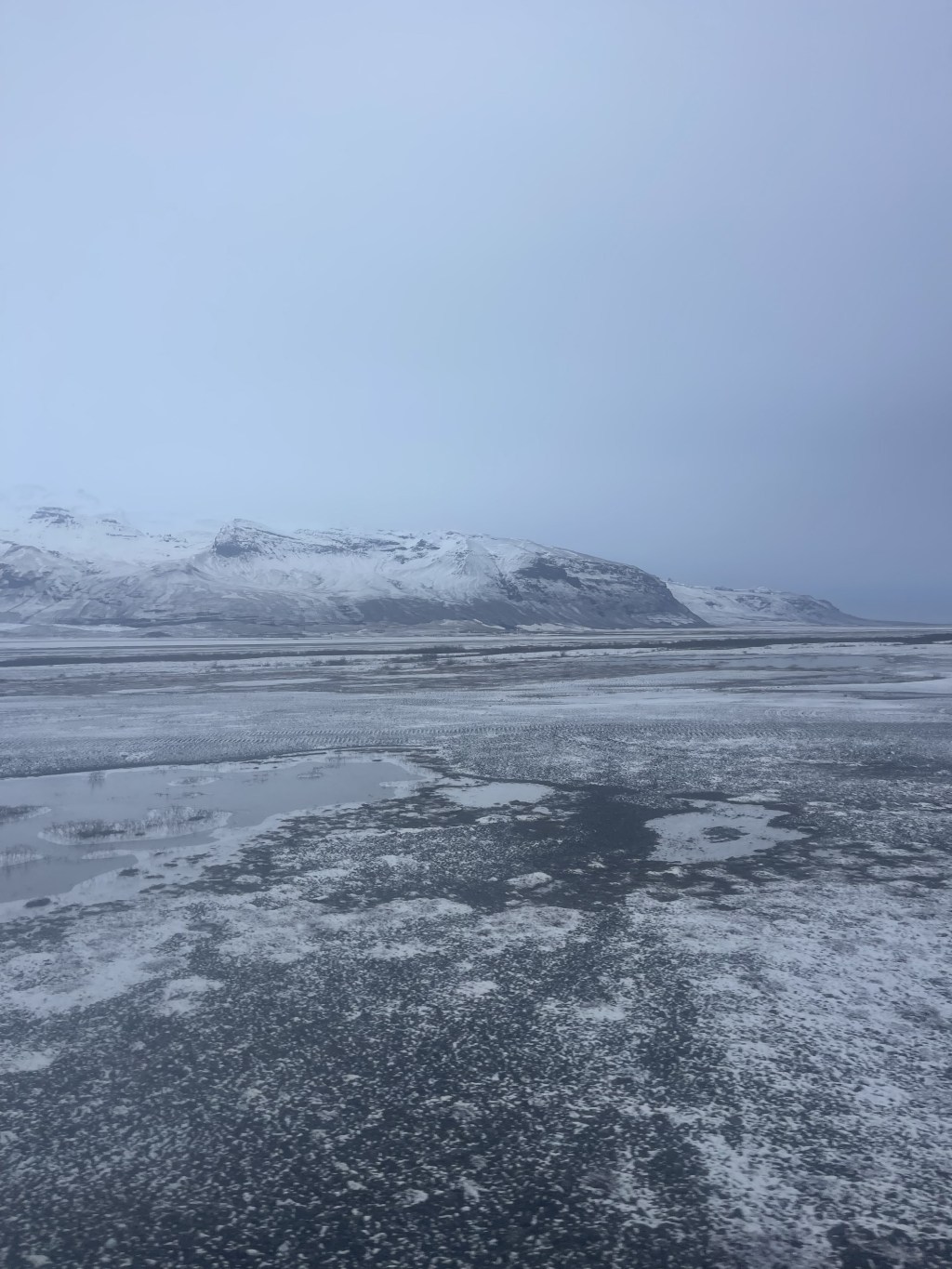
Our travels today involved many many stops and many many incredible sites. We made our way westward along the southern coast stopping several times along the way and ultimately visiting the glacier outlet Fjallsjökull and the glacier lagoon Jökulsárlón. While the locations themselves showed signs of civilization from the parking lots, small buildings, and tour groups, the land along the way was largely barren.
One of our brief stops in the morning was the remains of an annihilated bridge that braved the 1996 eruption of the volcano Vatnajökull and the floods that followed. The monument there, Skeiðará Bridge Monument, represents the destructive forces at play in the glacier’s flood plain and confirms the lack of civilization in the area (if the silty terrain wasn’t enough of a reason). With such powerful natural events, engineers must constantly evolve their technology to be able to withstand whatever may next happen. The past is the best indication of the strength of the natural forces at play and roads are built to withstand up until the recorded extremes, but as seen with the monument, sometimes those extremes are exceeded.
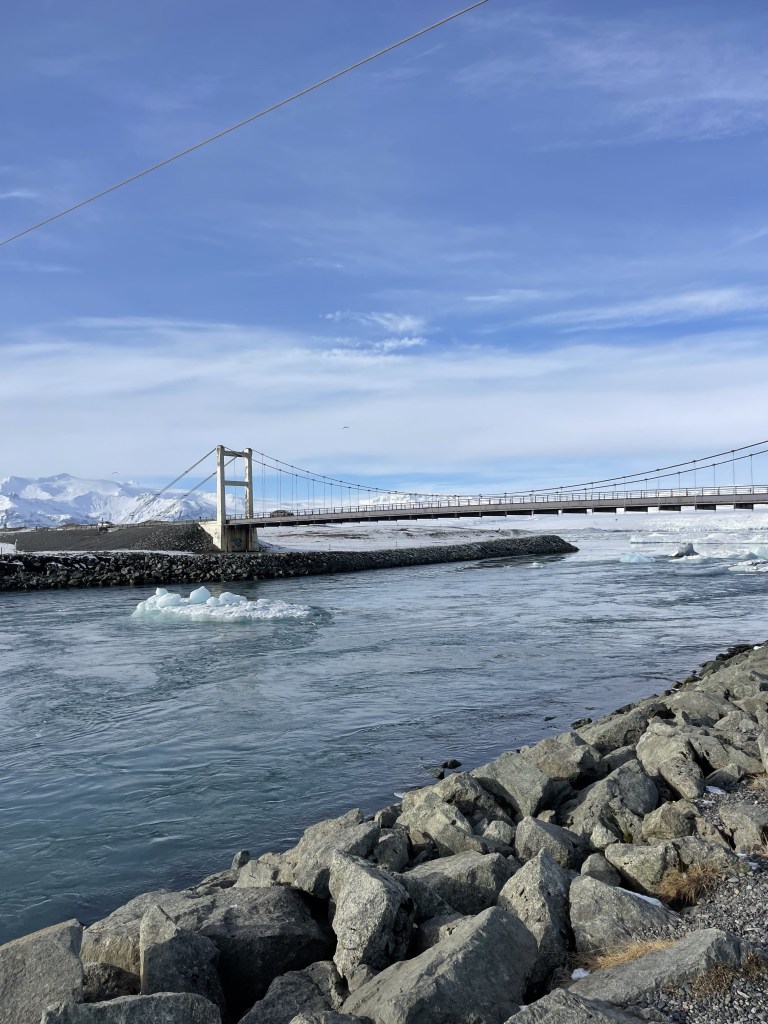
Given there is no way to prevent what is a natural occurrence and no way to accurately predict the timing or effect of an upcoming event, engineers work to best prepare and limit the damage done to the landscape and human life. Not building in the most effected areas is a start, but past this, intentional engineering choices also aid in the safety of the people and country. We drove past unused bridges and were informed that as the river’s path changed over time, the bridges lost their necessity. It appears two choices would have emerged–to either continue the use of the bridge or to switch to a new roadway and remove the bridge entirely. However, a new roadway was erected and the old bridge still stands.
This odd choice was made for several reasons. If the river were to revert back to its original path, the bridge would already be in place. Additionally, it would be a waste of resources and money to remove such a bridge. Finally, it is safer for vehicles to traverse a path lower to the ground given another factor of Iceland’s climate–the wind. The wind is largely a threat to the safety of citizens and tourists, and earlier in the trip we had seen a very striking display that involved a count of the number of deaths due to car accidents so far this year. Iceland acknowledges this and–similar to the lack of development along the southern coast–ensures a lack of cars on dangerous roads where needed. Another small contributing piece of engineering with this is the inclusion of signs along roadways that indicate upcoming wind speeds and if it is safe to proceed.
Between Iceland’s preventative and proactive engineering choices, they are able to prepare for inevitable natural forces while limiting the damage done to the inhabitants of the island.
 Swanson School of Engineering