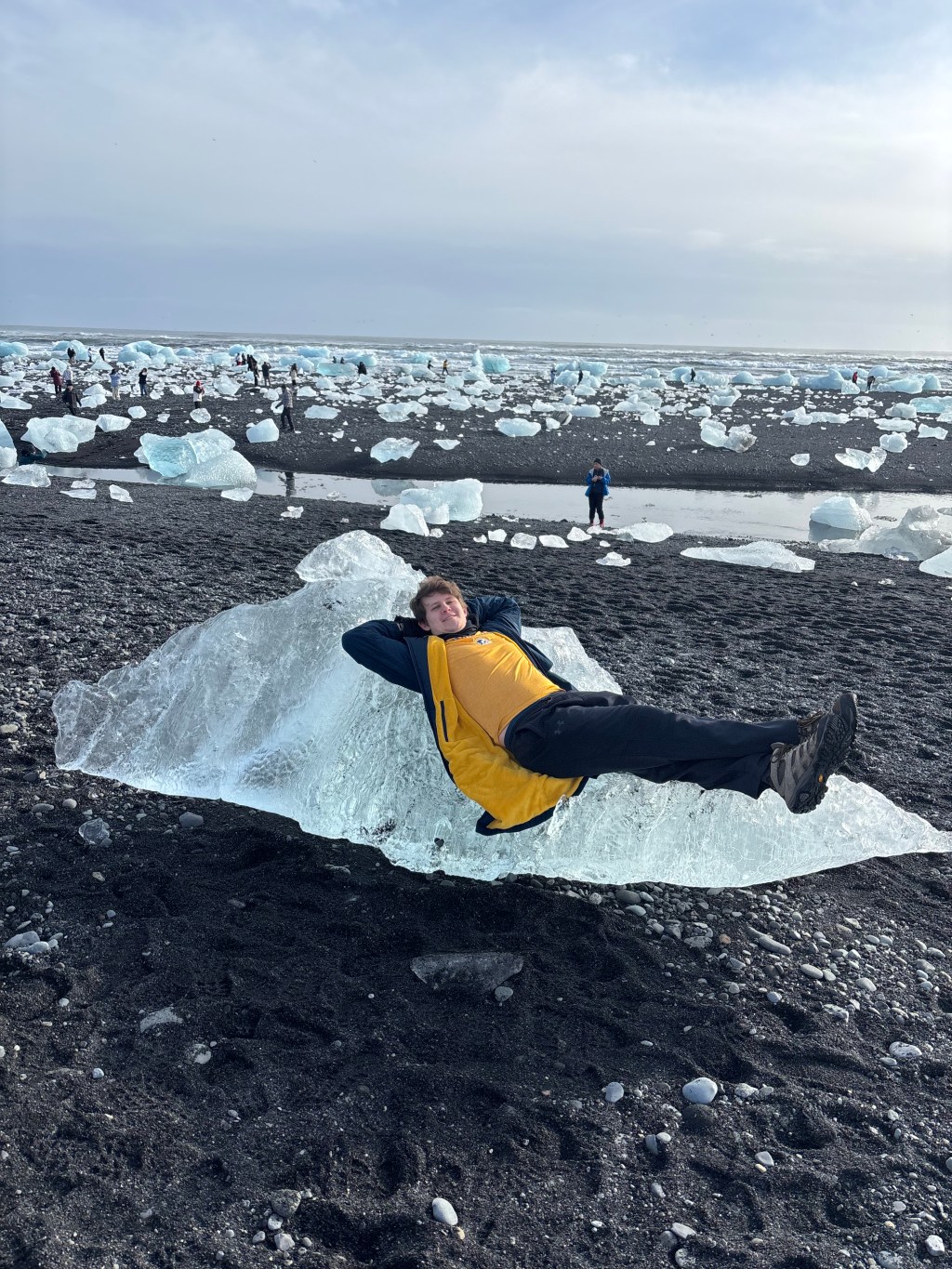
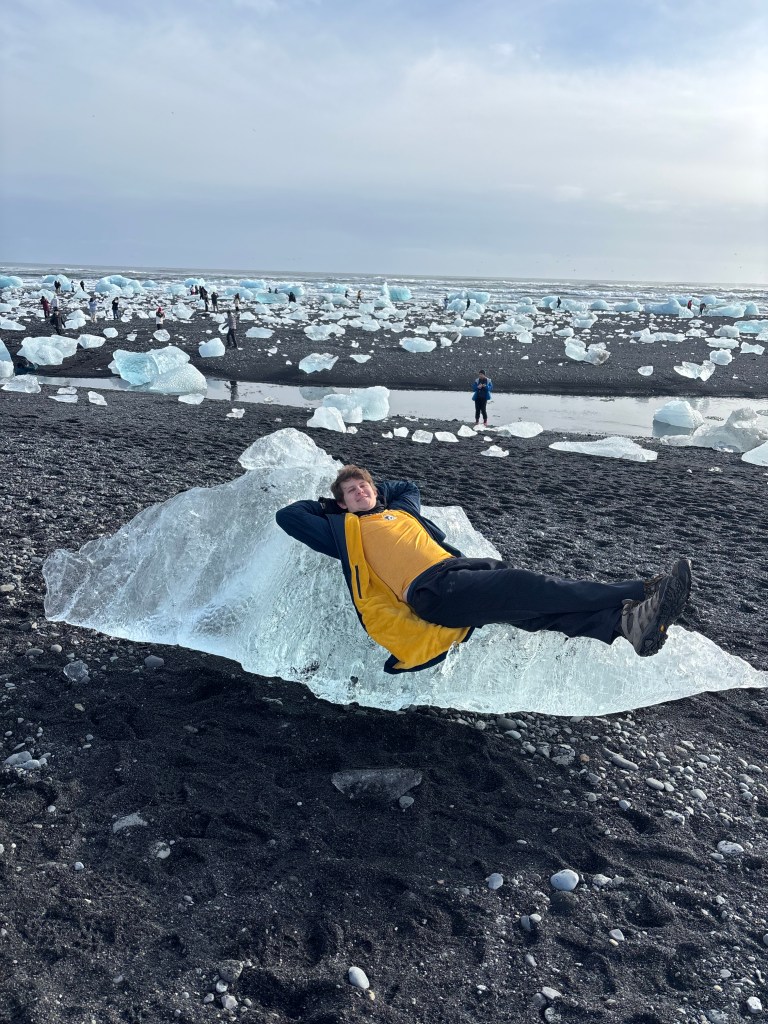
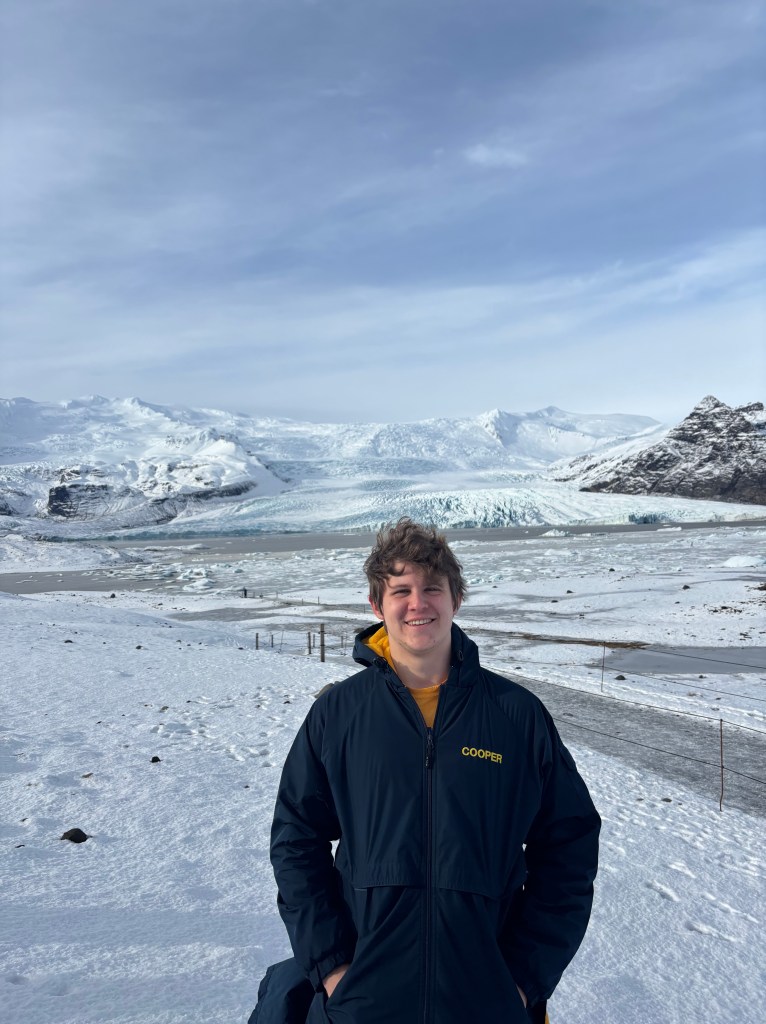
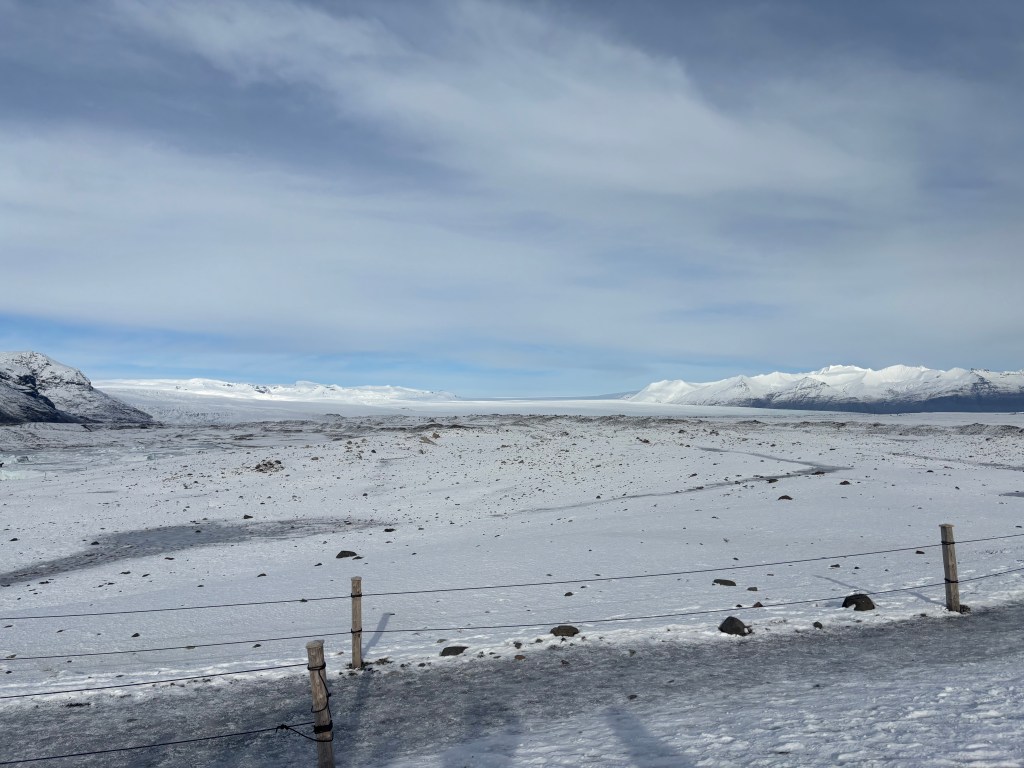
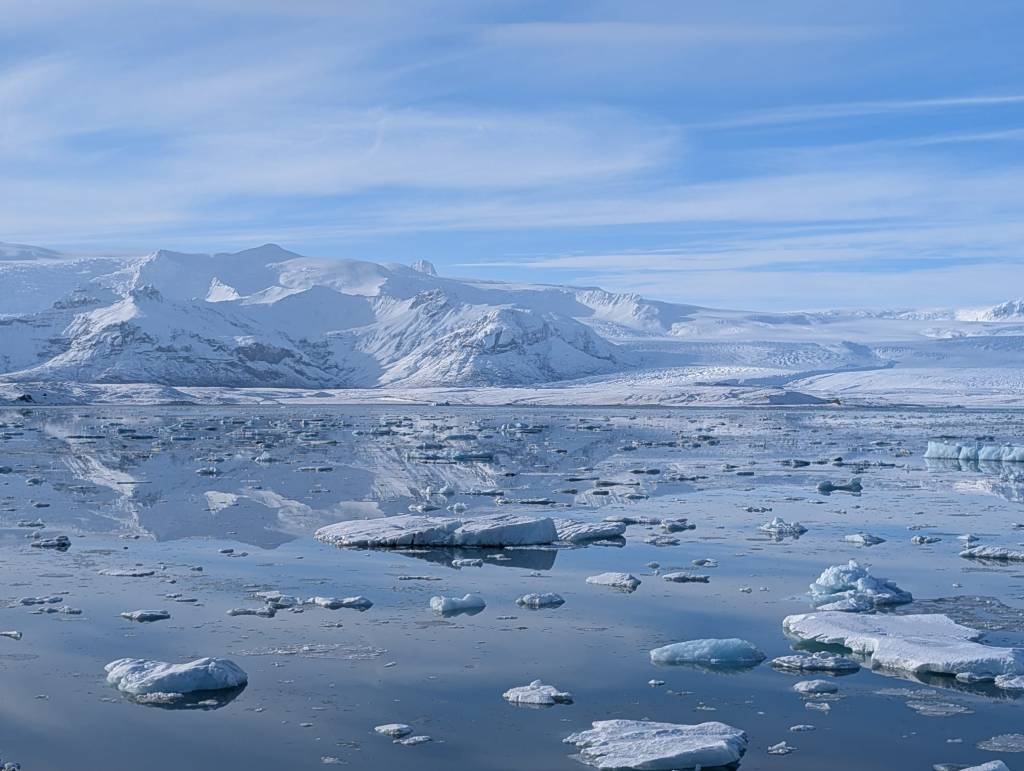
Today is our fifth day in Iceland and it is still just as great as the others. Except seeing the Northern Lights. Today we saw something really weird. Our guide Olof told us it was something most people call “the Sun.” I’m not sure I can believe her on this one. Where did all the wind and snow go that has been with us since day one? Strange astronomical anomalies aside, today we got to look around the largest glacier here in Iceland and a few of its descent points. One of these was Diamond Beach, named because of all the shiny chunks of ice that wash up from the glacier onto the beach. Nature is definitely the highlight of the trip and seeing all of the mountains, cliffsides, ice floes, waterfalls, and animals is really cool. We did get to see a dozen or so seals basking on an iceberg. These icebergs are breaking off of the glacier faster than any time in history because of global warming. This recession of the glacier could cause issues because as it melts in the higher points of the mountain, it is taking pressure off of the volcanically active area. This release of pressure will increase volcanic activity, and that is not conducive to human life, so this is a problem.
One thing that is being done about this problem here in Iceland, is carbon dioxide capture and storage. This is being done in one of the sites we visited, the Orka Natturunnar Hellisheidi geothermal power plant. At this plant they are running a system called Carbfix. The Carbfix system, in a nutshell, is taking carbon dioxide, dissolving it into water, sending the water back into the geothermal hot spot that the power plant draws water from, and then allowing the carbon dioxide to react with the rock to form stable carbonates. This process works because water with carbon dioxide is acidic. This acidity strips favorable rocks of elements like magnesium, calcium, and iron. This process was originally expected to take longer, but because of the basalt and the dissolution of CO2 into water, it only takes around 2 years. Basalt itself is highly reactive and extremely porous, which is what allows for the accelerated formation of carbonates.
 Swanson School of Engineering