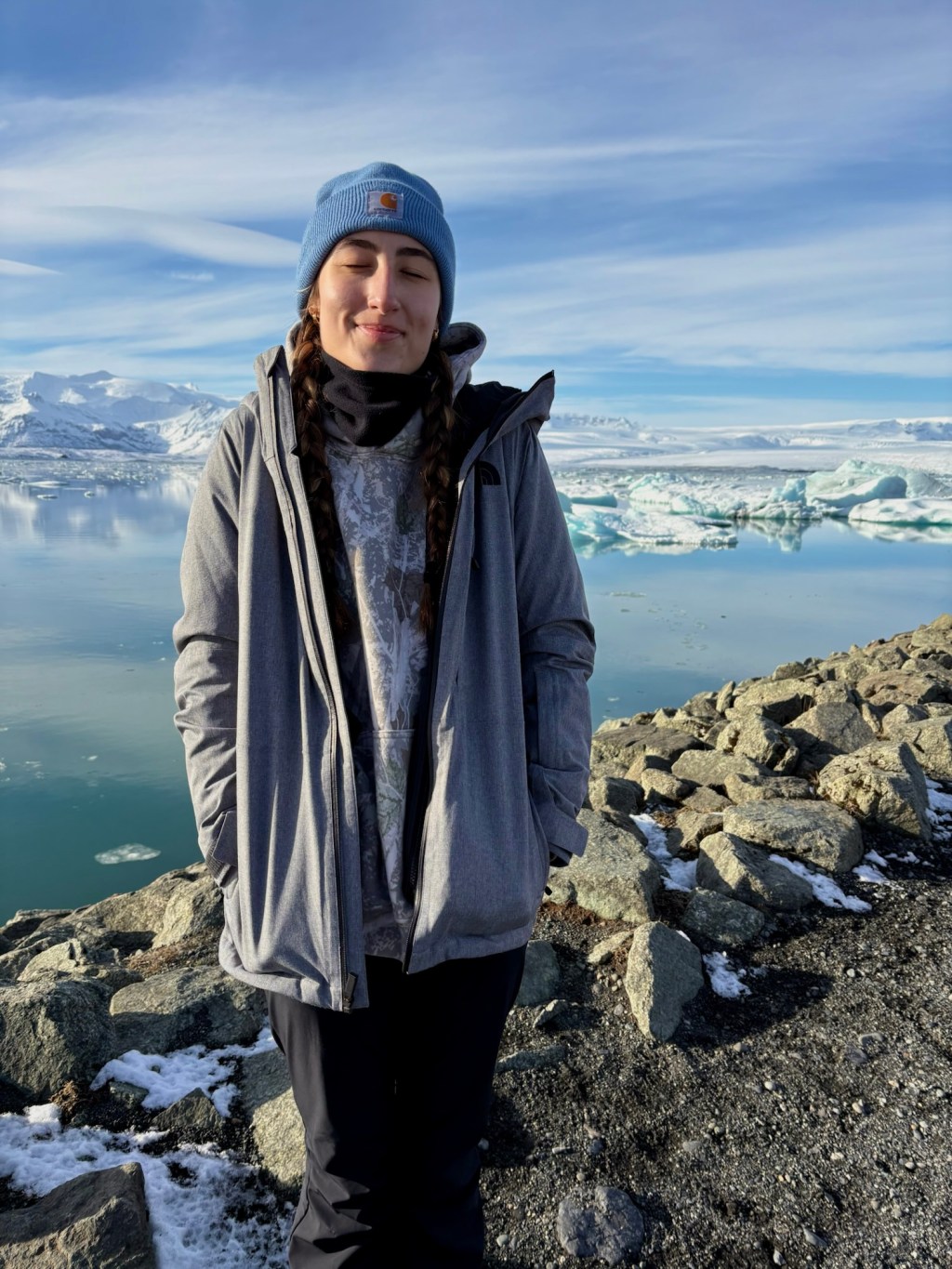
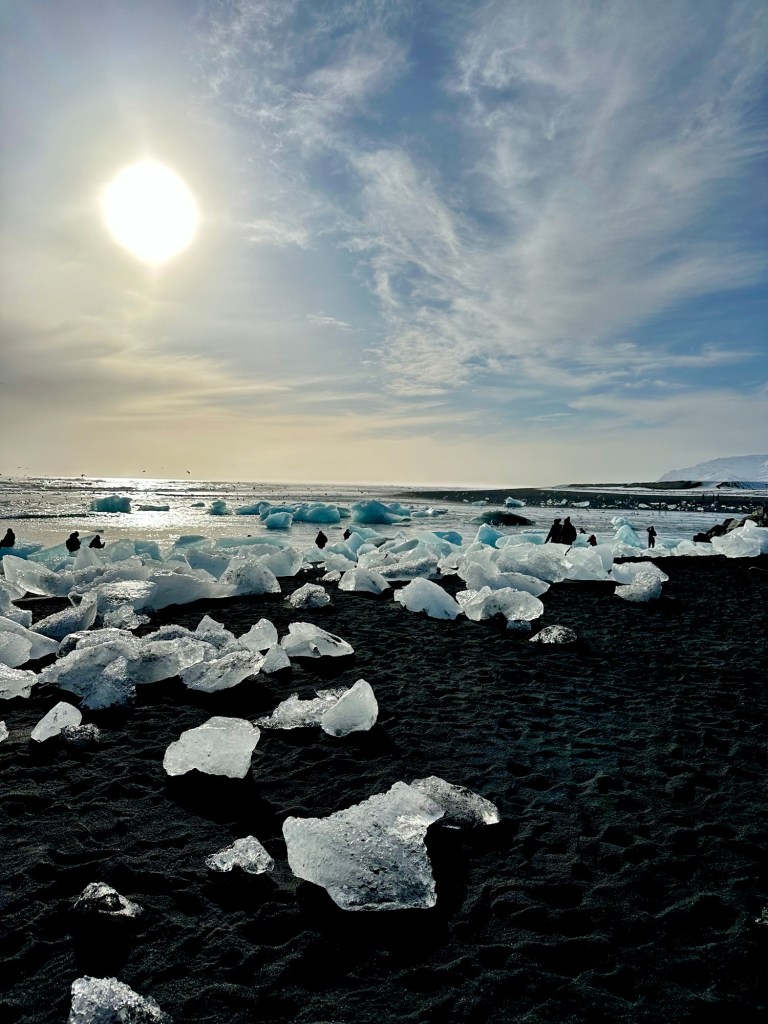
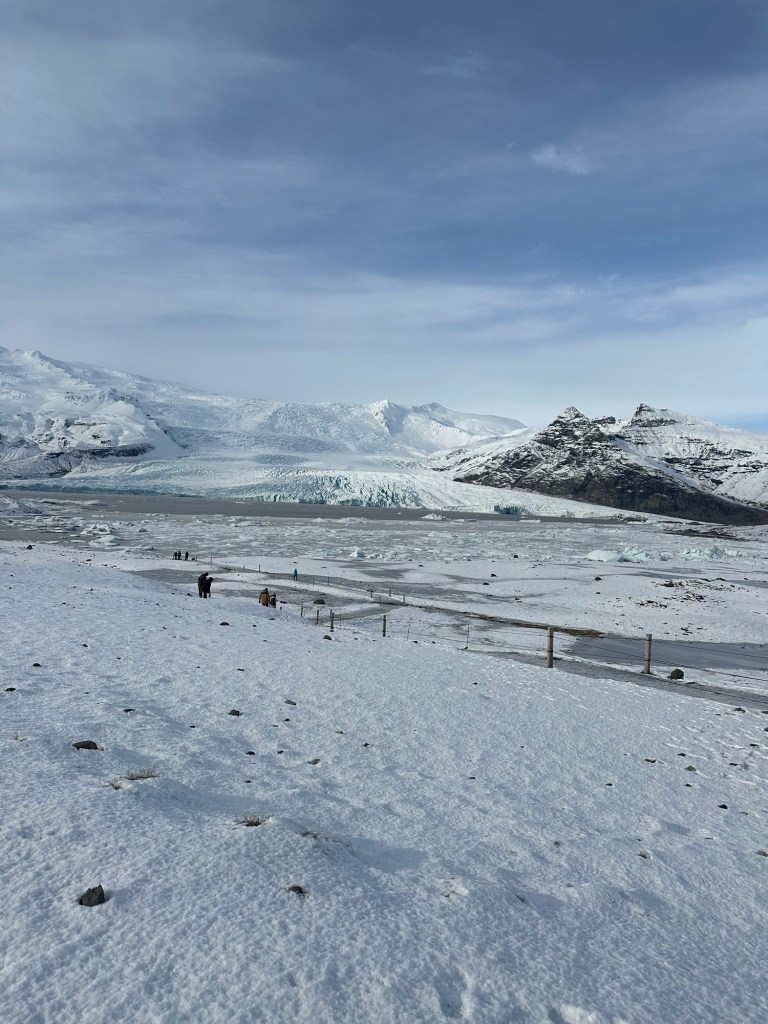
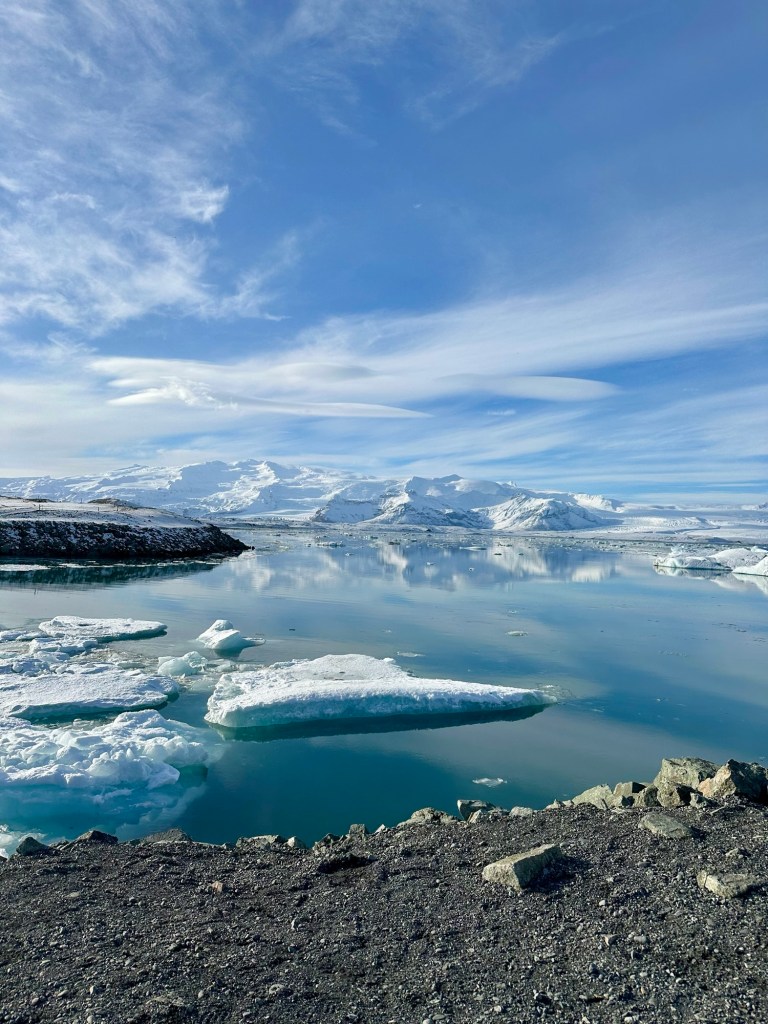
Today we traveled east in Iceland to view two glacial lagoons, Fjallsárlón and Jökulsárlón, in Vatnajökul National Park. We also visited Diamond Beach today, as well as many other tourist spots and national parks on our trip. Over the course of this trip, I have seen the most breathtaking natural sights. Our guide, Ólöf, tells us about the glacier movement and the melting of ice and its effects on the surrounding land. Additionally, we learned that tourism is Iceland’s largest industry. The conversations that accompany these beautiful natural features make me wonder about what they will look like decades from now from the consequences of global warming, natural land features, and tourism alike.
Climate change and global warming have enormous effects on glaciers and therefore the land surrounding them. As temperatures rise, the glaciers begin to retreat and melt. As ice melts, meltwater makes its way to the ocean causing rising sea levels. Likewise, the glaciers get lighter as they melt, reducing the pressure on the volcanic activity below them. Tourism contributes to glacier degradation indirectly through global warming from transportation greenhouse gas emissions as well as directly by physical damage from human activity.
For these reasons, it is important to promote sustainable tourism and practice conservation wherever possible. Sustainable tourism means staying on marked footpaths throughout the parks so as not to disturb the natural landscape, participating in environmentally friendly programs wherever possible, minimizing your carbon footprint, and more. Tourists can do their part to conserve national parks in Iceland and around the world. Similarly, national efforts are in place to promote sustainable land use and carbon neutrality. Iceland is extremely reliant on geothermal and renewable energy sources. Furthermore, they have strict regulations on infrastructure and tourism activities for historical and natural sites, and scientific monitoring of their glaciers and geological changes.
In summary, these efforts are important for preserving this beautiful land for centuries to come. With sustainable tourism and practicing conservation, it is possible to keep the ice in Iceland!
 Swanson School of Engineering