We started our day by heading back towards Reykjavik. going to a viewing platform to see the early-morning landscape. The view from the higher point extended the horizon so we saw further away. A mirage formed at the base of the mountain, making it appear to melt.
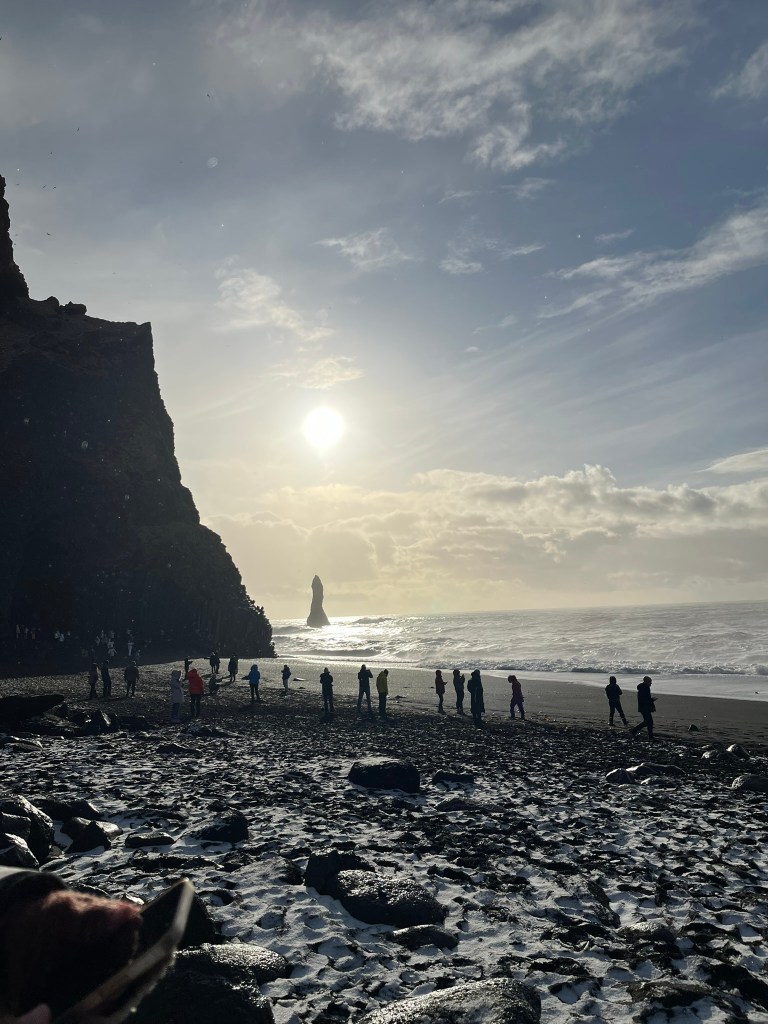
Our next stop was Reynisfjara, the famous black sand beach on the South Coast. The waves at this beach were larger than most due to the fact that the coastline quickly dropped off. In the United States, most beaches gradually slope upwards, leading to less intense swells. The sand on the beach is black due to volcanic rock that flowed into the ocean. The cooled lava was broken down over time by the powerful waves, which formed the sand.
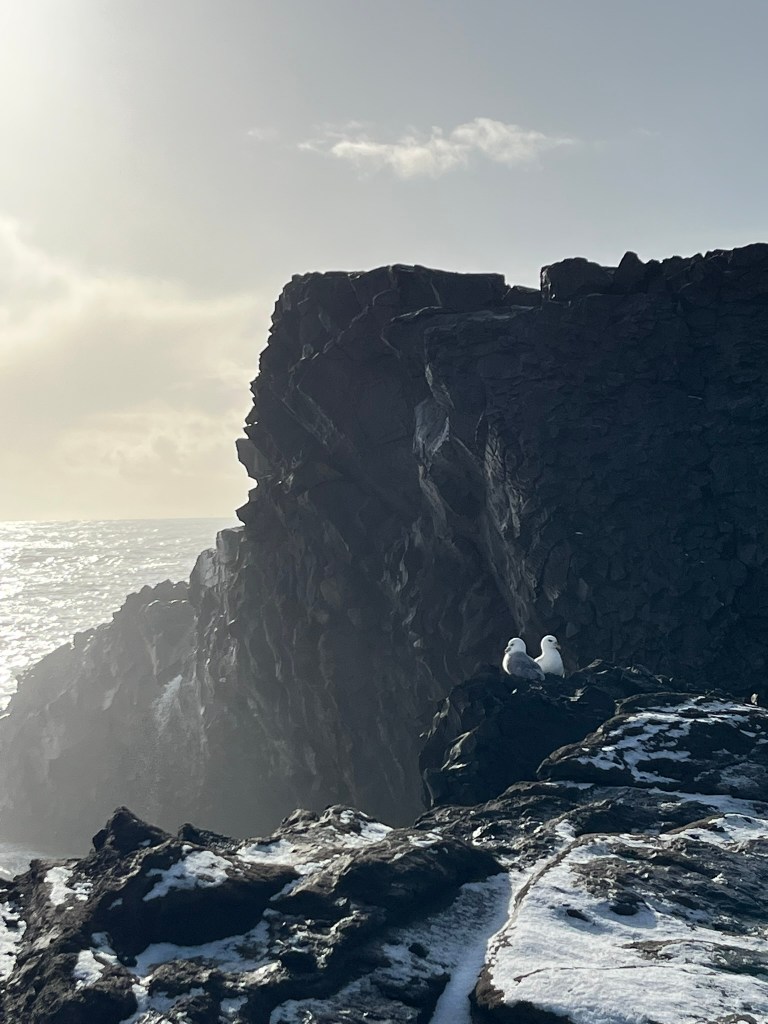
We then visited cliffs that overlooked Reynisfjara. There was a natural archway formed from the waves interacting with the cliff face. The cliffs formed from basalt and other rock formations.
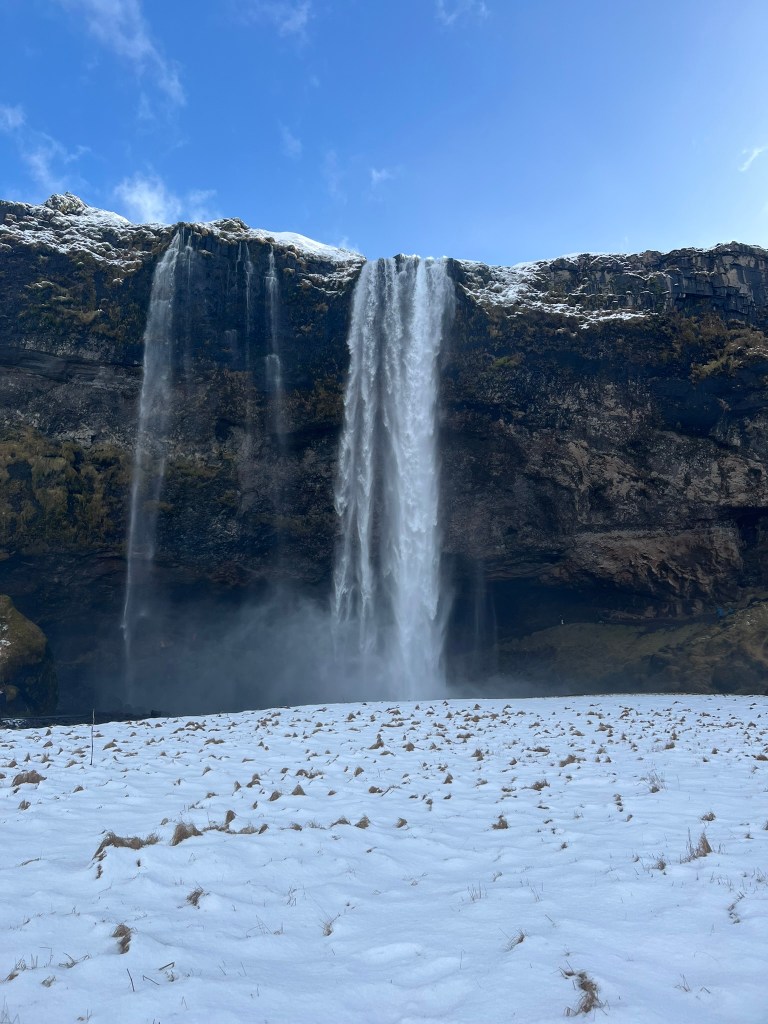
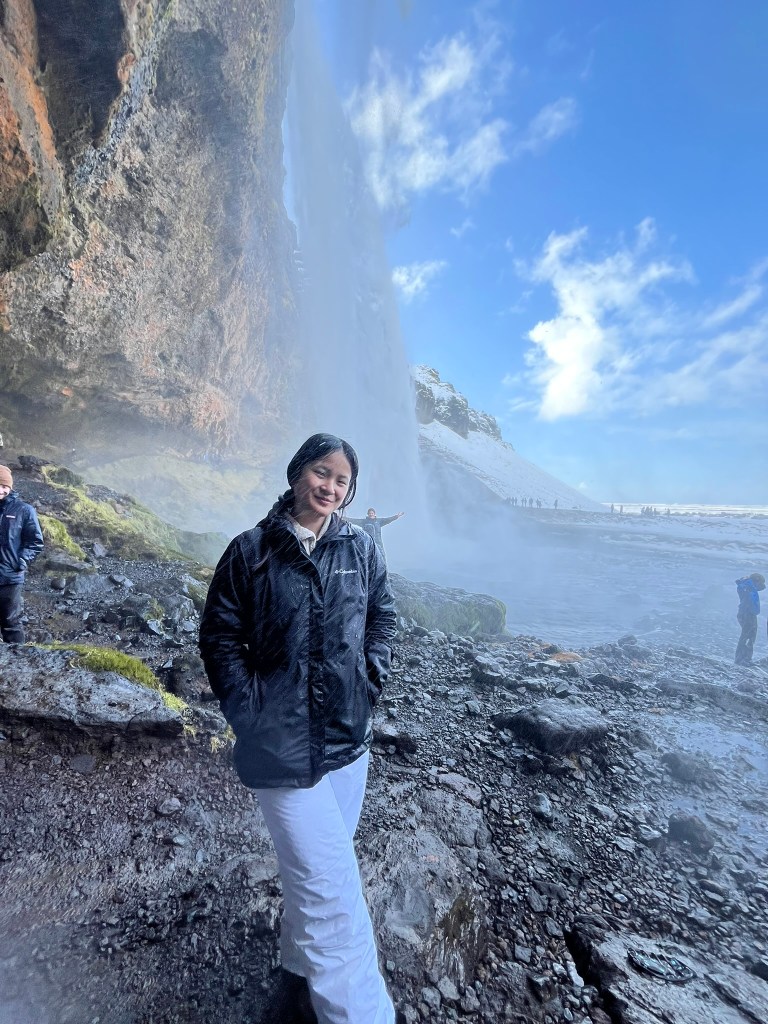
Seljalandsfoss was our next stop. This waterfall drops 60 meters and is part of the Seljalands River that originates in the volcano glacier Eyjafjallajökull. We were able to hike behind the waterfall. Thank goodness I had waterproof gear on because we got absolutely drenched.
The final stop before heading back to Reykjavik was the Kerid crater. This crater was formed from a glacier. It was a rare crater that left a hole below sea level. As a result, water rose to fill the hole and created a lake. The soil around the crater was red due to oxygenated iron mineral. We rolled snowballs from the top of the cliff down into the frozen lake!

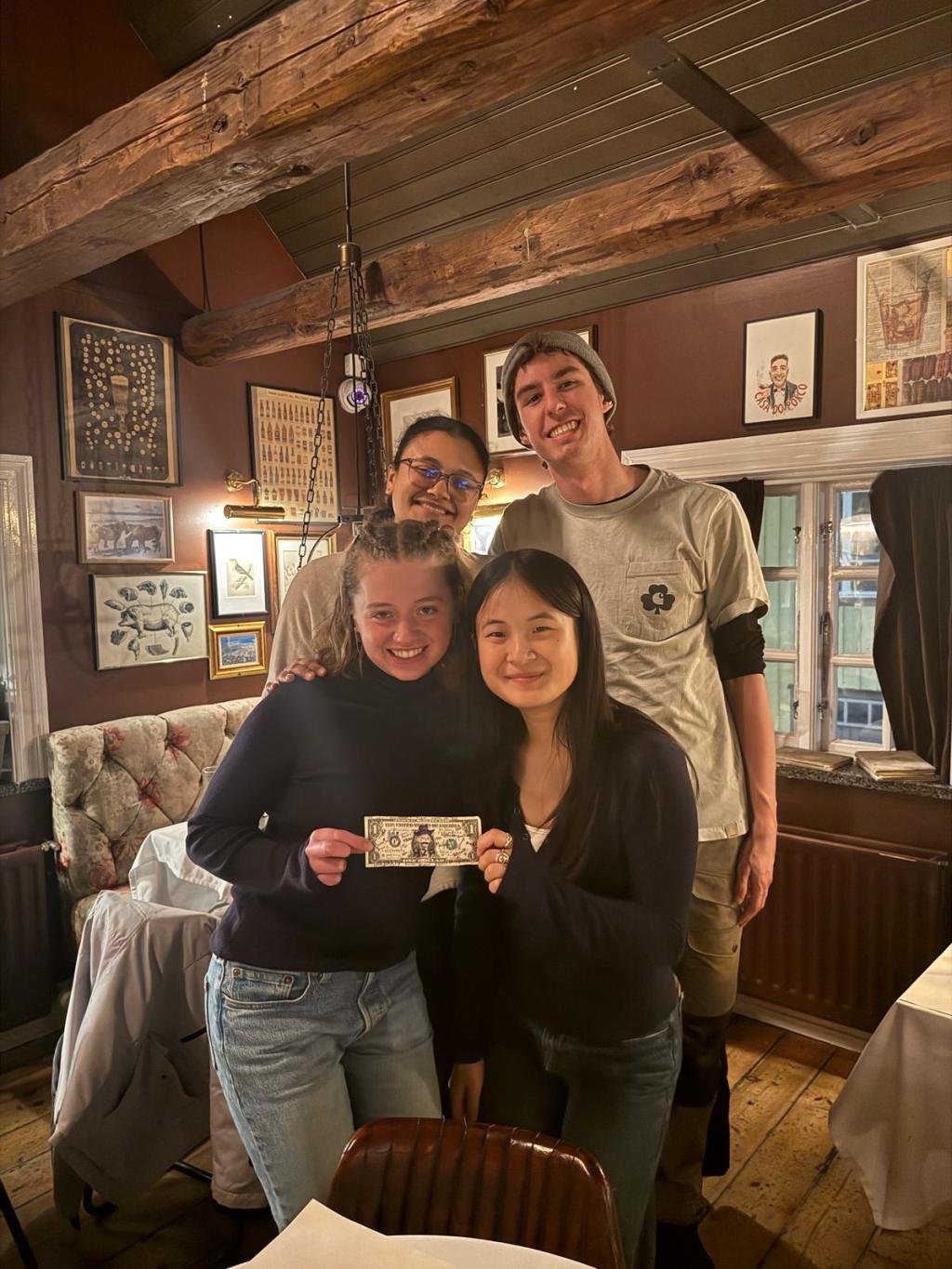
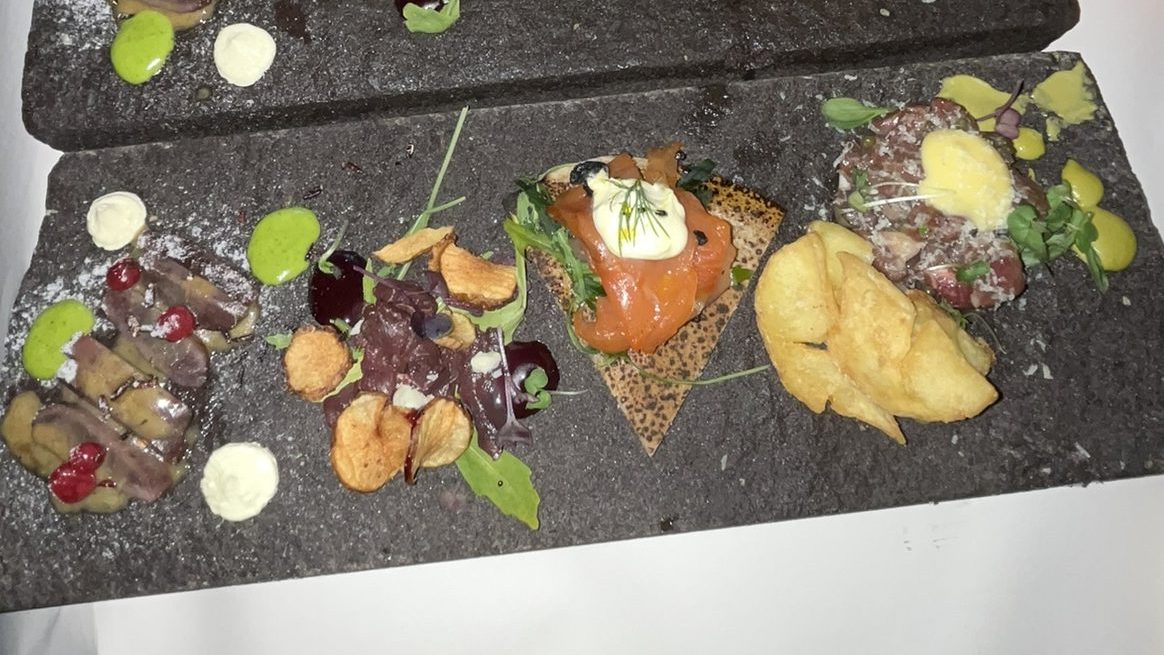
Once we arrived in our hotel in Reykjavik, we took a short 40 minute walk to The Sweet Pig Gastropub. Here, we were treated to a sampling of traditional Icelandic meals. There was horse tartar, puffin, lamb, and smoked Arctic char. The first two dishes were nothing like I had ever eaten before. I can only describe the texture as “mozzarella cheese”-esque. The flavors were also indescribable. They were incomparable to any meat I’ve eaten before. The lamb was earthy but was prepared differently than the lamb from our first dinner. The Arctic char was also textured like mozzarella cheese. It was not a fishy flavor, but rather a salty taste with a hint of fish. My favorite of the four was the horse. I definitely did not expect to like the horse meat the most as I believed that type of meat to be tough and sour, but it was not.
These dishes came to be a part of Icelandic cuisine due to necessity and convenience. Icelanders raised horses and sheep for work and wool. This means there were a lot of these animals during times of scarce food. Eating horses were also rooted in Pagan culture, where horses were sacrificed to the gods. Arctic char is native to Icelandic waters, so naturally Icelanders caught them. Puffins were also native to Iceland and easy to obtain.
I’m very thankful that I had the opportunity to try these dishes and immerse myself in Icelandic culture!
 Swanson School of Engineering