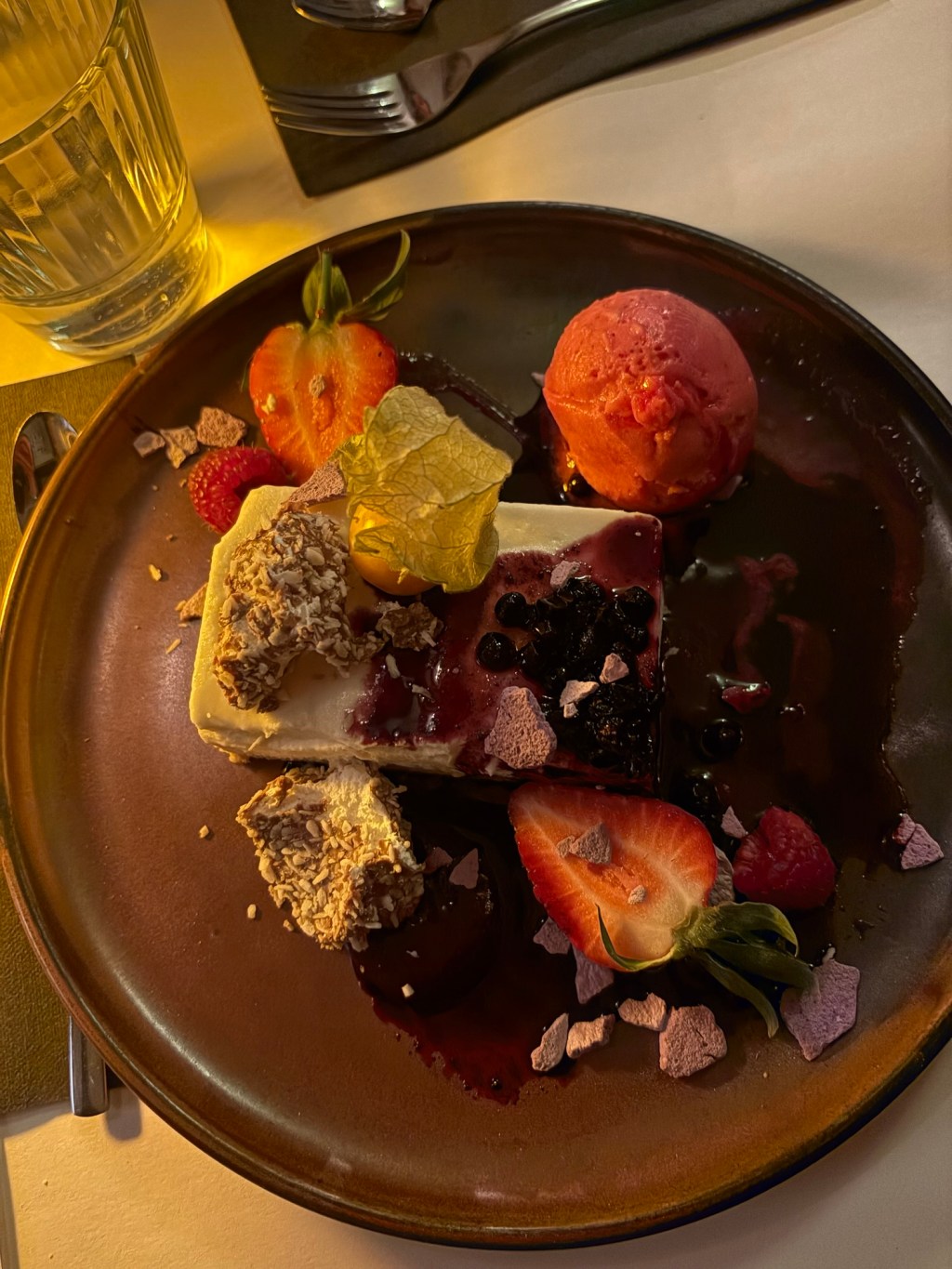
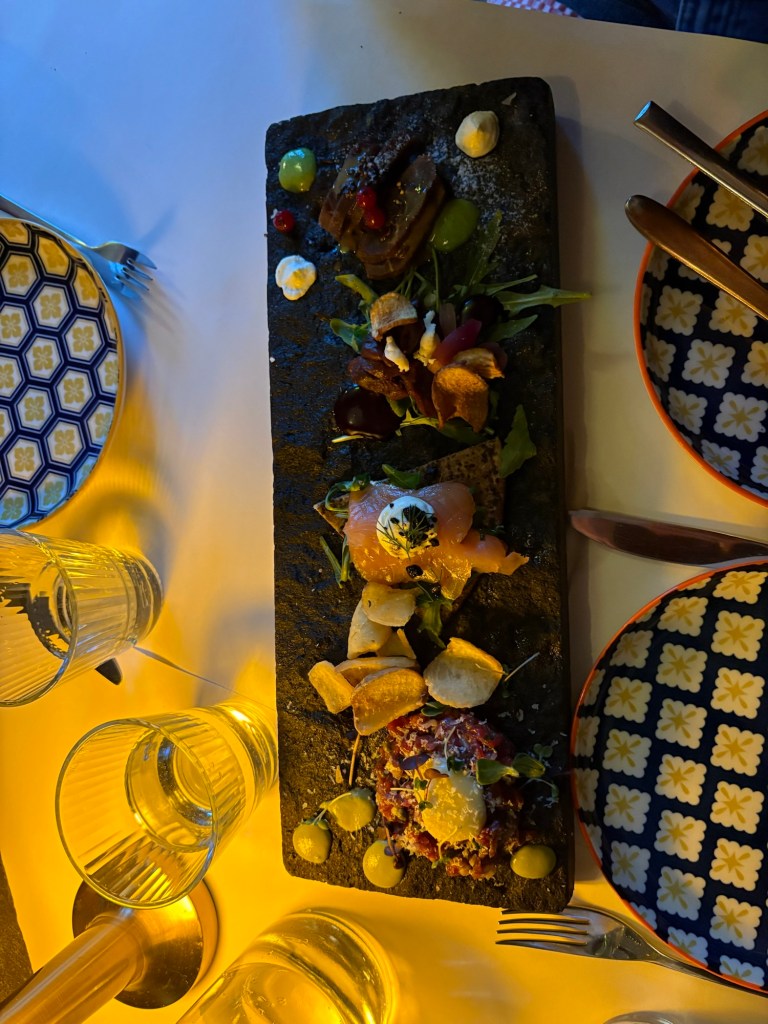
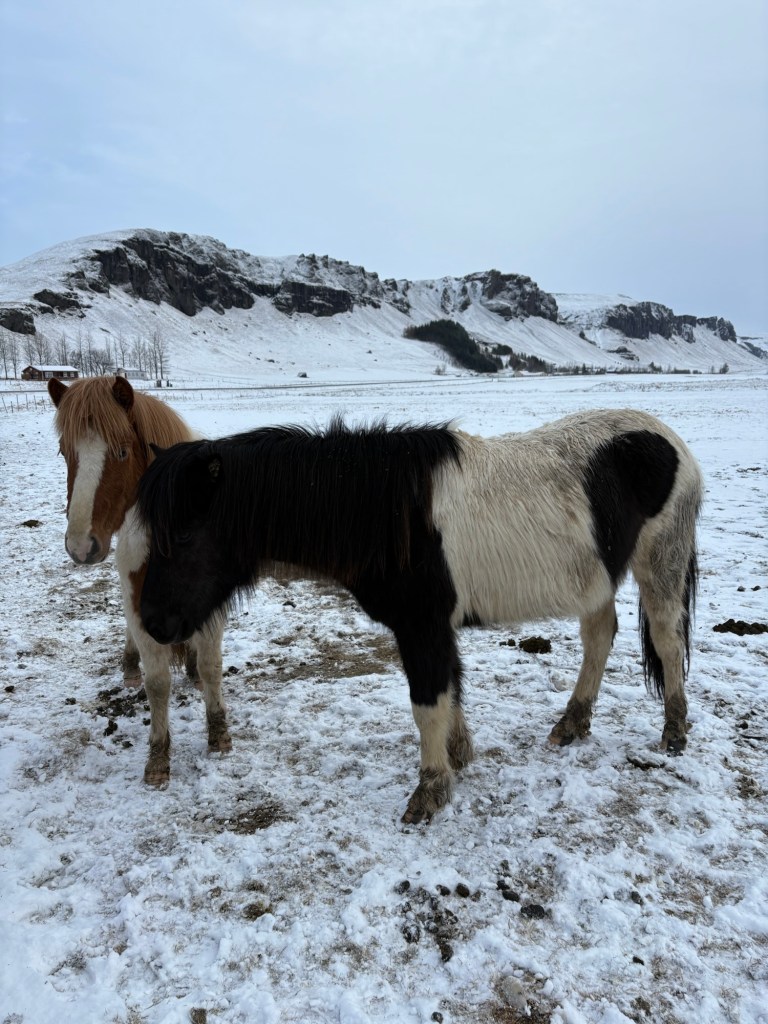
Today’s menu for dinner strays a little off my go-to dinner course of chicken tenders in the deep rooted tradition of South Oakland. As I expected, the food culture of Iceland varies heavily from any country or area I have had the opportunity to eat at before. Iceland’s variety of choices that feel far off the typical menu options were chosen due to a variety of features. It is evident that many options were heavily focused on the island’s overall climate and resources. These traditional Icelandic dishes often utilize what is on the land, locally sourced and preserved ingredients. My favorite dish on the menu tonight, the horse tartare, has historical significance, as horses were key to Icelandic life for much more than just a bite to eat. They were typically used for transportation, farming, and herding, and when they were no longer capable or needed, they were then used as a food source. Some other traditional dishes we tried tonight included smoked puffin, cured arctic char, and lamb tataki.
It is evident that the meals and foods chosen were intentionally chosen, shaped by Iceland’s geography and overall isolation. Our tour guide, Ólöf, explained to us earlier in the week that the preservation of food was essential for the survival of Icelanders. This further led to the creation of varying preservation options like drying, smoking, fermenting, etc. These methods helped Icelanders best survive living in their geographical location, facing long, harsh winters when fresh food was not widely available.
Although these traditional foods are still eaten and recognized in Iceland today, modern Icelandic cuisine has evolved, as we can see through the MANY gas station hot dogs, typically made of lamb, purchased throughout the course of this week. We can see how Icelanders have integrated their traditional foods while drawing influence and popularity from alternative nations’ cuisine options.
Earlier in the week, we also saw how Icelands tradition goes beyond their traditional ingredients, but their dedication and commitment to sustainability, now seen in food sourcing, including the agriculture of vegetables, such as the tomatoes we saw at Friðheimar greenhouse and their usage of renewable energy and resources for their production of goods.
Overall, I appreciate the chance and ability to try all the foods I experienced over this trip. I think a traditional meal or even just a simple dish that encapsulates nostalgia helps us see into someone else’s shoes, providing a stronger sense of understanding and connection between different cultures. Food is more than just a quick bite or sampler platter to taste test, there is a strong social aspect that allows us to share stories, bond with varying cultures, and embrace new perspectives.
 Swanson School of Engineering