I hail from a city of bridges, and their purpose lies beyond a piece of functional infrastructure; they serve as a point of pride for a city and its people. They stand as monuments to cooperation, hard work, and enduring labor in their ongoing maintenance. Bridges serve to connect otherwise distant or difficult to access communities, drawing both sides of the divide into a single, unified entity.
In the context of urban development, bridges not only activate otherwise disconnected economic lanes, but open opportunities for those across natural boundaries. Bridging the divide from a new residential development to an established industrial sector increases the pool of viable workers and drives an increase in economic output. Bridges also serve as both a function and symbol of stability. Large public works by nature, many rightly view their construction as permanent investment in the development of the area. Such dedication shows a commitment to further developments in the region and a positive outlook for continued economic growth. Populations see this and shift their own development to match, resulting in an increased level of public investment and presence in the affected region.
Behind the socio-economic veil is the inherent poeticism that lives within bridges of all kinds: that is, they quite literally bridge a divide. Bridges have been used historically to cross frontiers, serve as physical monuments to international friendships and agreements, and to tie together the ever-increasing complexity of human settlement. As previously mentioned, the psychological value of freshly connecting two disparate regions also begets a tangible response outside of sentiment. Since antiquity, though particularly with the rise of rail connections in the industrial revolution, bridges have taken on the symbol of forward technical progress. They display not only the engineering prowess of their time, but the insatiable human desire to overcome and surpass that which divides us.
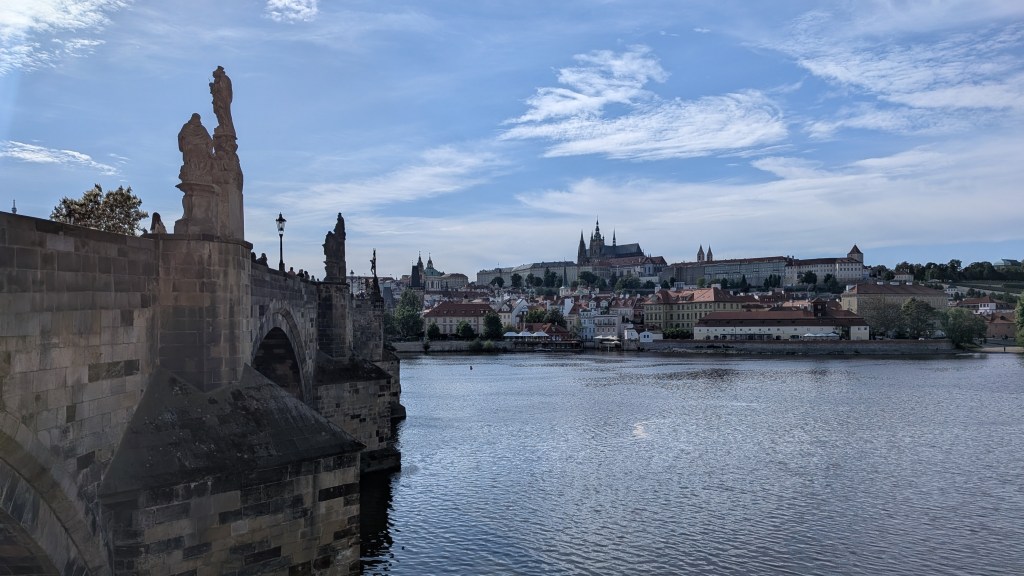
Prague’s Charles Bridge is an exemplar of these tenets. First constructed in 1357 the bridge not only connected the areas surrounding Prague Castle to the Old Town, but served as a monument to King Charles IV’s rule and legacy in shaping the Kingdom of Bohemia and now the Czech Republic. Embossed upon the main gate and lining the low walls that run the bridge’s length are various statues of saints and patron saints, representing the labor and continued investment poured into the bridge throughout its lifetime. Through the 17th and 18th centuries the bridge became a living testament to the artisans and religious folk of the community who worked to maintain and expand the cultural significance of the bridge, transforming it from a necessity of transport to a landmark easily identifiable with and by the community of Prague.
From their humble value proposition as a point of connection, bridges satisfy not only what practical requirements are thrust upon them, but the poetic and symbolic weight of those connections. Bridges here are not only the first step in physically joining communities, but in binding their constituents into a consistent sense of identity and self.
 Swanson School of Engineering