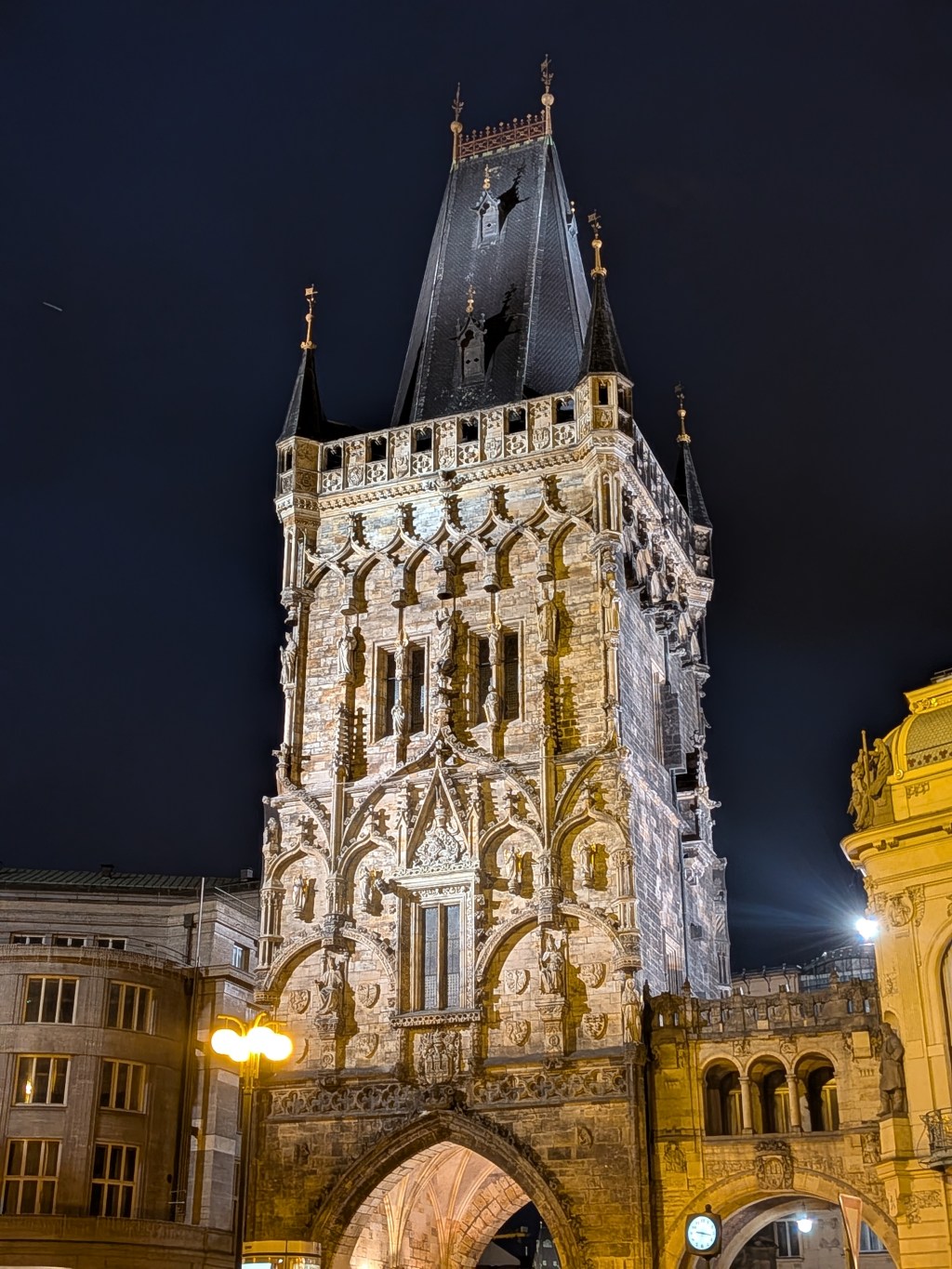
Prior to arriving in the Czech Republic my only lens toward its culture was through its shared history with Germany. Yet Czech is a West-Slavic language (not germanic), and its position in Central Europe establishes a unique and distinct cultural identity. Through a series of lectures hosted by Charles University, we were given the opportunity to see how this land nestled in the mountains was shaped by a diversity of resources and the various culture groups that surround it.
Throughout the ages many German-speaking peoples have settled in the country and contributed greatly to its development of science and engineering. Beyond Germans, though, were Austrians, Italians, Jews, and more who all forged communities in search of economic opportunity in the medieval era and prior. The expertise of the Germans and Italians was particularly useful in the development of silver mining in the central and northern areas of the country. This initial development not only fueled the regional economy (or rather enriched the ruling feudal families) for centuries, but lead to a deeper investment into the sciences and engineering techniques necessary for later expansions into arms manufacturing, and later, rail and logistics.
Arms manufacturing in particular was a cornerstone of the Bohemian economy through the Austro-Hungarian days. Reflected through a modern-day acquisition of Colt and rising demand from the nearby invasion of Ukraine, the Czech Republic has a long and enduring legacy of supplying the means of conflict; many times to both sides at once. Historically, the Jewish community took upon the role of brokering such deals. As was true in many other places in Europe, Jews were not allowed to own property for most of the region’s history. Their land-neutrality, combined with deep familial ties across different countries and cultures, positioned the community as the ultimate deal-makers without putting the rest of Bohemia into the crosshairs of any particular foreign power. As a result, the region experienced over a hundred years of steady and uninterrupted industrial development, providing the country with the manufacturing capacity to leap ahead into the automotive, aviation, and power sectors in more recent history.
While German presence was, and is, important and impactful in the Czech Republic, it was the historical presence of many neighboring ethnic groups, and the industrious culture of the native Czechs themselves, that switched something in my perception. This program had been billed as an investigation of engineering at the crossroads of Europe, and until now I didn’t quite understand what that would entail. Looking back to the hundreds of years of different cultures, languages, and political thought that has knit its way throughout a small yet so very historically dense region I now see the Czech Republic in a newer light. Beyond some central European state, it is a place of opportunity where people of all different backgrounds flock to develop a better future for themselves, and incidentally, their society. It is a trait I see reflected not only in the city of Prague, but also in the better parts of our own history in the United States.
 Swanson School of Engineering