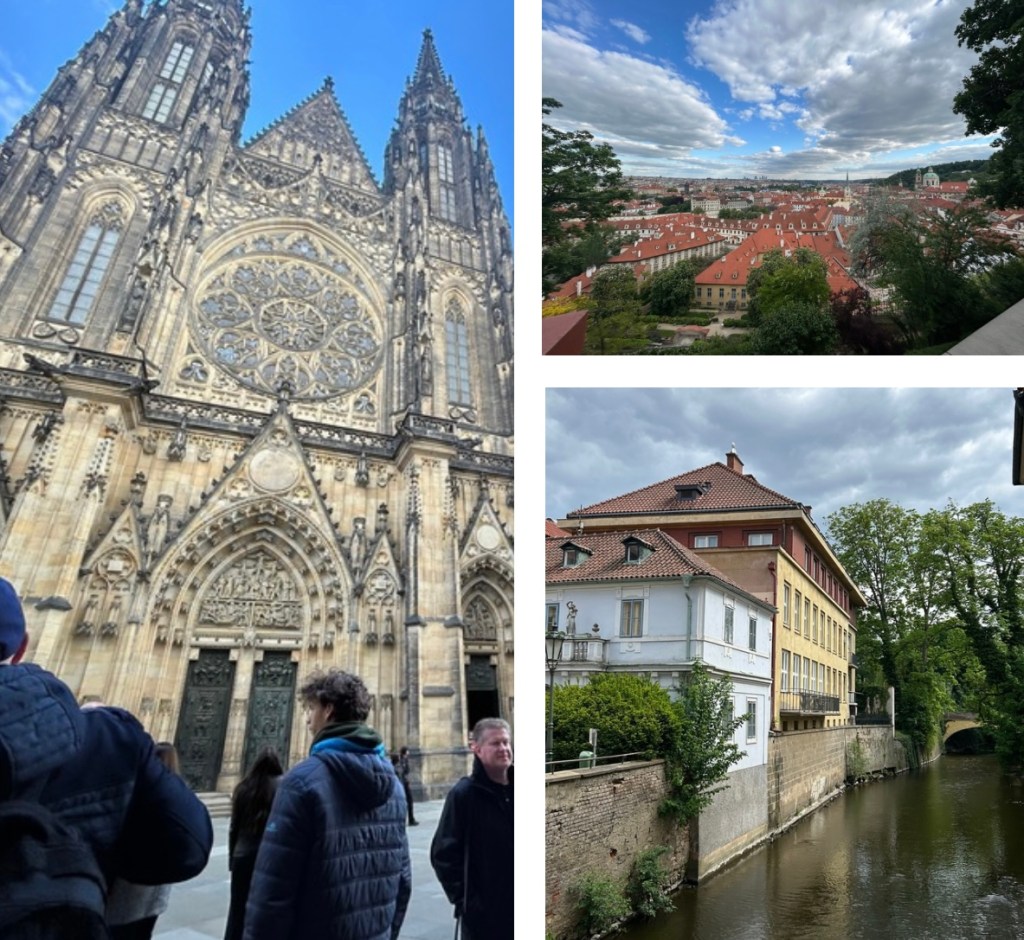
Our third day in Prague began with a hands-on cooking class, where we prepared a traditional three-course Czech meal: kulajda (a creamy mushroom soup), Carlsbad dumplings, and potato lokše. I was struck by how deeply Czech culinary traditions reflect values of resourcefulness and seasonality. For example, the dumplings were made from leftover bread—highlighting a cultural emphasis on minimizing waste. The use of mushrooms in kulajda revealed the significance of mushroom foraging in Czech life, especially during the fall picking season. I also discovered the popularity of plum jam and learned to make potato lokše, pancakes made from potatoes and flour. This experience gave me a deeper appreciation for the richness and practicality of Czech cuisine. Later, during our walking tour of Prague’s Lesser Town, I began to notice the city’s layered engineering history. From the mechanical systems like tram rails and Škoda cars, to civil structures like the beautiful bridges spanning the city, and even chemical applications such as beer-based cosmetics, I saw how different branches of engineering intertwine with daily life in Prague. The most surprising part of the Prague Castle visit was St. Vitus Cathedral, which took over 600 years to complete—an incredible testament to the Czech people’s perseverance. Seeing the sculpture of Edvard Beneš, who led the Czechoslovak government-in-exile during World War II, reminded me of the country’s deep-rooted resilience. These moments made me realize how history, culture, and values are embedded not just in stories, but in architecture, food, and the spirit of the people.
- Comment
- Reblog
-
Subscribe
Subscribed
Already have a WordPress.com account? Log in now.
 Swanson School of Engineering