Today was one of the more sobering days of our time in the Czech Republic. We visited Terezín, a former military garrison that was repurposed during World War II as a transition camp for Jews who were being deported. The journey there took about an hour from Prague, but the emotional weight of what we saw made the distance feel much longer.
The first thing we encountered was a mass grave a burial site for approximately 10,000 people who perished during that tragic period. Although we’ve all learned about it in school, there’s something profoundly different about standing in the very place where it happened. Walking through the camp, we saw the original cells where over 600 people were packed together in unbearable conditions. It was heartbreaking to imagine their suffering. The Czech government has preserved these structures remarkably well from the bunk beds to the washrooms allowing visitors to confront this history in a raw, unfiltered way. Which again highlights their efficiency in historical preservation.
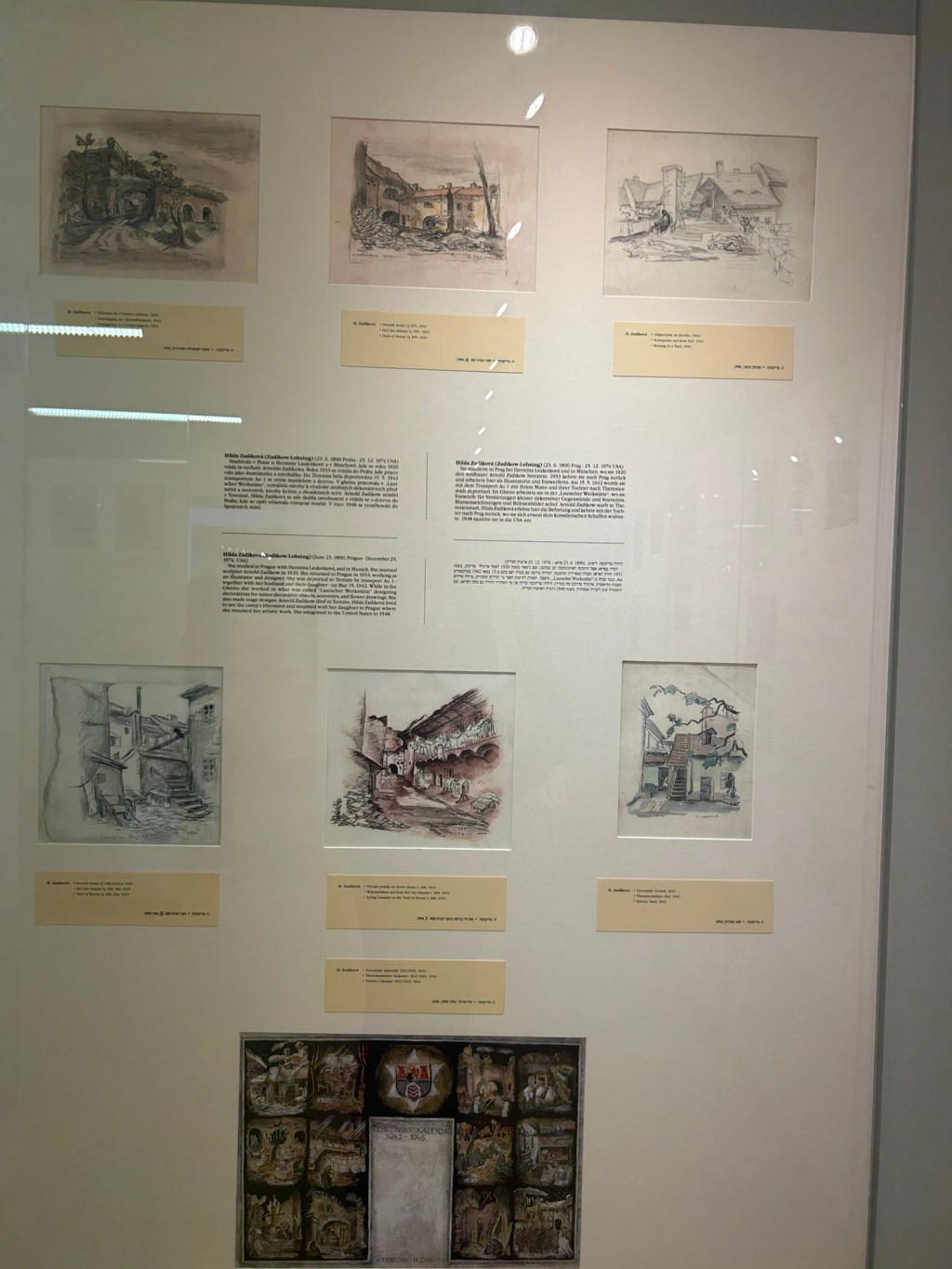
But what struck me the most was how even in the darkest of times, people still turned to art. Despite the pain and fear, Jewish prisoners—both children and adults found strength in painting, writing, and performing music and theatre. There was a defiant beauty in that. It reminded me that human creativity is not just an expression of joy, but often a survival mechanism. Their art was not only a form of resistance it was a source of solace and dignity.
Later that evening, in stark contrast to the day’s earlier tone, I attended a Czech soccer game. I’ve always loved soccer, but I wasn’t prepared for the level of passion I witnessed here. Czech fans are intense—and I mean that in the best way possible. The stadium was packed with energy. Everyone knew the chants, from kids to grandparents, and the entire arena vibrated with excitement. Soccer here isn’t just a game it’s a community ritual. The Czech Republic has a proud football tradition, with clubs like Slavia Prague and Sparta Prague (which were the playing teams) boasting long histories and deep fan bases. Even after such a somber start to the day, the match was a vivid reminder of the country’s spirit and resilience.
Today was a journey through grief, reflection, and cultural pride. It reminded me of the power of both memory and unity whether expressed through art, history, or the roar of a soccer crowd
 Swanson School of Engineering