Today we went to Terezín, which is about an hour away from Prague. The name Terezín comes from Empress Maria Theresa of Austria-Hungary. Her son ordered the construction of the fortress Theresienstadt to strengthen the border against Prussia and named the fortress Terezín in her honor. The fortress functioned as a prison and at one point housed Gavrilo Princip, the Bosnian Serb student who assassinated Archduke Franz Ferdinand—an event that triggered the First World War. When the Nazis gained control of the region, they used Terezín as a concentration camp which was a final stop before sending people to Auschwitz to be exterminated.
This was an extremely difficult tour, as we walked around the camp and tried to imagine how 100 people could have lived in such cramped quarters. Prisoners had to wake up at 4 a.m. every day and work from 6 a.m. to 6 p.m. with no food in between. They were only given a small dinner afterward. We learned about the immense suffering—many starved or died from typhoid, and some were executed there.
Outside the fortress was a town that the Nazis turned into a Jewish ghetto. Before the war, it had about 7,000 residents. At its peak under Nazi control, the population was 58,000. With so many people packed into tight spaces, sanitation was extremely poor, and many died from disease.
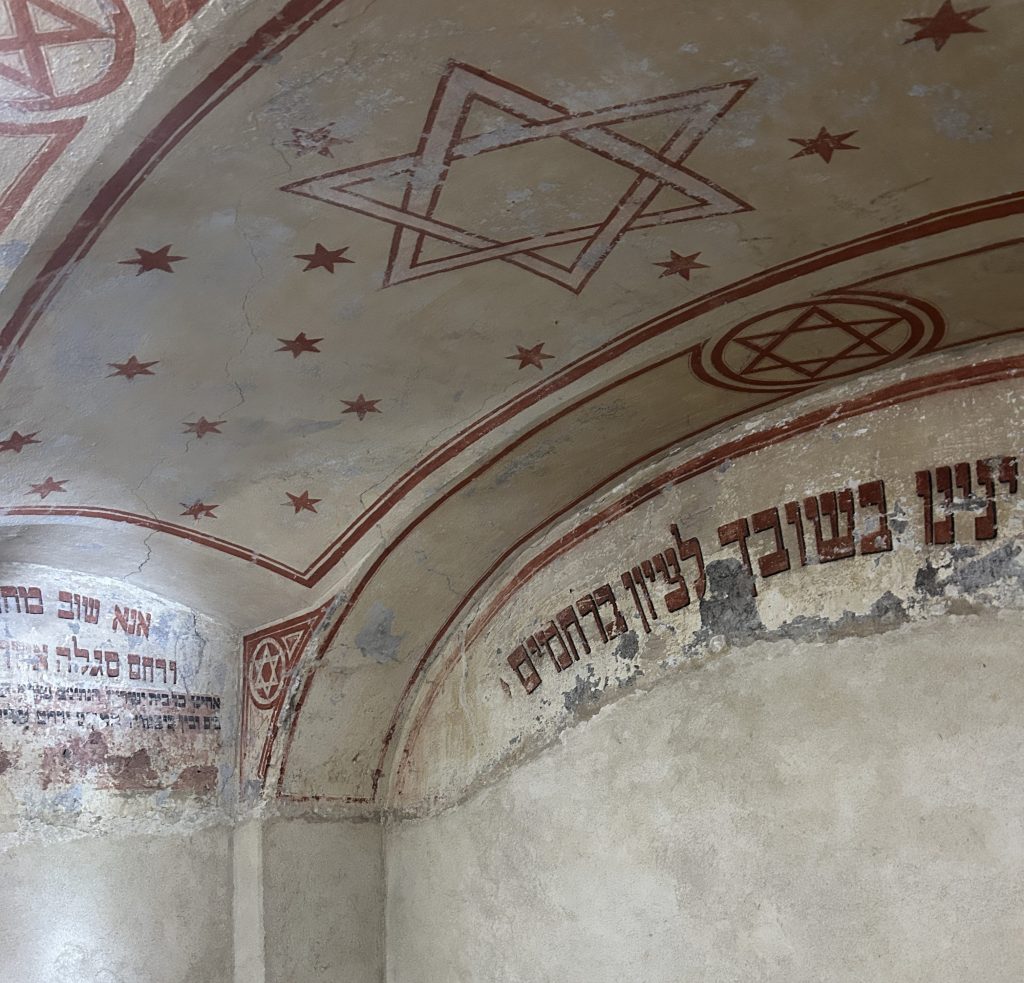
The way these people were treated was absolutely horrific, and they had little power to change their situation. However, they did not just sit and wait to die. Despite the oppression, art flourished. People wrote poetry after long workdays and created music and visual art. Musicians like Hans Krása and Pavel Haas composed music while living in the ghetto. Decades after the war, a family revealed that their home had contained a secret prayer room where Jews met with a rabbi and worshipped together. The room was decorated with art and hope.
As we walked through the Magdeburg Barracks Terezín Memorial Museum, we saw walls filled with art. Much of it expressed the pain these people experienced—rooms with figures lying lifeless, black-and-white sketches of silhouettes, and yet hopeful watercolors of the rolling hills beyond the ghetto. I was grateful to see it in person and understand how much suffering there was. Artistic expression and worship helped these people endure—and in many ways, that was a form of resistance in itself.
 Swanson School of Engineering