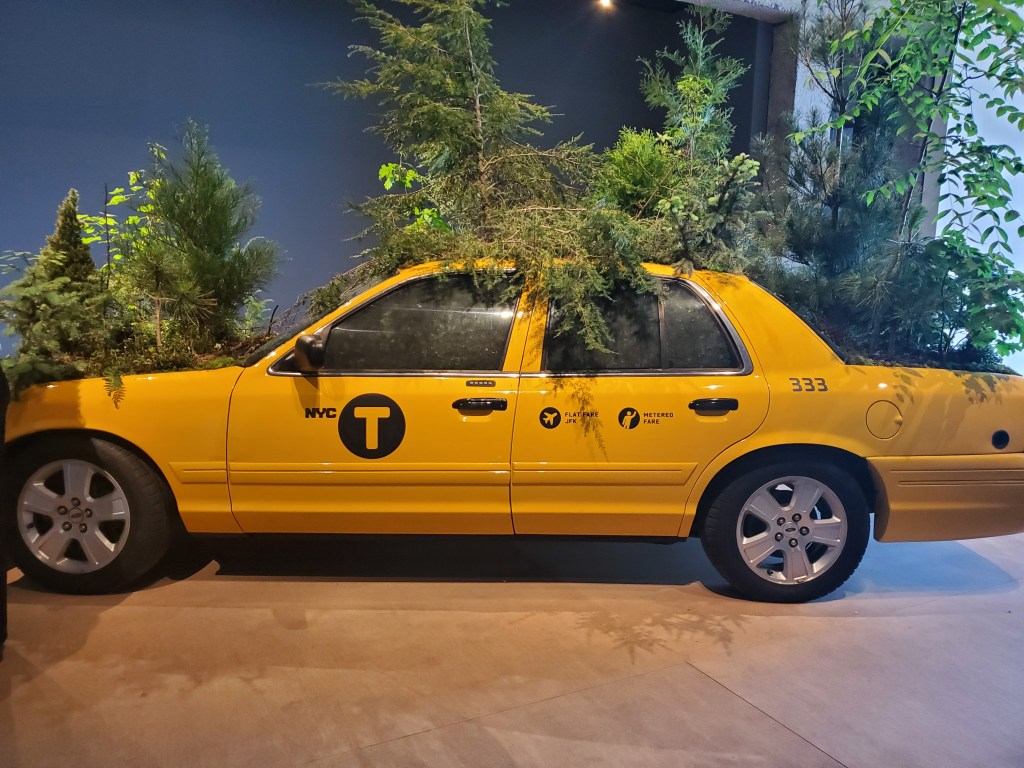
This afternoon, we visited the KunstHalle Praha. A KunstHalle (a German word) is a museum that displays temporary art exhibitions. This trend grew when photos replaced the need for artists to make realistic paintings, and when artists turned to making art freely (and to profit) rather than only by commission. The KunstHalle here was founded in 2015 by a couple and focuses on 20th-21st century art; the building was bought and extensively remodeled, and the museum opened in 2022. The building was the city’s transformer station since the 1930s, providing electricity to power Prague’s trams. It still contains the transformers, but thanks to modern smaller technology, they’re housed in the basement only. We were told about the renovation: how they created a new building on the inside (leaving the facade per Prague’s regulations about buildings in the historic towns), all while the transformers kept working. The architecture and interior design blend the new with the old, involving things like exposed cement walls and copper in the floor tiles to pay homage to the building’s original purpose.
We toured the multiple basements, containing HVAC systems and the art storage area. I learned about the incredible care that goes into storing and displaying artwork: they’re insured and only touched with gloves, they must be kept at certain temperatures and humidities, there are sensors in each room to constantly monitor the climate. We also visited the one current exhibition and several rooms where exhibits have yet to be installed. The latter gave me an appreciation for “exhibit architecture”: temporary walls erected to best display the coming art, how they’re painted, potential lighting arrangements, the room’s ventilation sources. There’s so much behind the scenes, that often goes unnoticed!
The museum was an interesting bridge between art and science, and required creativity and resilience (through the pandemic’s supply issues) from those who redesigned it. In the big picture, this is similar to all engineering. In my and my peers’ future careers, we must consider both function (its purpose) and form (aesthetics, how it’s used, how people interact with it) when designing things. We’ll have to be creative and make compromises between features. This is what I enjoy about engineering: blending art and technical science, to create something new.
 Swanson School of Engineering