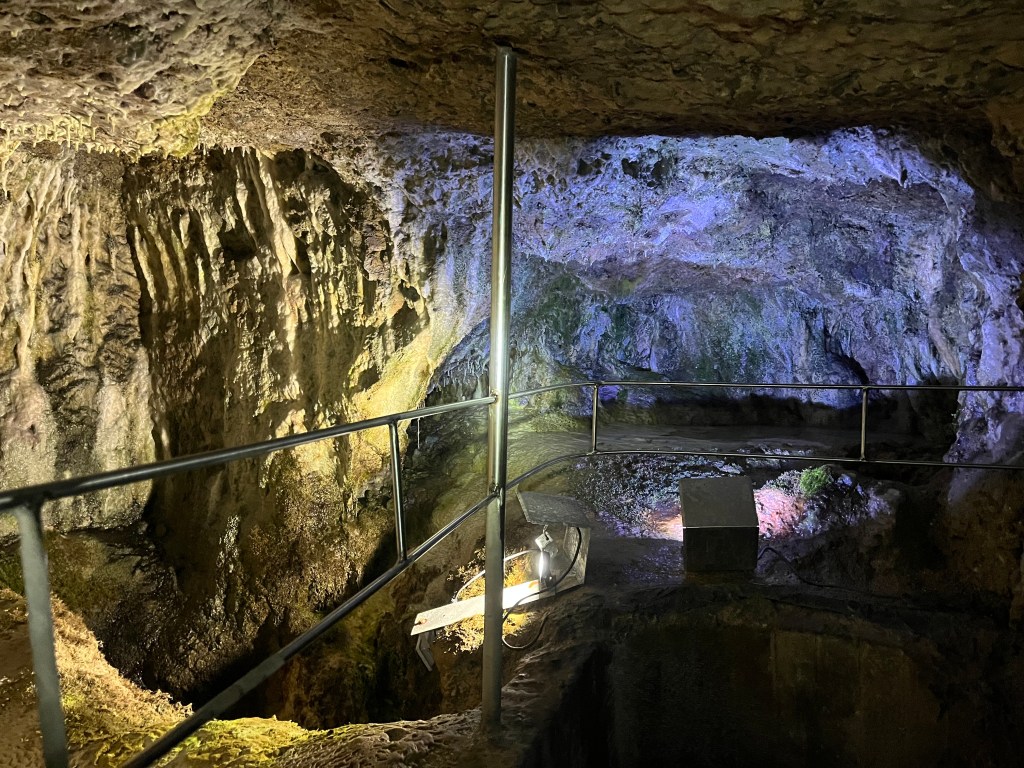
After spending many days of our trip learning about Prague from the 1700s to the present, we visited Kutná Hora. About a 90 minute drive from the city of Prague, Kutná Hora was first settled in the 13th century by monks after they discovered silver deposits in the ground. Kutná refers to the kind of hats that were worn by the monks of the time and Hora refers to the mining that broke out across the region for not only silver, but copper as well.
Much like 20th century miners in the United States, the silver miners of the 13th and 14th centuries led very difficult lives. These medieval miners lived usually a maximum of 40 years and faced true danger at every turn, but they chose to stay for the promise of wealth that made many of them extremely rich. The industry leaders became so wealthy at the time in fact, that they began to rival the Catholic church, building St. Barbara’s cathedral in 1388.
What most impressed me about our tour of the silver mines was the ingenuity and bravery of each of the miners. Using only very simple hand tools and protective gear, they managed to navigate around and dig kilometers of caverns with little more than the light produced by a match. Thanks to their efforts, in the 14th century, Kutná Hora became a medieval metropolis, something that would be completely overlooked if you only saw the beautifully quaint town today. The process of minting the Prague groschen was known all around Europe and was the perfect example of just how influential the Czech Republic has been for 8 centuries. I thoroughly enjoyed our visit, and learning about medieval history that predates that of the United States by over 4 centuries.
 Swanson School of Engineering