
Today we drove an hour and a half to a company called ČEZ. They supply various types of energy to the Czech Republic and surrounding countries. We toured their coal power plant and later visited their open-pit mine. We learned that ČEZ is phasing out all of their coal power plants and transitioning to natural gas and nuclear energy. By 2030, their coal power plants will be out of commission.
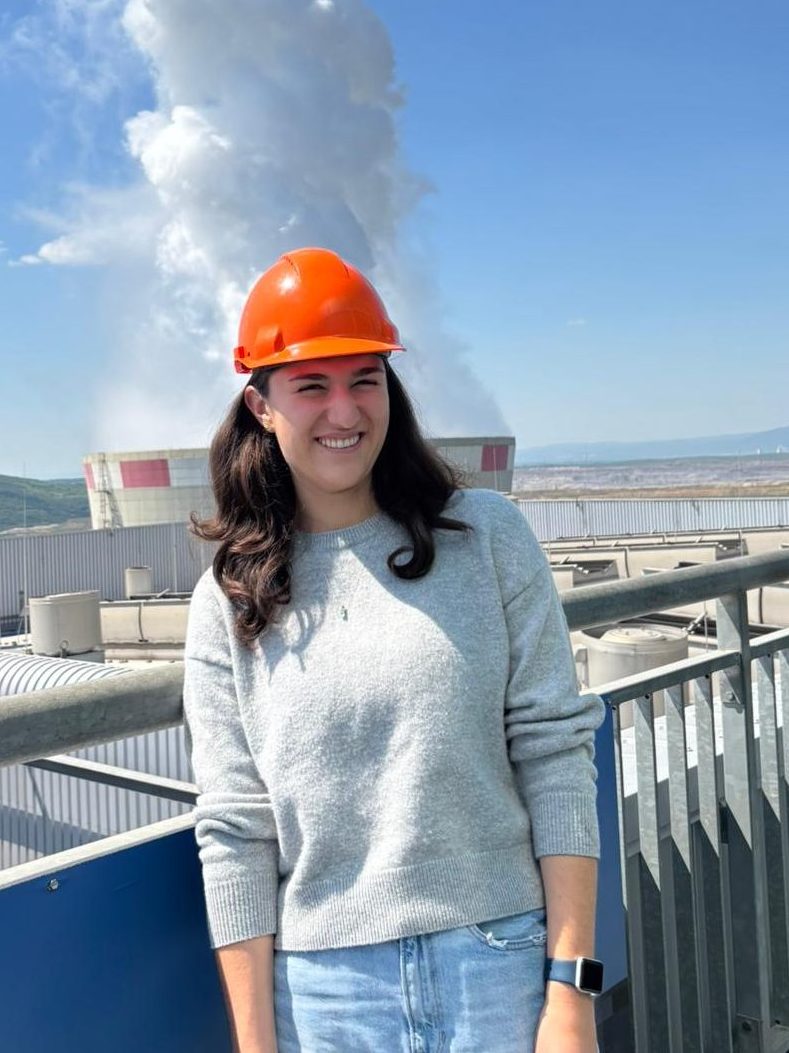
We began the day with a talk from ČEZ, and I was surprised by how much overlap there was with the classes I’ve taken at Pitt and my internship. They spoke about flue gas, cooling towers, and air requirements, which immediately brought to mind my air quality class from this semester. There was also an on-site water treatment system, which I hadn’t realized. Our speaker explained how they create water that is clean and pure enough to be used throughout the system. Thanks to my internship last summer, I was already familiar with process diagrams, but it was still amazing to see how nearly 100 different processes are involved in generating energy from coal and treating the resulting waste products.
The first tour was of the power plant facility, and it was incredible how many levels there were in the main building. Good thing I’m not afraid of heights! We walked over grates and looked down to see endless pipes and pumps, with the floor nowhere in sight. At the top of the facility, we saw steam rising from the cooling tower and had a great view of the small nearby town. It was also endearing to learn that ČEZ has had a nest box for endangered peregrine falcons since 2015, and that 1–3 chicks are raised there each year.
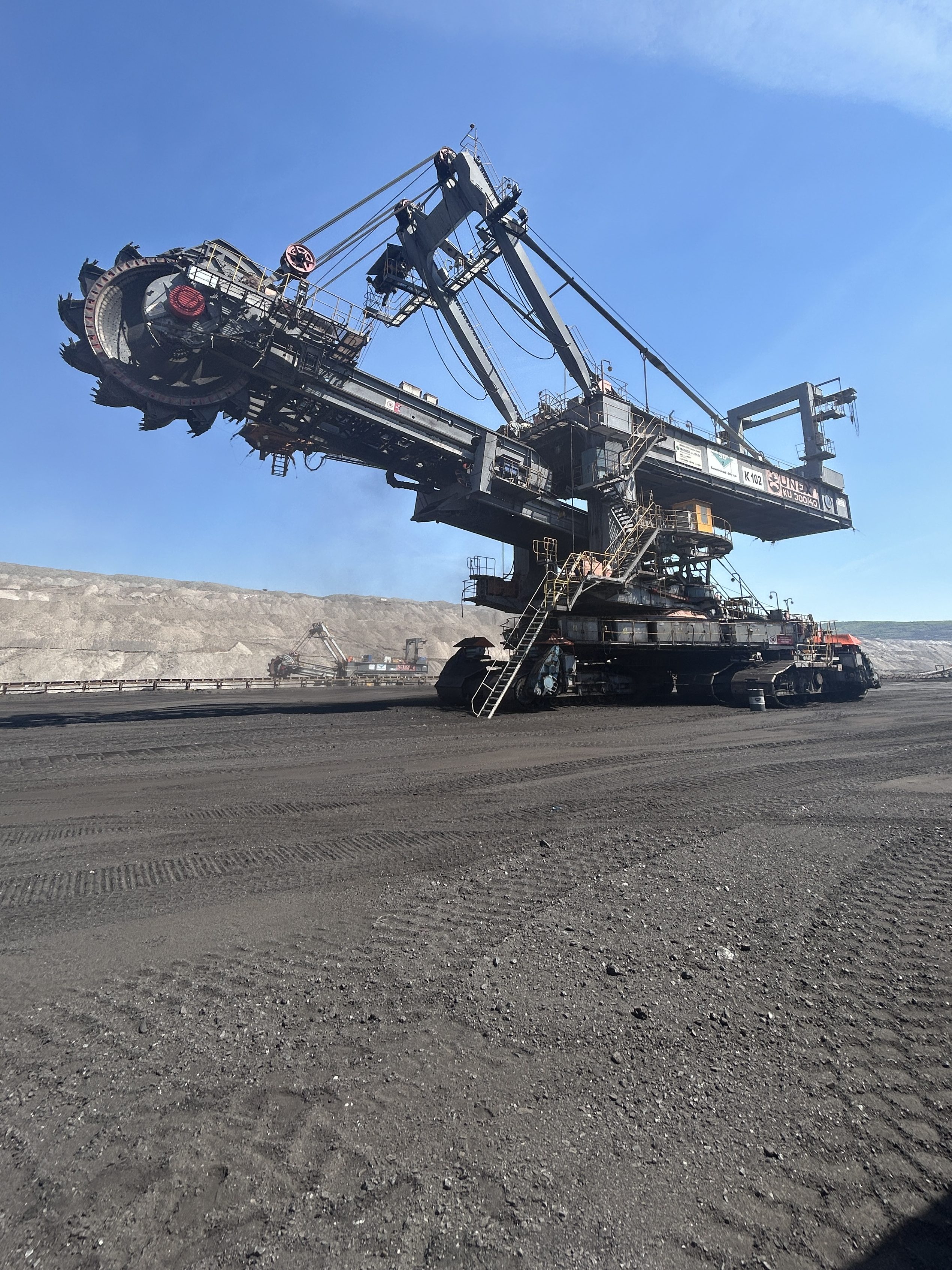
Our second tour was to the mine site. As an environmental engineer, my first reaction was horror. The mine, which began operations around 1960, spans an enormous area. We drove what felt like forever to get halfway down to where the massive coal-collecting machines operate. They reminded me of Star Wars machines crossing the desert. This mine is already slowing down production and will be completely closed by 2030. We learned that the company is required to restore the land, and at the end of the tour, we saw their reforestation efforts. The land will never be what it once was, but it was reassuring to see efforts to make it livable again for wildlife. I remember being deep in the mine and seeing a lone bee, and just feeling bad for it.
Something else I noticed during this trip that I wanted to mention: on drives through the suburbs of the Czech Republic, you’ll notice rolling fields of yellow. It’s beautiful and feels almost unreal. I learned that these fields are subsidized by the government, and the yellow flowers are canola—grown for biofuel. At first, it sounded like a great idea, but I learned from our host that many people in the Czech Republic actually dislike the plant. They say it smells bad and is ugly. According to Jakub Hruška from the Czech Academy of Sciences, the plant damages water, soil, and biodiversity. Canola requires a lot of pesticides, which are particularly harmful to the environment. The main beneficiary of the investment in these crops is actually the Prime Minister, Andrej Babiš.
This was a learning moment for me. It reminded me that even when something seems like a good idea, it’s important to consider how it affects the people and environment most directly impacted. This is a valuable anecdote to remember when I am working as an engineer in the future!
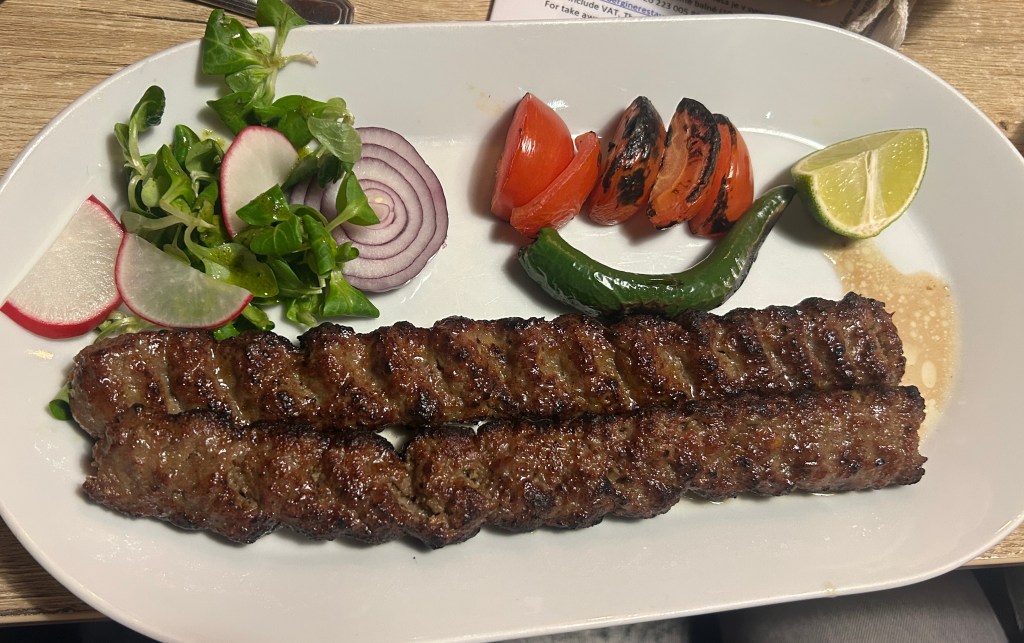
Lastly, the day ended on a highlight—I discovered that the best Persian kabobs in Prague are at Aubergine Persian Restaurant! As the trip starts to wind down, I’m trying to see and experience as much as I can.
 Swanson School of Engineering