Our visit to the Institute of Organic Chemistry and Biochemistry was mind-blowing. I was particularly fascinated by the cancer treatment research focused on the Lact B protein, discovered by the brilliant Dr. Zuzana Koledová. Her insight—that heart and joint cancers are relatively rare compared to breast and liver cancers—led her to investigate protective proteins. The team has already tested the treatment on mice with exceptional results, showing the compound selectively kills cancer cells while sparing healthy ones. The upcoming toxicity and clinical trials are an exciting next step.
I was also deeply impressed by the Kaleta Group’s work on the design, synthesis, and study of molecular machines—rotors, motors, and switches at the nanoscale. Their research aims to develop functional molecular systems for applications in nanotechnology, materials science, and molecular electronics. This intersects with my engineering interests, especially in the use of advanced imaging, spectroscopy, microscopy, and laser excitation—technologies rooted in physics and quantum mechanics. I was thrilled to learn that their team collaborates with a group specializing in quantum computing simulations, which ties directly into my passion for physics-based engineering solutions.
Government-supported research institutions like the Czech Academy of Sciences play a vital role in advancing engineering and science. They provide a stable foundation for long-term research, foster interdisciplinary collaboration, and support innovative thinking without the pressures of commercialization. This ecosystem is crucial for technological progress and enables scientists and engineers to focus on high-impact work.
Today’s most significant cultural challenge was navigating a language barrier. While on the cruise, I struggled to communicate with a server who only spoke Czech and seemed frustrated. It was an uncomfortable moment, but I remained calm, tried to use gestures, and eventually managed to communicate. It reminded me of the importance of patience and cultural awareness.
In the afternoon, I visited the Military History Institute in Prague with my roommate. We explored artifacts spanning from the 16th to the 21st century—including weapons, uniforms, passports, and communication devices. I was struck by the weight of history contained in that building, and while I was amazed by the technological evolution, I also felt sadness reflecting on the role of war in driving so much of it.
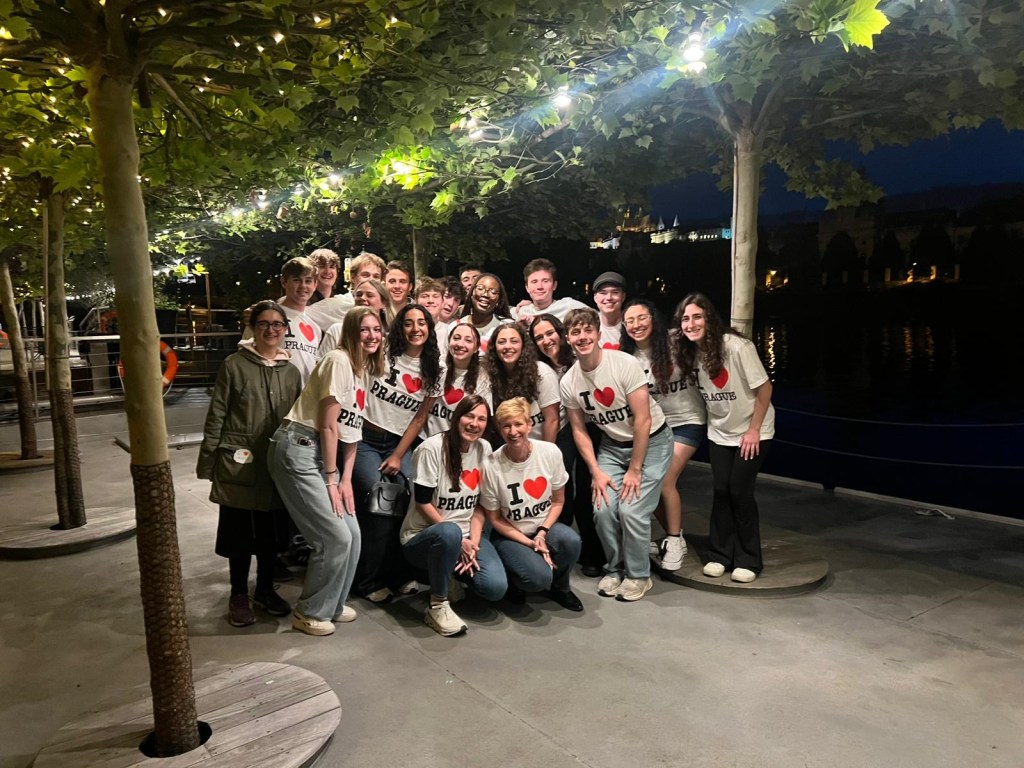
During the Vltava River Cruise, I observed the remarkable integration of Prague’s urban planning with its natural environment. The city’s architecture flowed seamlessly along the riverbanks, and the historic bridges offered a close-up view of structural elegance. I also noticed the well-designed tram system and admired the dams, which demonstrated thoughtful river engineering that balances aesthetics, transportation, and water management.
 Swanson School of Engineering