In today’s world, AI chatbots like ChatGPT are becoming more accessible, more thorough, and more powerful every day. With their increased usage and reliance on large data centers for their calculations, these AI chatbots are using significant levels of energy and water that the energy grids all over the world are not designed to handle. The new challenge for grid operators and electrical engineers is to figure out how to manage power consumption so that no one area of the grid will cause an outage during peak hours.
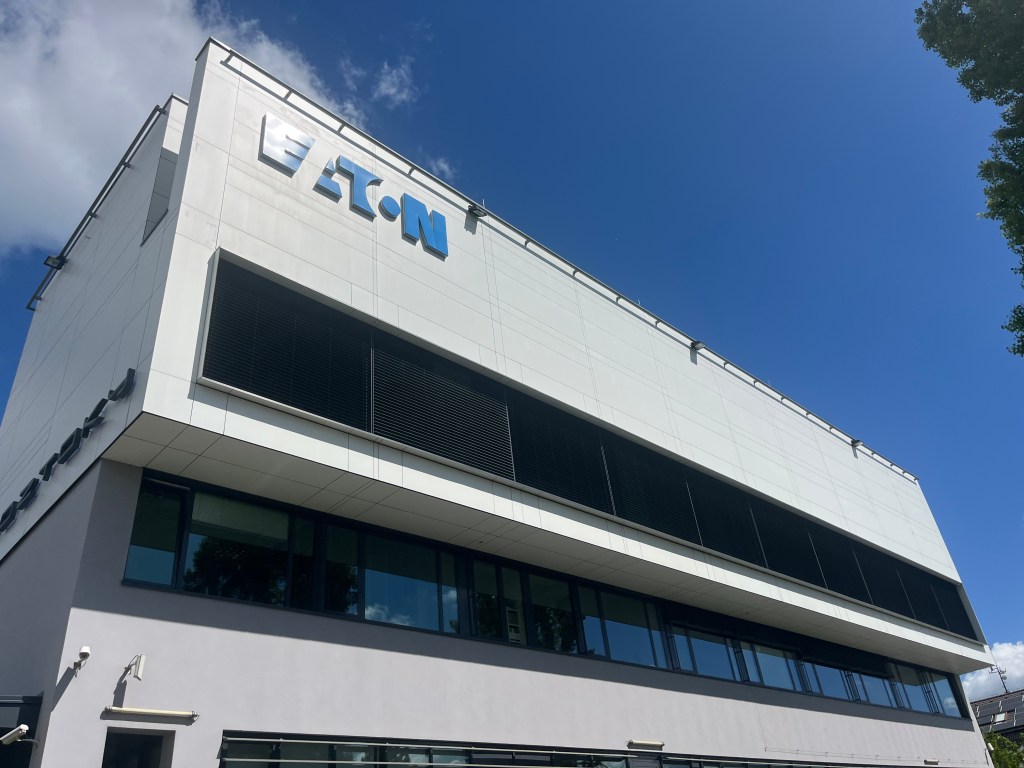
During our Eaton visit, we had the unique opportunity to talk with the head of the Czech Republic’s engineering division where he explained their main project – the anti-arcing circuit breaker. When operating at such high voltages amongst the grid lines, it is important to ensure that there are some precautions taken against electrical arcing. This is the phenomenon where the voltage is so high it is able to bridge the gap between the extremely large resistance in the air separating charges. Should the grid face overflow from one particular area, it could possibly cause a short, and Eaton’s breakers may have to be used.
In addition to Eaton’s breakers, we also got to see how their design engineers are working to plan devices to be more efficient, sustainable, and useful within the grid. For example, as the demand for electric cars continues to increase, so too will their energy consumption once people begin to plug in their cars to charge after work. Thanks to Eaton engineers, they are working on utilizing a DC micro-grid to monitor the power consumption and hopefully make it much more efficient by applying direct current to the cars themselves. While Eaton is already a very large company, in its main business of power management it is poised to become a giant in the market solving the newest problem we face from AI.
 Swanson School of Engineering