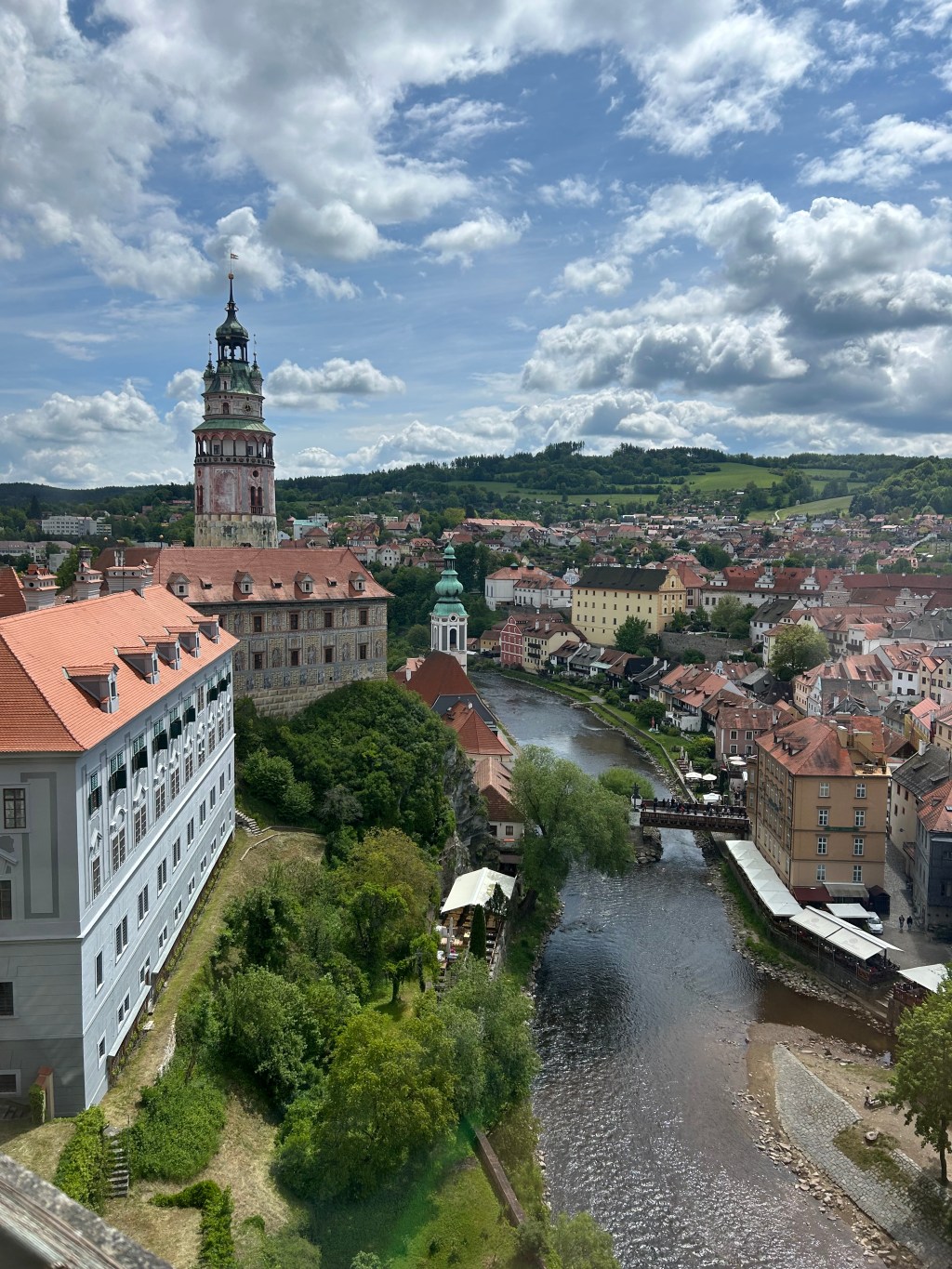
While observing the medieval watermill system along the Vltava River in Český Krumlov, I felt deeply connected to the legacy of engineering across cultures. These mechanisms, simple yet elegant, reminded me that engineering is a universal language—used by civilizations for centuries to harness natural forces. Despite different languages and time periods, the human drive to solve problems and innovate unites us across borders. The Czech Republic’s emphasis on sustainable, localized infrastructure—like integrated public transport in even smaller towns and the widespread use of passive building design—offers lessons in efficiency and environmental consciousness. I see great value in the Czech approach to engineering solutions that harmonize with both nature and community needs. The U.S. could benefit from adopting more of these decentralized, low-impact systems. Ordering food at a small, local restaurant without English menus pushed me to rely on observation, gestures, and a few learned Czech phrases. I realized how much we often take communication for granted—and how much can still be communicated with respect, patience, and a smile. It taught me that humility is a key part of cross-cultural interaction. Český Krumlov is a microcosm of centuries of scientific and cultural evolution. It’s striking how structures built with pre-modern tools have withstood time through clever design and material use. As an engineering student, I’m reminded that innovation doesn’t always mean complexity—sometimes, the most enduring solutions are those that work in harmony with the environment and are rooted in deep, contextual understanding. Today strengthened my belief that engineering should always serve people, not just push the boundaries of technology.
- Comment
- Reblog
-
Subscribe
Subscribed
Already have a WordPress.com account? Log in now.
 Swanson School of Engineering