Alyson Ferrari – Electrical Engineering

Ever since coming to Pitt, I have found that my favorite educational and professional
experiences have been paired with tangible, hands-on learning components. However, none of
my prior experiences can hold a candle to the experiential learning that came from the site tours
and hands-on workshops that were built into this academic program.
When it came to our art history course, there were only one or two days out of the
entirety of the month-long program that were spent entirely indoors discussing paintings and
sculptures on a screen. Every other day, we’d discuss the different artistic periods of the
Renaissance, the most influential artists and their works before getting up and walking over to
those paintings/buildings and seeing them in-person just a foot or two in front of our eyes.
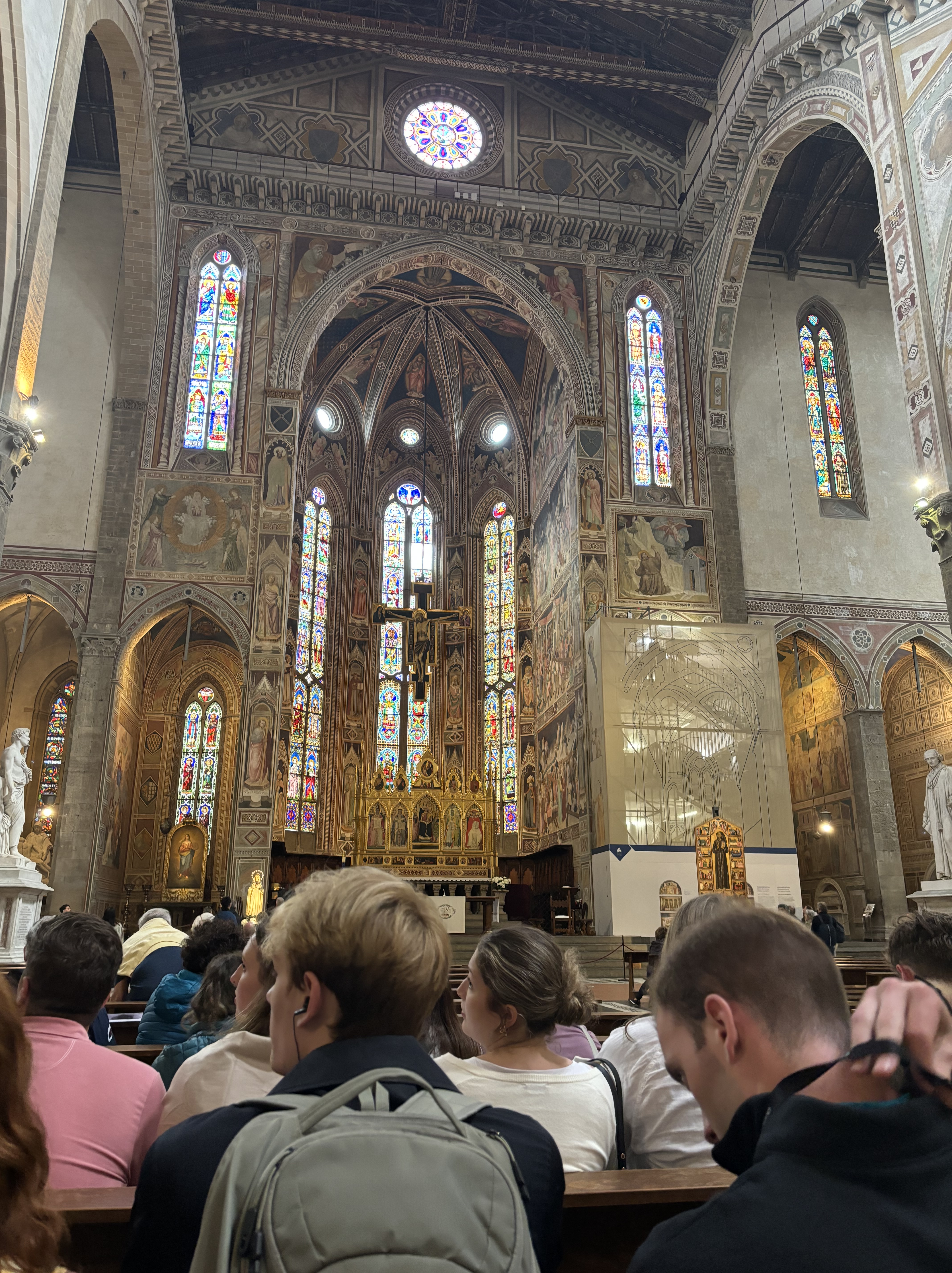
Words cannot describe how mesmerizing it was when I walked into one of my first Italian
churches, the Church of Santa Croce, and was surrounded by pointed arches, stained glass
windows and mini chapels that are filled with detailed frescoes. Not to mention the tombs that
line the walls such as Michelangelo and Galileo which are both decked out in sculptures and
paintings to honor the beauty and knowledge they brought to their country.
However, just seeing art does not allow for the full appreciation of how skilled these
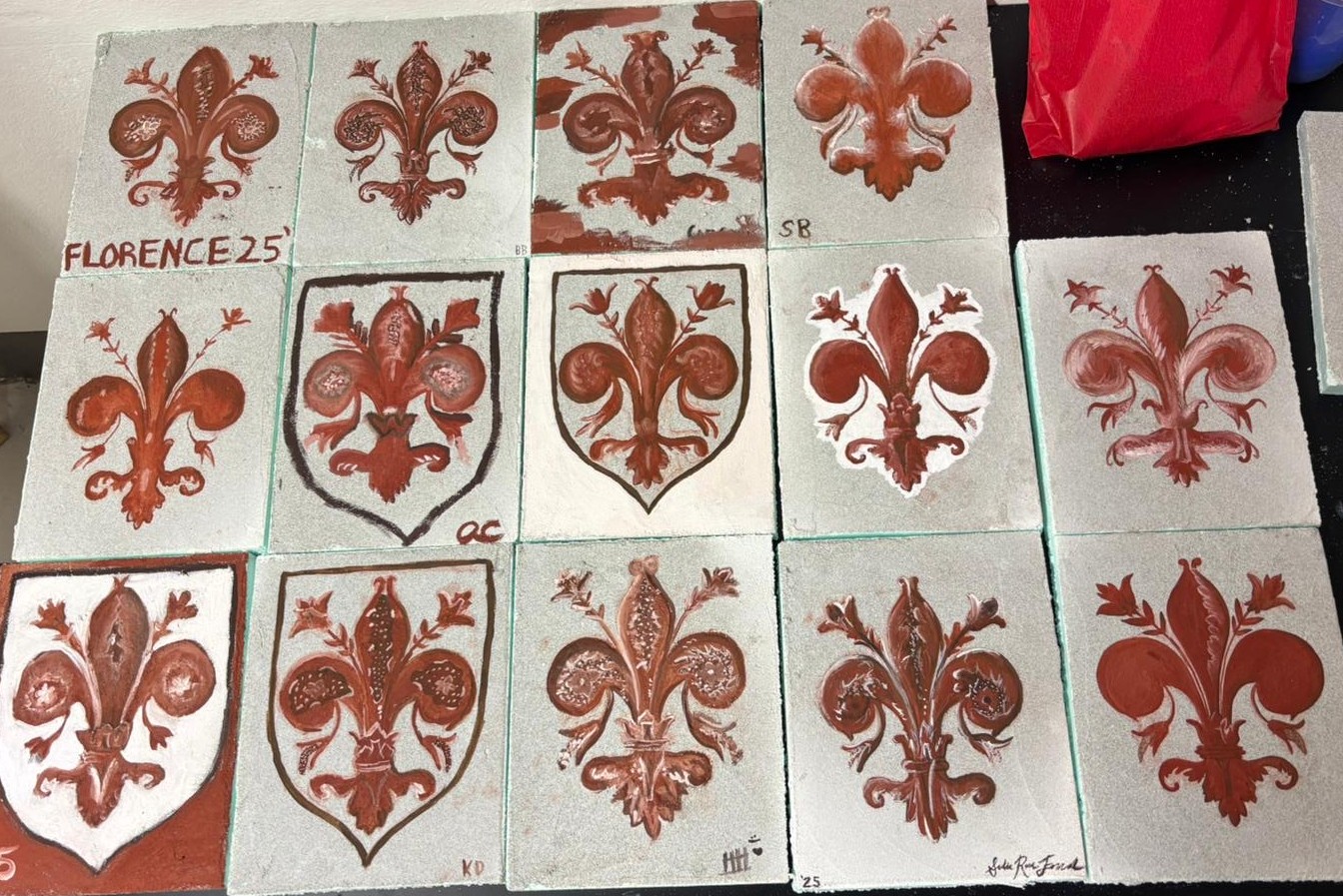
artists were in their craft. That’s where the fresco workshop came in. Fresco is the technique of
painting on wet plaster and allowing it to dry into the wall, hence how they’ve lasted so long. A
three hour workshop at a nearby art school taught me and my trip mates the proper technique of
fresco by designing a simple Florentina, a red iris that serves as the symbol of Florence. As
someone who is very much not an artist, it was definitely outside of my realm of expertise.
However, part of art is just trying and seeing what comes out, and it was fun to get to test out
such an old art form.
For our engineering sustainability class, it was a bit more lecture based. However, our
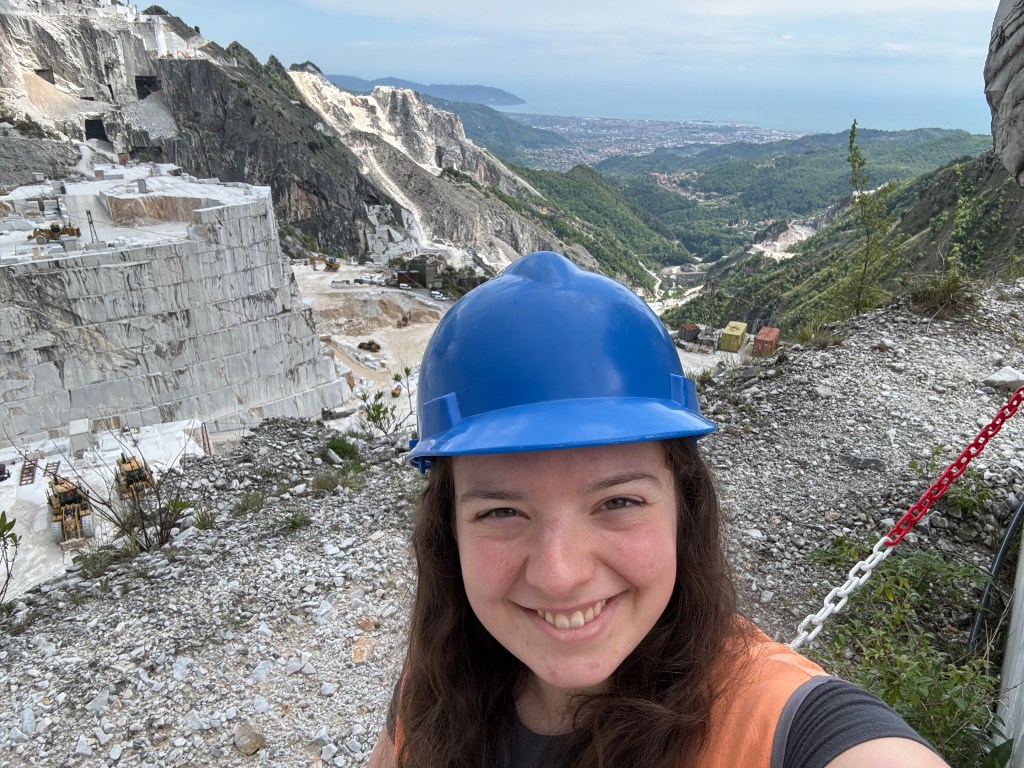
site tours such as the one to the Carrara mountains where Michelangelo and other Renaissance
artists sourced their marble was an incredible hands-on experience. We began our day with a
two and half hour bus ride up to the mountains (take the time to look out the window especially
as you get closer – the views are stunning) which eventually led us to the foot of the mines.
Once we got there, we had a guide discuss the history of the mine, and how technology has
advanced over the past few centuries to make a safer and more efficient marble extraction
process. Then as a group we were packed into mini jeeps and driven up the mountain that gave
a stunning view of the mines, the town and sea before discussing the machinery and work
procedures that we were seeing. We were even allowed to collect small stones of marble strewn
across the ground which I now proudly have on my desk as a reminder of such an exhilarating
day. All of this was built into the program itself.
On the other hand, if you want to take your weekends or free evenings to do some
personal exploring of the city and country (which you should 1000% do), you’re going to learn
very quickly the importance of public transportation and walking, or at least I did. Italians do a lot
of walking, and you’ll notice a major decrease in the amount of cars in comparison to the US,
especially in the city centers. Many locals prefer to use their motorbikes and if they have a car
they are very compact. More often than not, the streets meant for cars are covered in
pedestrians so you have to keep an ear open for any honking that notifies you it’s time to move
to the side so a car can pass. Overall it’s an efficient way of getting around and it’s safe other
than the possibility of spraining an ankle on the uneven cobblestone. However, the biggest skill I
had to learn in order to get around was the train system. On my very first day in Italy, I flew into
Rome alone and had to make my own way up to Florence. I took the Leonardo Express from
the airport to Roma Termini before taking a 2 ½ hour high speed train up to Florence. The
biggest takeaways from that experience was to make sure I had the Trenitalia app so that I
could buy the tickets easily and not have to worry about the long lines at the ticket booths.
Sometimes those booths may even refuse to take your credit card without a pin, which we don’t
have in the US. I had to learn that the hard way. The app also allows you to track the status of
the train and gives you the opportunity to search up other routes in case of a cancellation. I
quickly found that if you can navigate the trains, you can navigate your way through Italy.
 Swanson School of Engineering