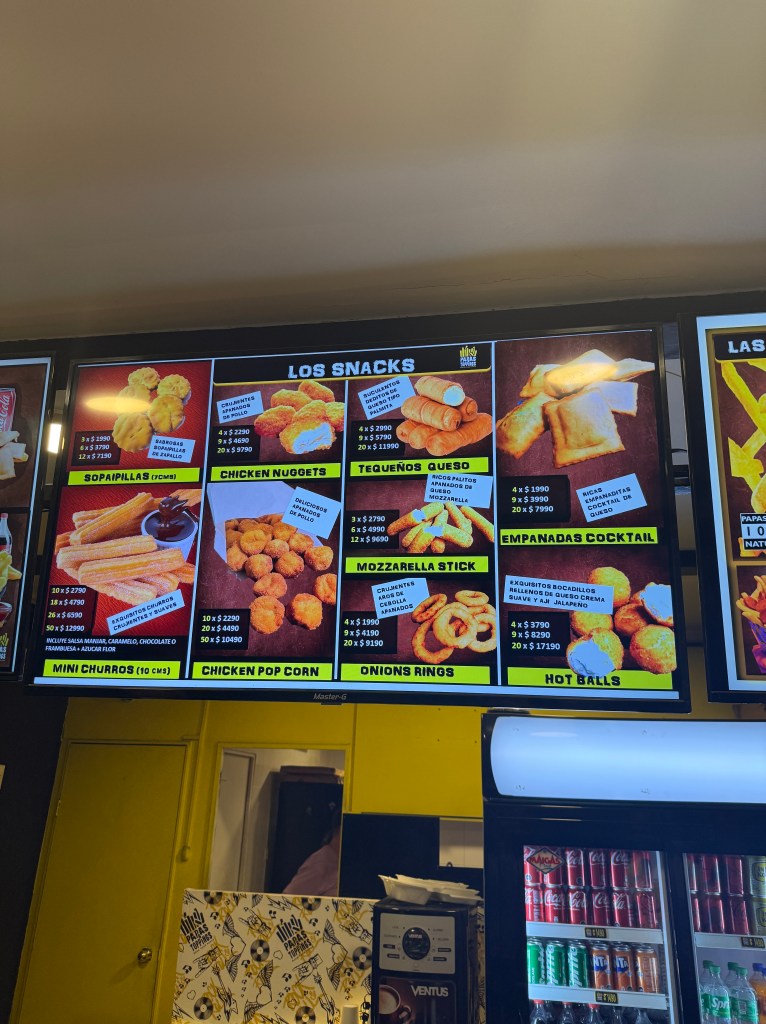
Menu Containing Many Different Chilean Snacks
One of the biggest surprises of my week in Santiago was how much food shaped our team dynamic. I arrived in Chile as a vegetarian, a little nervous about what I’d be able to eat. But within a day, I realized I had absolutely nothing to worry about. Not only did Chile have far more vegetarian options than I expected, but several Chilean students in our program were also vegetarian. That instantly became a point of connection. We bonded over restaurant tips, ingredient substitutions, and late-night conversations about our favorite foods back home.
Sharing meals quickly became one of the easiest ways for all of us to learn about each other’s cultures. Lunch breaks weren’t just a pause from work but a great chance to bond. Someone from Brazil would describe a dish from home, a U.S. teammate would compare flavors to something from their childhood, and our Chilean peers would enthusiastically share all we needed to know about the local foods we were eating. These conversations helped us relax, open up, and trust each other more. And that translated directly into creativity. The more connected we felt, the freer we were to experiment with ideas for our project.
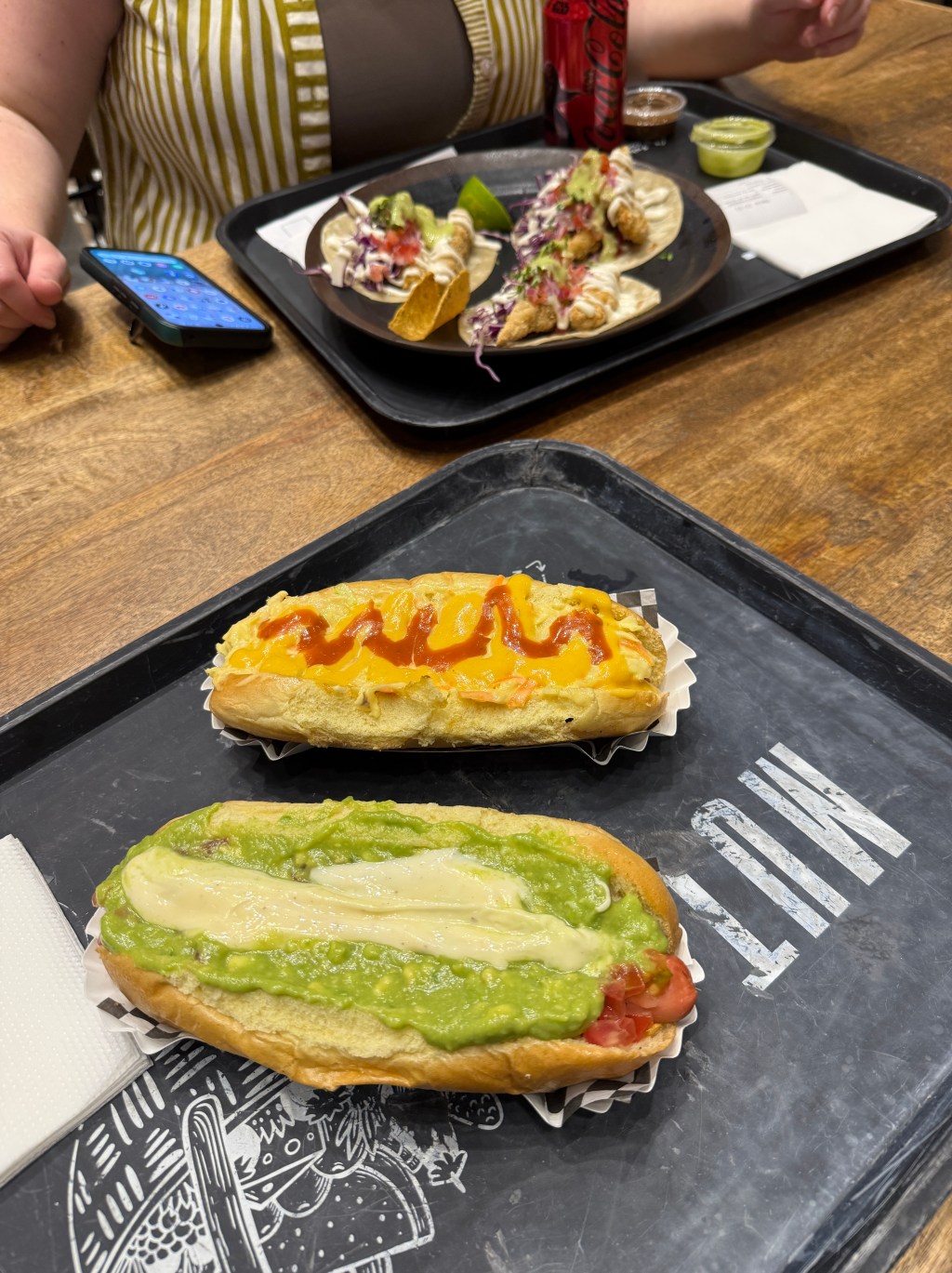
I found a few foods that quickly became my go-to choices. The vegetarian completos were a highlight. These were loaded with fresh guacamole, tomatoes, and an almost shocking amount of mayo. I also fell in love with Chilean empanadas, especially the cheese and the pesto-tomato versions. Someone introduced me to tequeños de queso, which reminded me of mozzarella sticks but with an even crispier outside and a different kind of cheese inside. Even familiar foods like pizza or quesadillas came with a “Chilean twist,” whether it was the cheese they used or toppings I’d never tried before.
But my all-time favorite was the sopaipilla. These small, round fried dough pieces could be served sweet or savory, and I’m not ashamed to admit I ate at least twelve in one sitting. The savory ones dipped in pebre, a fresh Chilean tomato salsa, were honestly one of the best things I’ve ever tasted. It wasn’t just the food itself but the moment and the people I was sharing it with. Sitting outdoors, surrounded by Chilean students eager to share their culture with us, laughing, trading stories, and passing around plates… it made me feel at home in a place I had just arrived in.
Experiencing Chilean cuisine wasn’t just about trying new flavors. It helped us understand each other, appreciate our different backgrounds, and build a sense of community. Food became the bridge that helped strangers from four different countries become a team. In the end, it ultimately fueled the creative energy that shaped our final project.
 Swanson School of Engineering