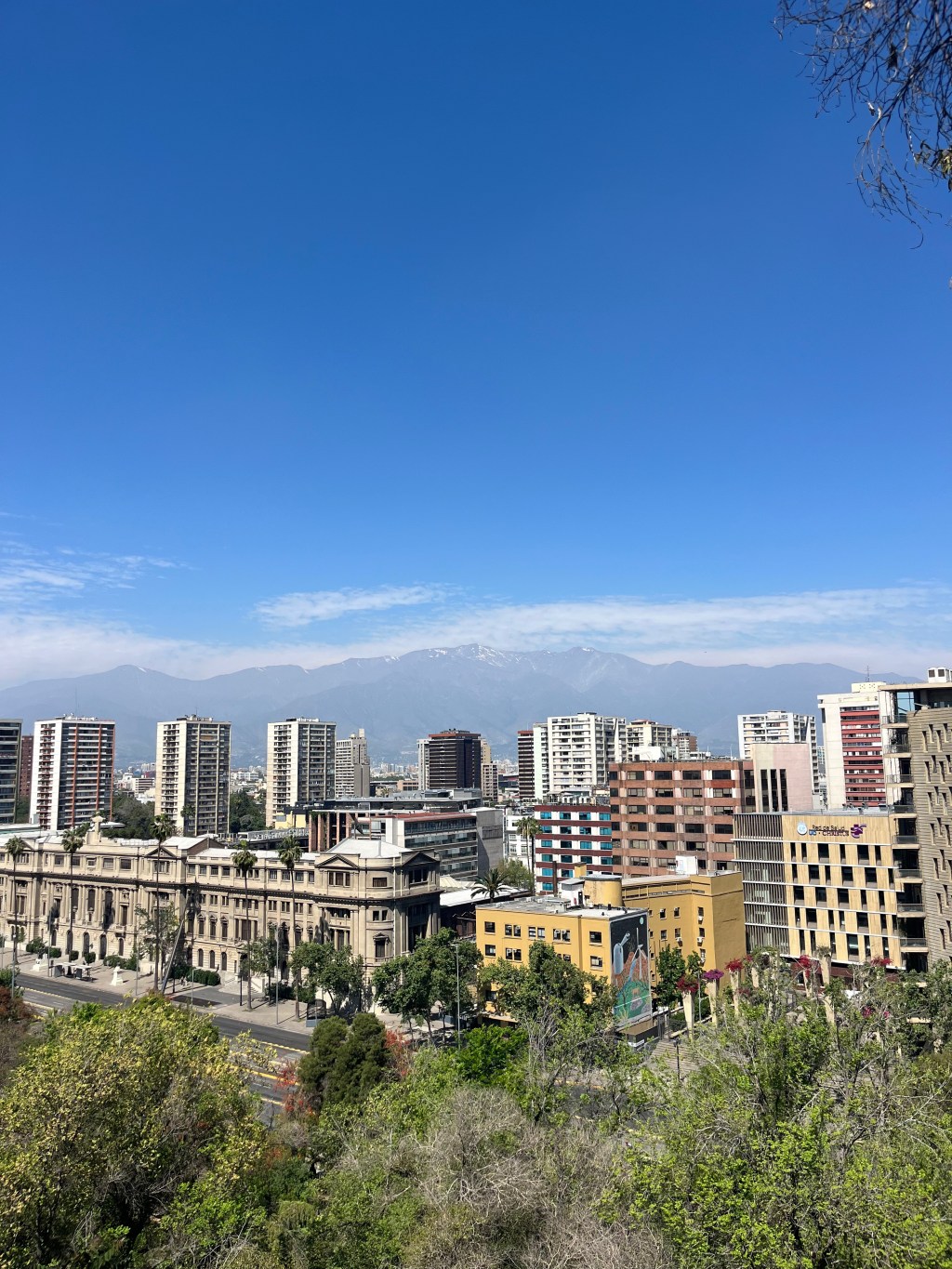
Outside of some preliminary research following my acceptance to the Moving the Cities program, I was largely unfamiliar with Santiago prior to arriving. I had seen photos of Santiago’s impressive architecture, including the iconic Sky Costanera building. I heard tales of completos, a Chilean hotdog piled high with guacamole, tomatoes, and mayonnaise. But, had yet to discover the deeper aspects of Chile and the people who live there.
For those who are unfamiliar, the foundation of Moving the Cities is centered around using cross-cultural collaboration as a means to address the Sustainable Development Goals developed by the United Nations. This year’s attendees were tasked with developing an innovative design with emphasis on goal 12, which focuses on responsible consumption and production. My team opted to target circular reuse in local communities through our project, which offered the perfect opportunity to get to know more about various communities in Chile and their biggest challenges. The first-hand experiences of the three Chilean students in my group, each of whom was from a different part of the country, played a significant role in guiding our project. In addition to allowing our team to gain valuable insight for our project, their experiences established a greater appreciation of the country as a whole. Through research and the knowledge of one of my team members who lives in the Atacama Desert region of Chile, we identified textile waste as one of the largest issues plaguing the Chilean people and decided to tackle the issue.
Truthfully, I knew nothing of the vastness of this issue prior to Moving the Cities. The problem comes directly from large corporations and fast-fashion industries and trickles down to a plethora of responsible parties. Companies over produce textiles in an attempt to keep up with ever-changing trends. When the next best thing becomes popular and demand for that once trendy top drops, over produced goods get shipped away to become somebody else’s problem. It is easy to ignore when you are not living amongst it. Unfortunately, it is not so easy to ignore for residents of the Atacama desert. Aside from being an eyesore stretched miles across the beautiful landscape, the chemicals in the textiles can cause fires and impose adverse health effects on the surrounding communities. Our team developed a concrete composite layered with textile materials to be used in finishing applications based on research that is already being done on a similar material at a university in Spain. It may be a small step, but we are excited about the possible impact that an innovation such as this could have in addressing one of Chile’s most paramount environmental issues.
We likely come across dozens of online articles a day about all the terrible things that are happening in the world. It is easy to feel distant and disinterested or simply overwhelmed. I do not know what the solution is. However, I know that the word “disinterest” did not come to mind when hearing real experiences from a person in place of reading statistics off an LED screen. It is a testament to the power of human connection, the need for informed travel, and the deepened mutual understanding that often accompanies it.
 Swanson School of Engineering