Day Four of Iceland was all about the landscape. Mountains, plains, waterfalls, glaciers, beaches – we saw it all. Perhaps even more impressive is the way the natural beauty of Iceland inspires its folklore. The nature spirits of Iceland are highly respected in the pagan religion, and being in good standing with them and the Elves can keep residents safe from the next avalanche or volcanic eruption or flood in the region.
Chasing Waterfalls
We departed early this morning for a town east of Vík, and our first stop along the way was the waterfall Seljandsfoss. At 200 feet high, the waterfall is situated along ancient sea cliffs that formed during the last Ice Age, when the ocean came much further inland. Ólöf said the sea birds that nest in the cliffs seemed not to care that the ocean was so far away.
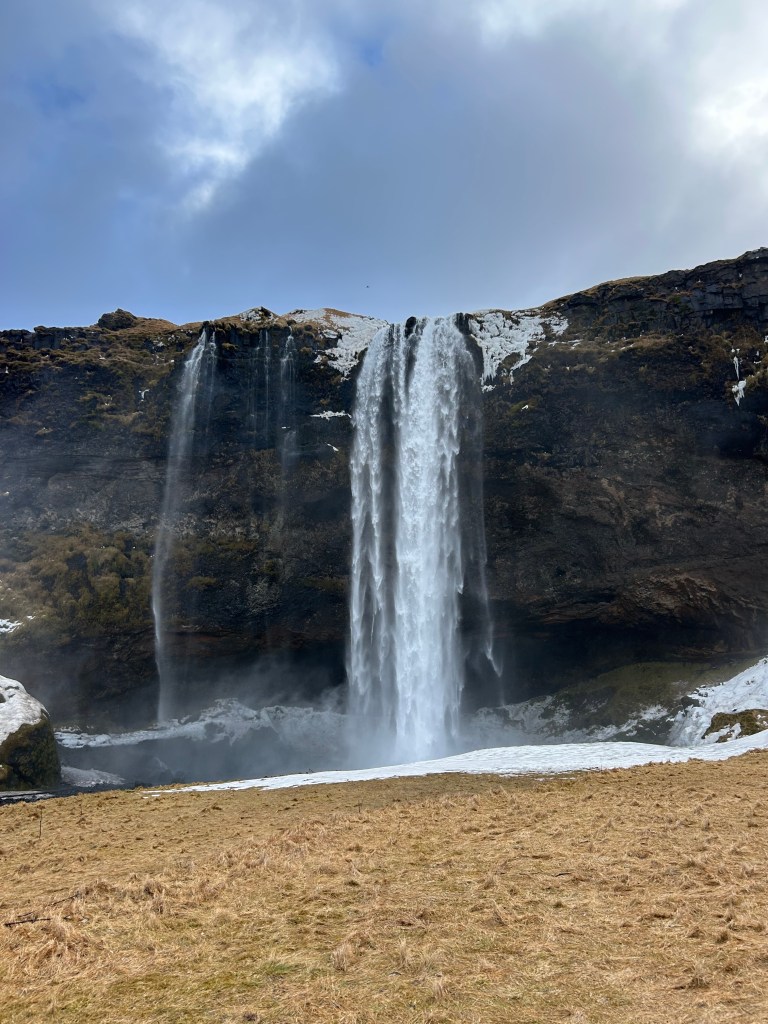
While we were admiring the waterfall, the sun came out and cast a rainbow over the plains.
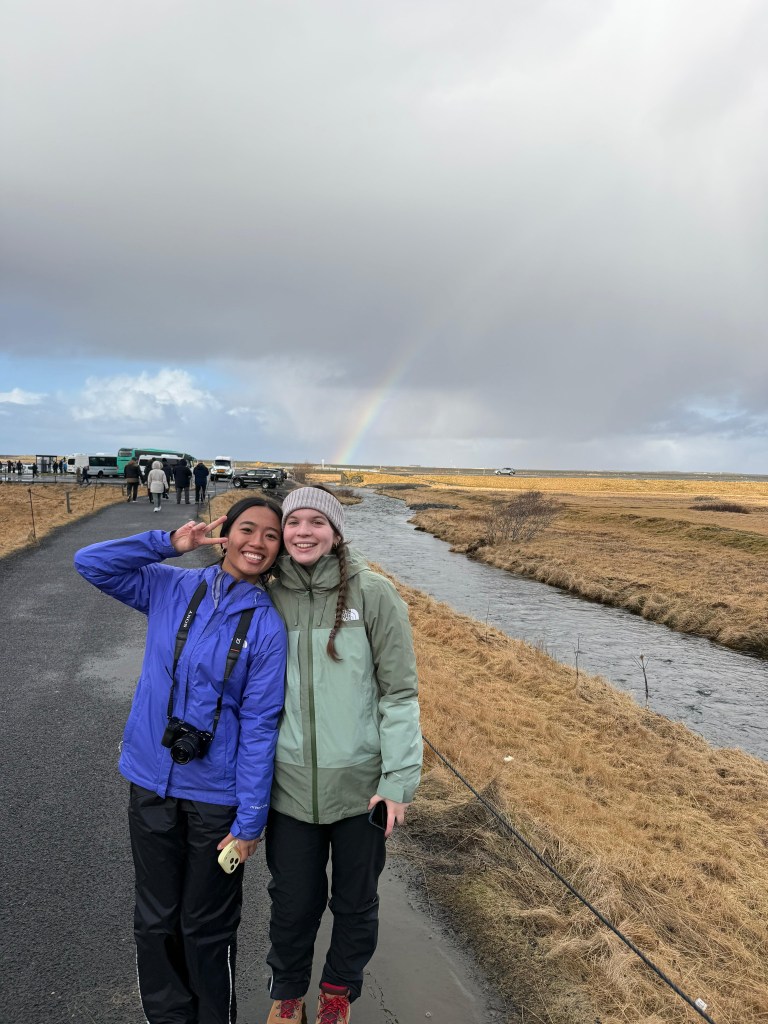
Finding the End of the Rainbow
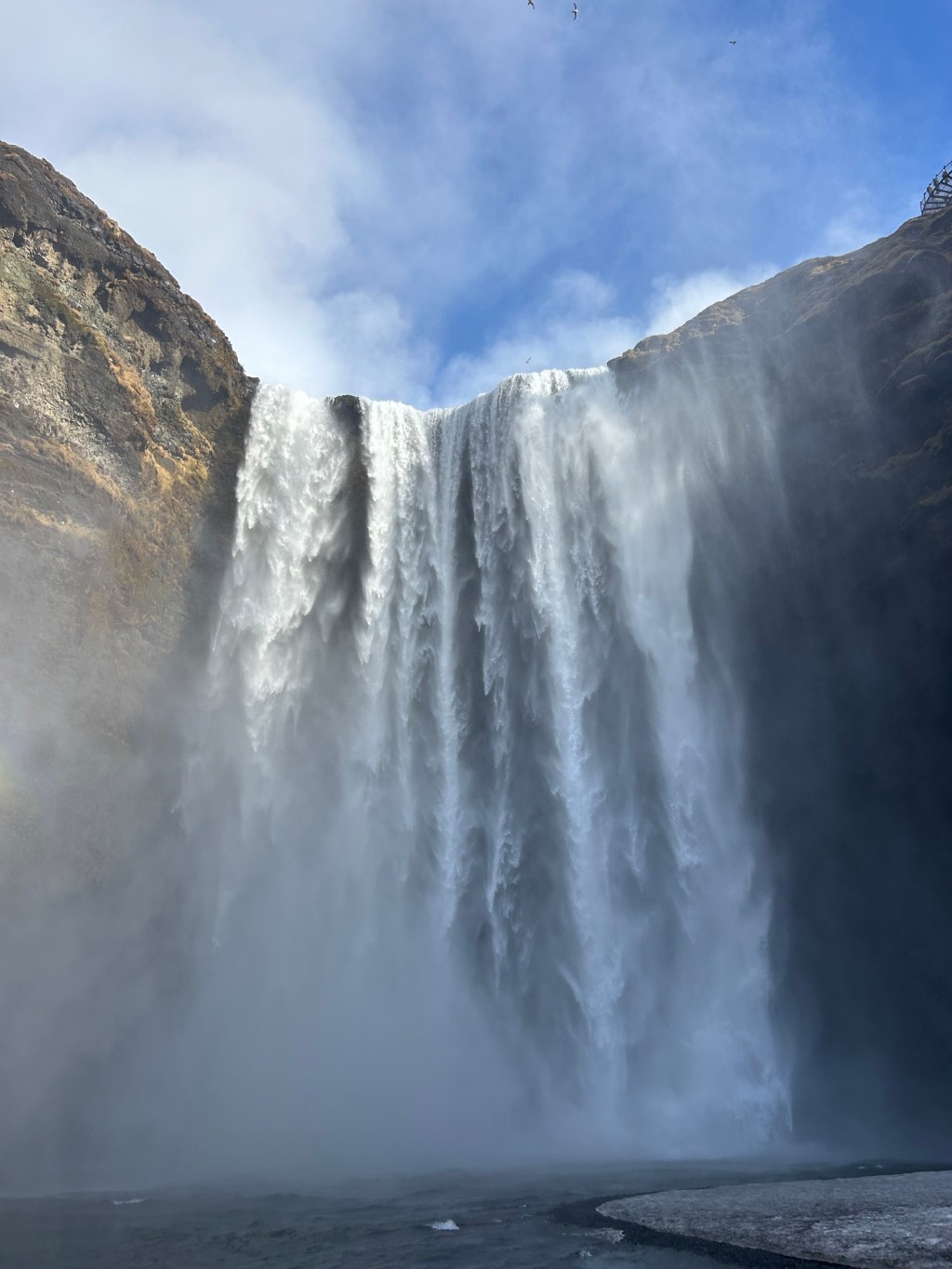
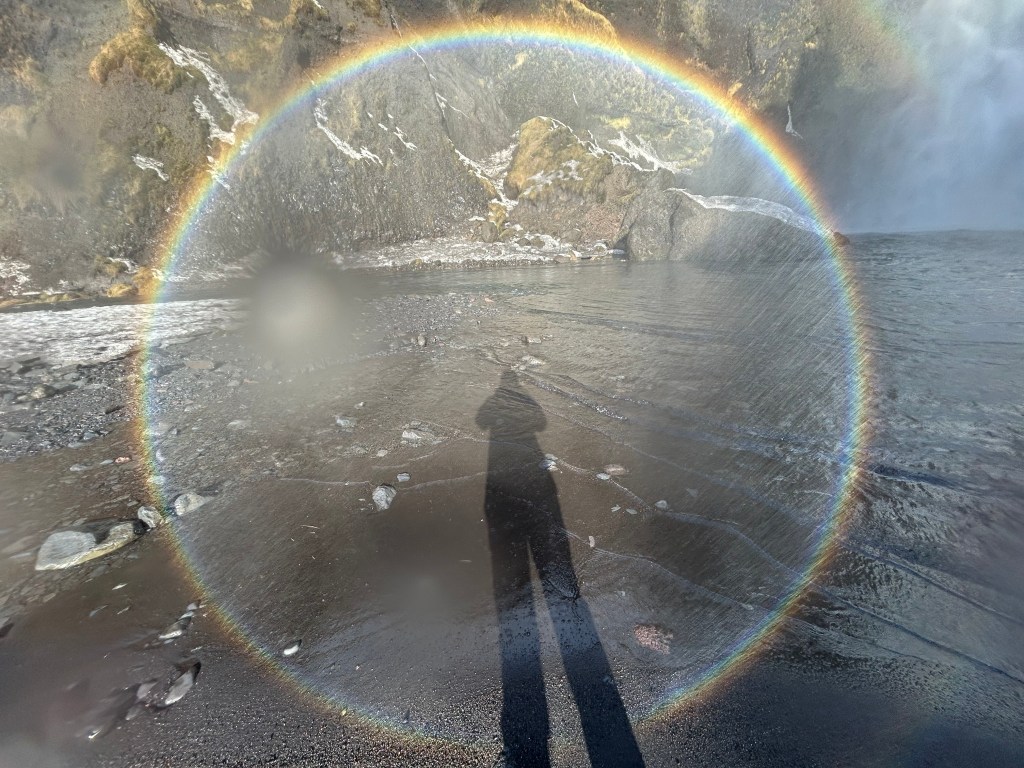
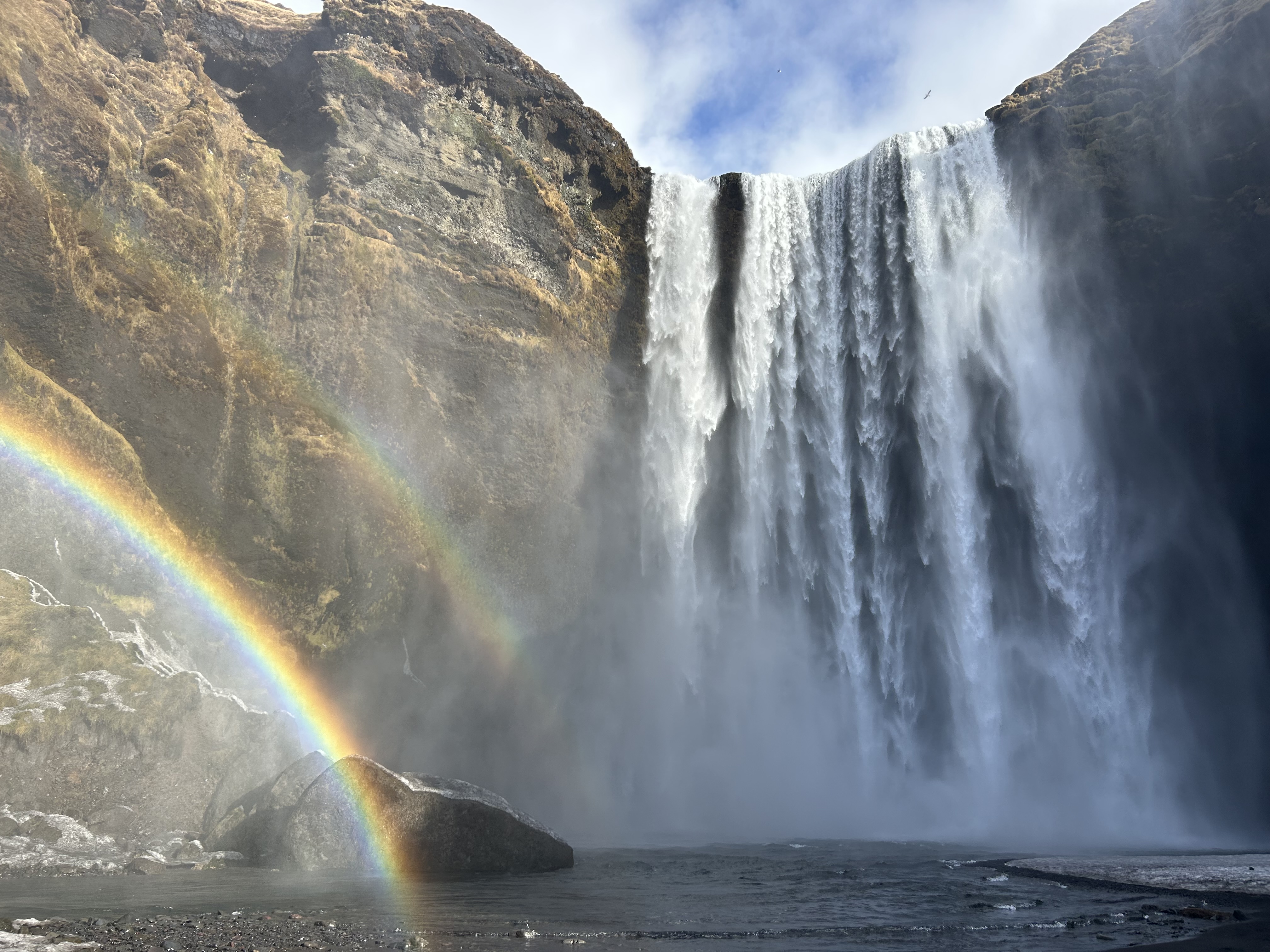
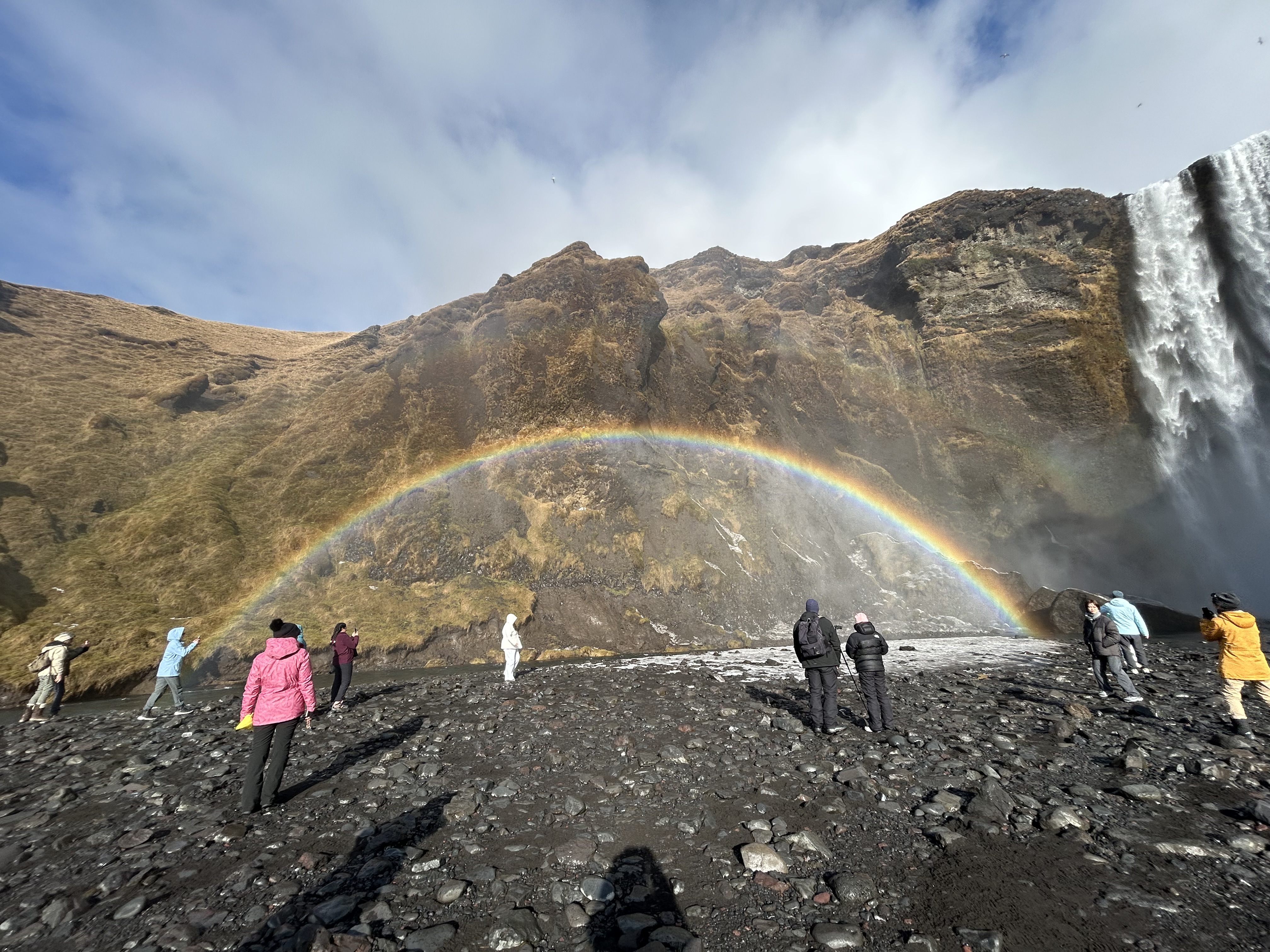
After Seljandsfoss we went to Skógafoss, a waterfall about 30 km away. The rainbow followed us here, creating a full arc along the cliff. I went chasing after it, because obviously if there’s going to be a pot of gold at the end of the rainbow, Iceland is where the pot of gold would be. I didn’t find a pot of gold, but I did learn that when you reach the end of the rainbow it becomes a circle (yes, I know, this means there technically is no end of the rainbow since circles don’t have beginnings or ends, but you know what I mean).
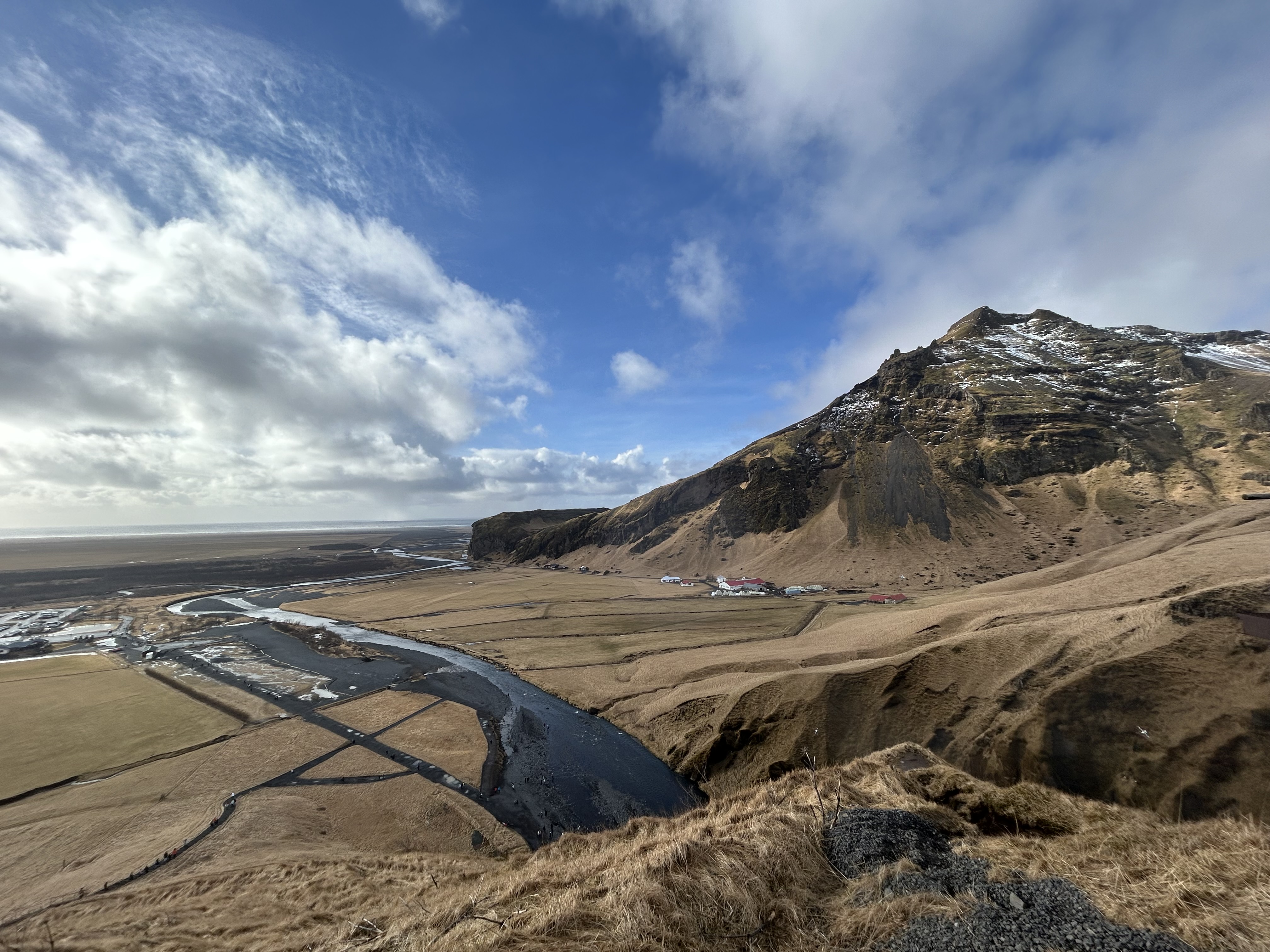
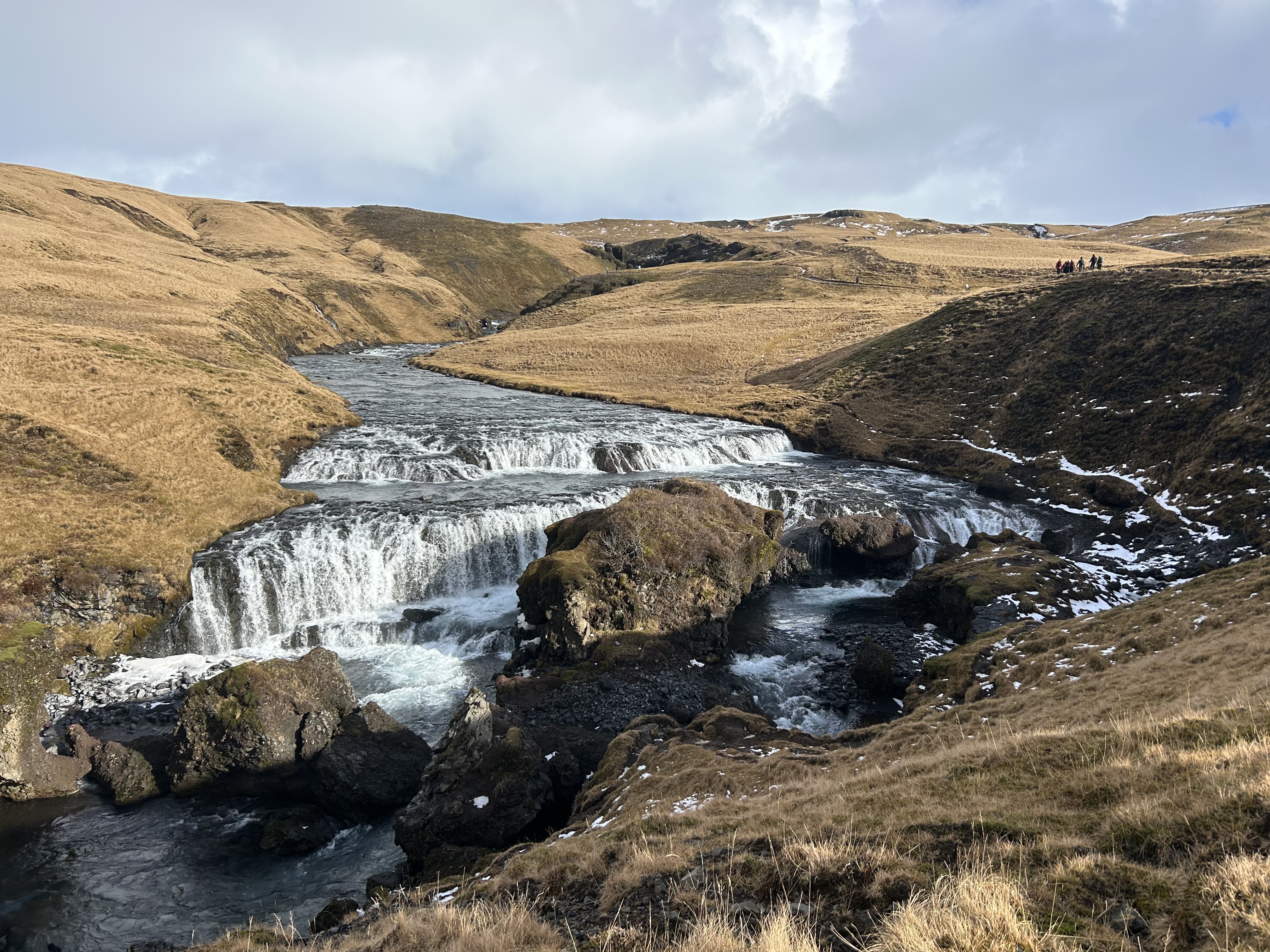
After thoroughly enjoying the base of Skógafoss we climbed 527 stairs to the very top of the waterfall. The views quite literally made me speechless.
In a Hole in the Ground there Lived an Icelander
We stopped at the Folk Museum after Skógafoss for a presentation about Medieval Icelandic culture and the opportunity to browse around. There was an outdoor exhibit that was a model of traditional Icelandic turf houses built from imported wood, stones Ólöf said the Icelanders scavenged from the mountainside, and earth. Icelanders, she said, make do with the materials they have. The short doors are a result of limited wood beam length, the stones stacked however they happen to fit, and the turf taken from the ground itself.
Ólöf told us the literary works of J.R.R. Tolkien, particularly The Hobbit, were inspired by Icelandic folklore, and he created the concept of a Hobbit hole as an idyllic version of these turf houses. Rather than dark, drafty, and damp, Hobbit holes are warm and cozy. And, of course, they have a circular, green wooden door.
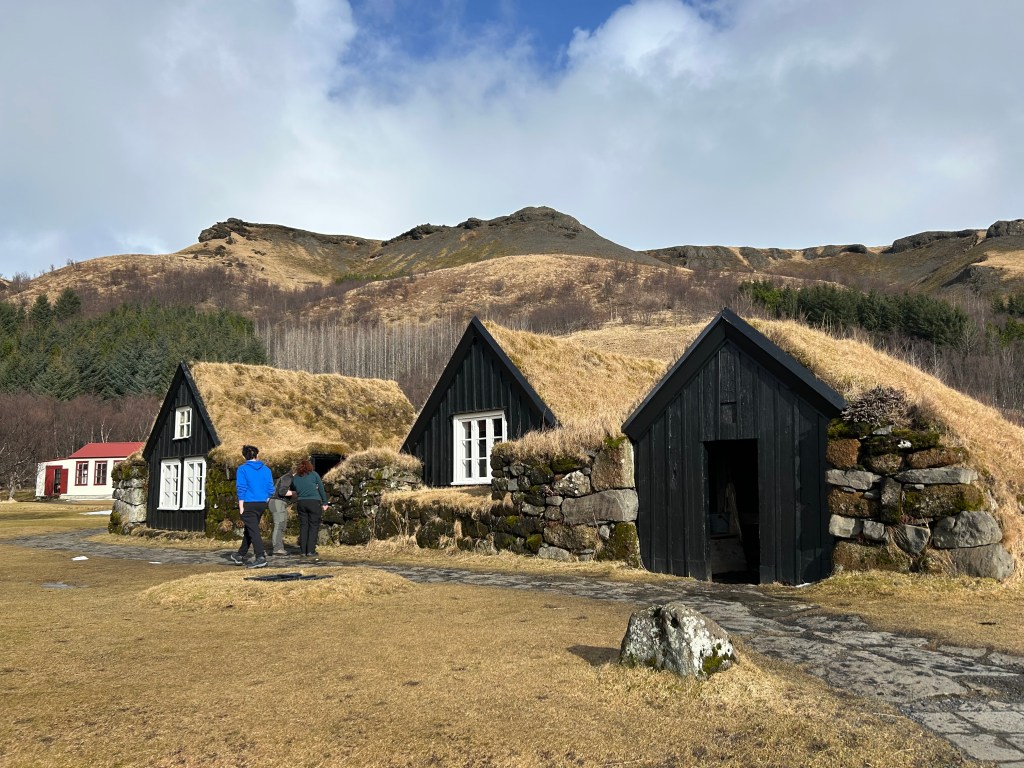
There are several other Icelandic influences on the lore of Tolkien’s works that I found particularly interesting in my own research. Tolkien himself hired a native Icelandic au pair named Arndis Thorbjarnardóttir, who helped him translate Old Norse sagas. The model of his narratives reflect the style of a saga, and the geography of Middle Earth was inspired by the Icelandic landscape. The trolls that turn to stone in sunlight, the Ringwraiths, the barrow-wights, and the Elves are all direct references to Icelandic folk tales and ghost stories. Even the character Gandalf was inspired by the image of Odin as a bearded, cloaked wanderer.
The View from the Bus Window
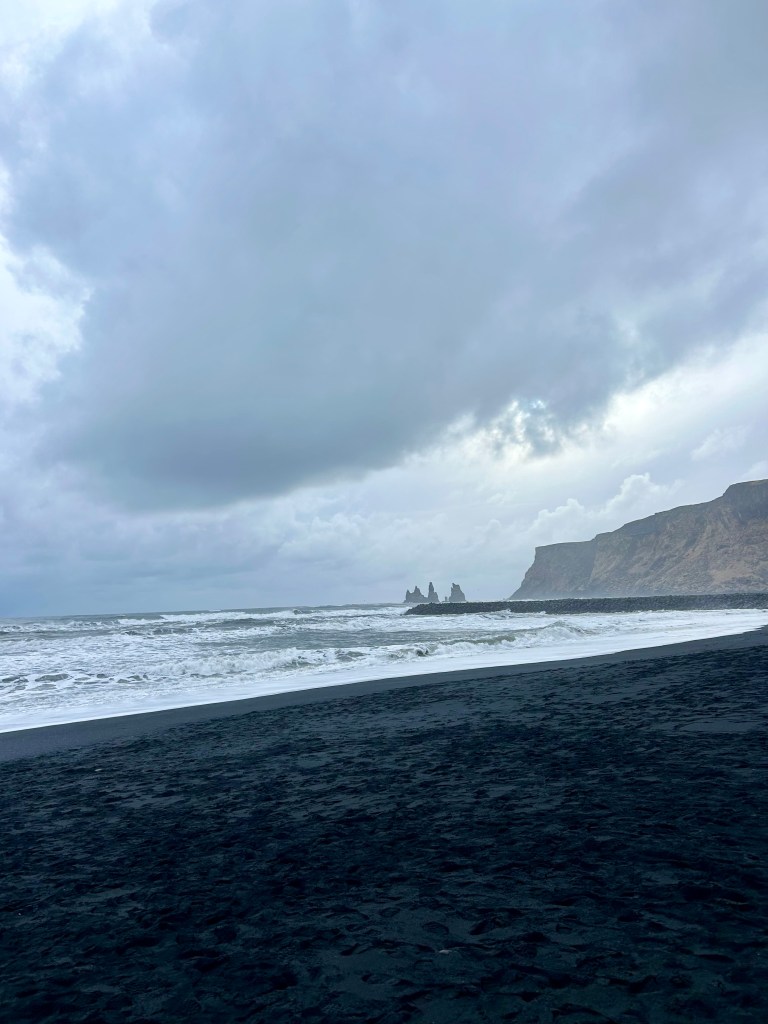
Only in Iceland can you stop at a gas station and find yourself on a black sand beach looking out over the largest crashing waves you’ve ever seen. Ólöf was telling us that there has been an extremely strong current along the south coast of Iceland recently, so the volcanic sand beaches are being stripped away. However, the current is easing, and some of that sand is returning to the coast.
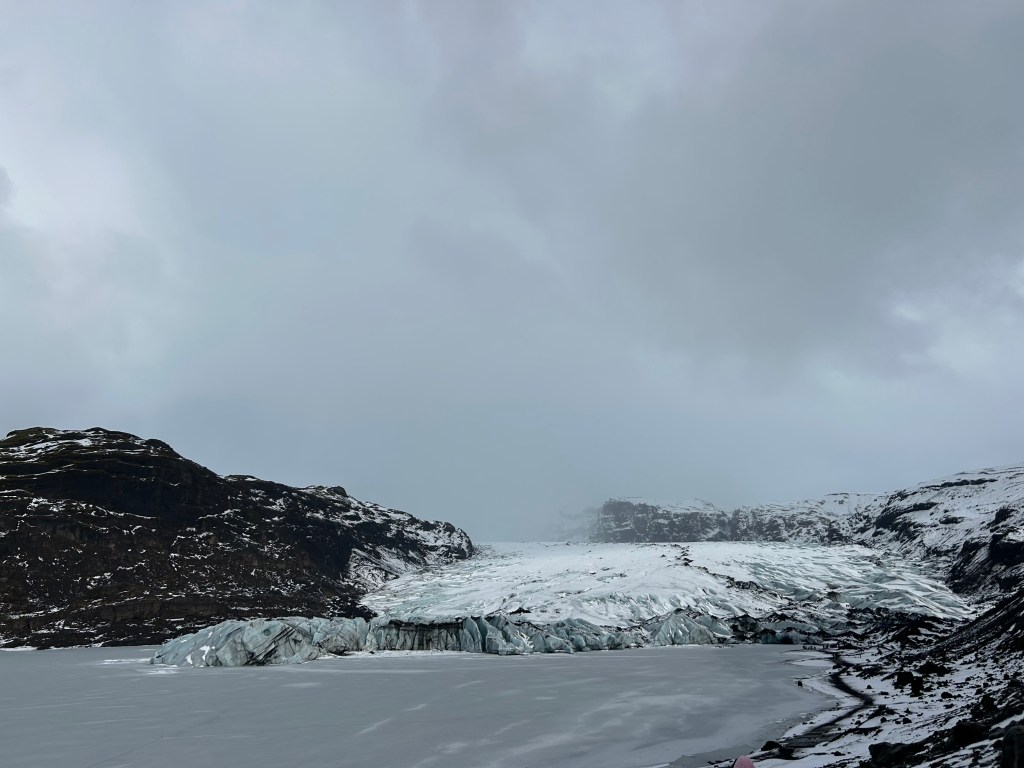
Our final stop of the day was the Sólheimajöskull glacier, located between the volcanoes Katla and Eyjafjallajökull. Due to climate change, the glacier has receded 887 meters in the past twenty years, and it is carving out a fjord as it melts. We were fascinated by the bright blue color of the ice, streaked with black volcanic ash from the eruptions of Katla and Eyjafjallajökull. Katla, Ólöf said, typically erupts every 60-80 years, but its last major event was 1918, making it long overdue for an eruption. Apparently there has been an increase in seismic activity and ground deformation around the volcano in the past few years, signs that is preparing to erupt. According to the geological maps, there were several earthquakes around it just this morning!
We’re going to try to catch a glimpse of the Northern Lights tonight. Wish us luck!
 Swanson School of Engineering