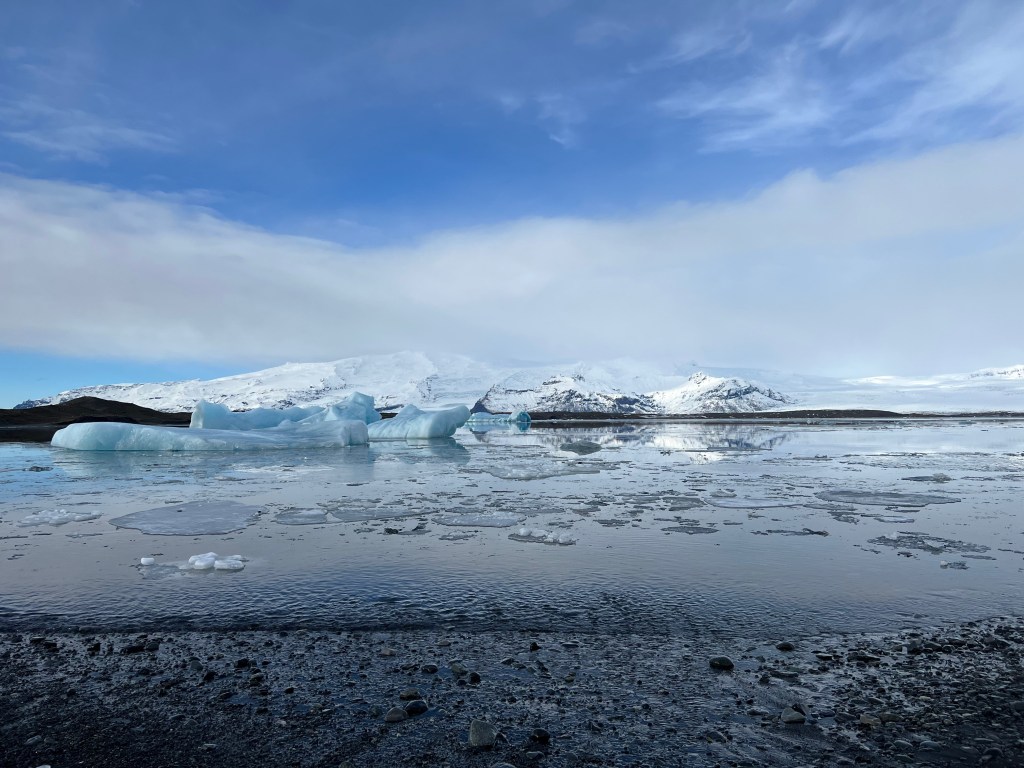
We began Day 5 with a trip to the Jökulsárlón glacial lagoon, where we admired stunning views of the glacier and the blue icebergs floating along the lake (with the occasional harbor seal resting on the ice). These icebergs melt quickly once they detach from the glacier due to the higher temperature of the seawater that enters the lagoon. As a result, they are quite unstable and can break easily, so… no climbing. I enjoyed collecting rocks along the beaches of the lagoon and tried hard to think back to my geology class where I learned how to identify igneous rocks. While at this site, we also visited Diamond Beach, a black sand beach where pieces of icebergs have washed ashore. The contrast between the crystal blue ice and the black sands is beautiful, and the ice chunks really do look like diamonds. Unfortunately, due to strong easterly winds and rough waves, some of the black sand beaches have experienced significant erosion. However, there are recovery efforts in place that are mitigating the effects. Just more proof that Iceland’s landscape is constantly changing!
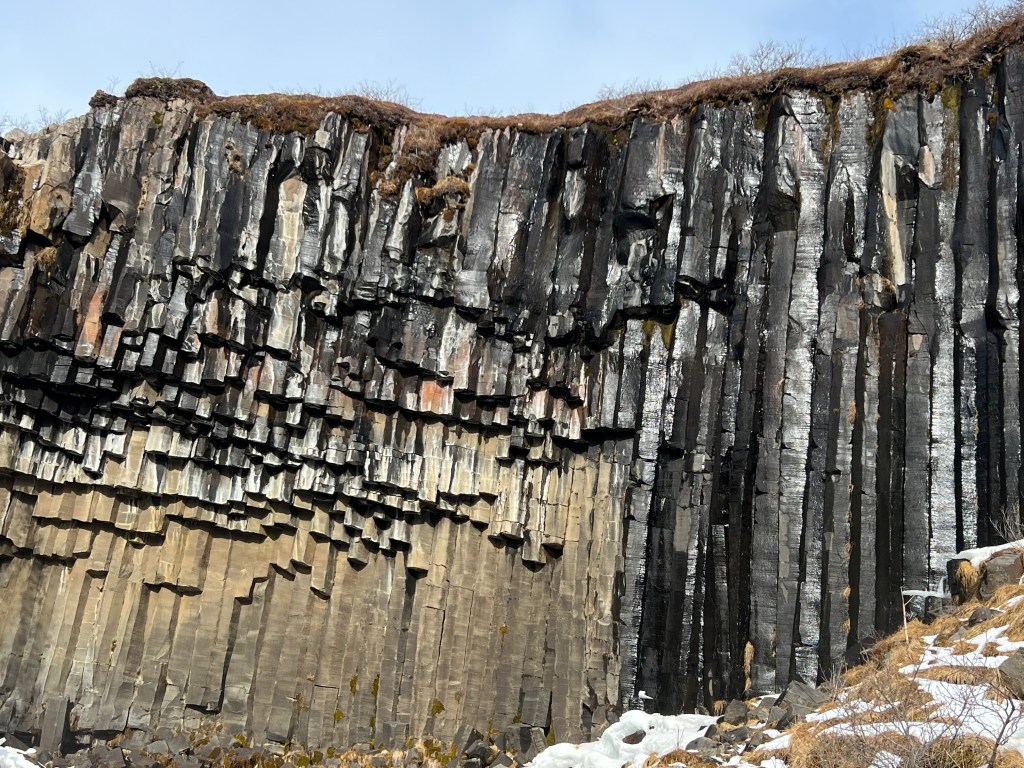
After the glacial lagoon, we drove to another area of the Vatnajökull National Park and hiked to a waterfall surrounded by basalt columns. These rock formations are fascinating. Basalt is an igneous rock that is deposited as lava during volcanic eruptions; as the lava cools and solidifies, cracks begin to form. Basalt is unique because the cracks that form in this rock create vertical columns with five to seven sides. After today, I have a new understanding of why Iceland is called the Land of Fire and Ice!
 Swanson School of Engineering