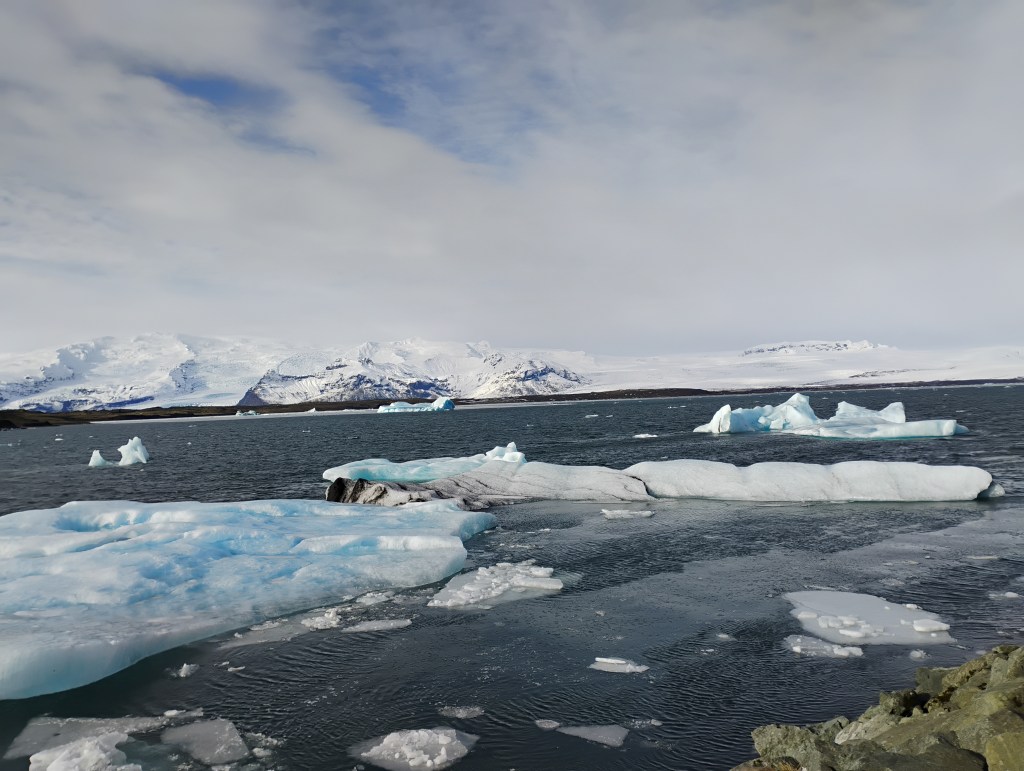
Today is day 5 in Iceland, and we visited Jökulsárlón glacial lagoon. It’s formed the the retreating Breiðamerkurjökull glacier, and it was absolutely amazing to see. It’s formed by a process called calving. When a glacier recedes, in this case Breiðamerkurjökull, the land where the glacier used to be is actually compressed by the weight of the ice. The glacial melt water collects there, and forms a glacial lagoon. As Breiðamerkurjökull recedes further and further, it’ll reveal deeper and deeper depressions and the lake will continue to grow.
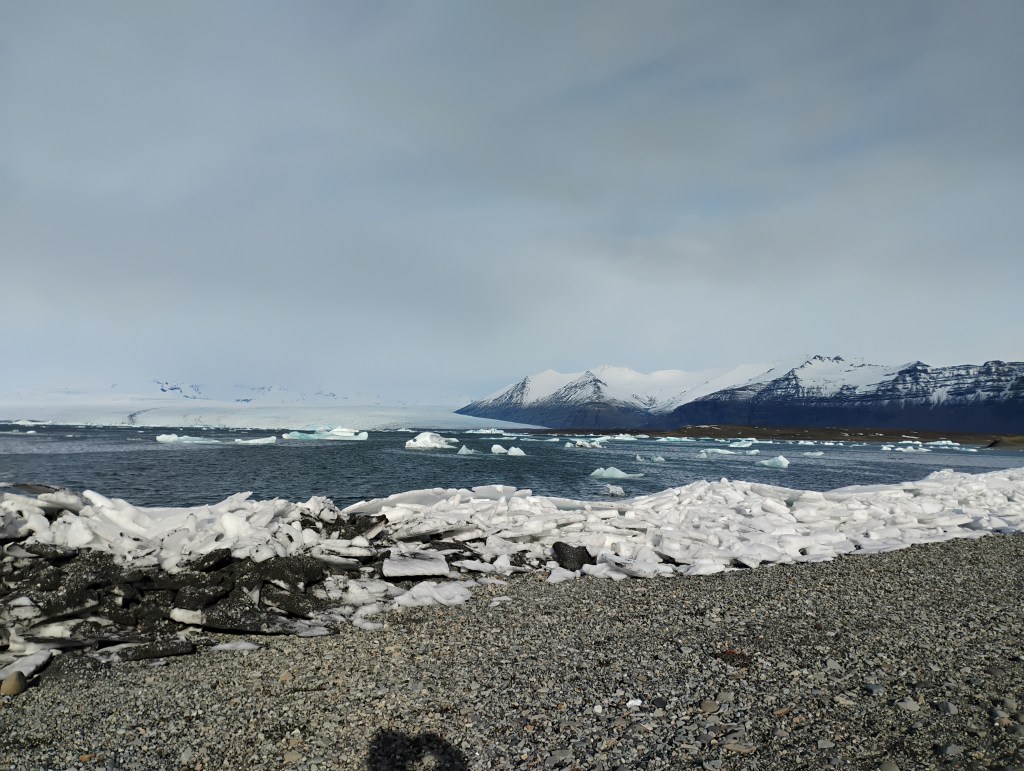
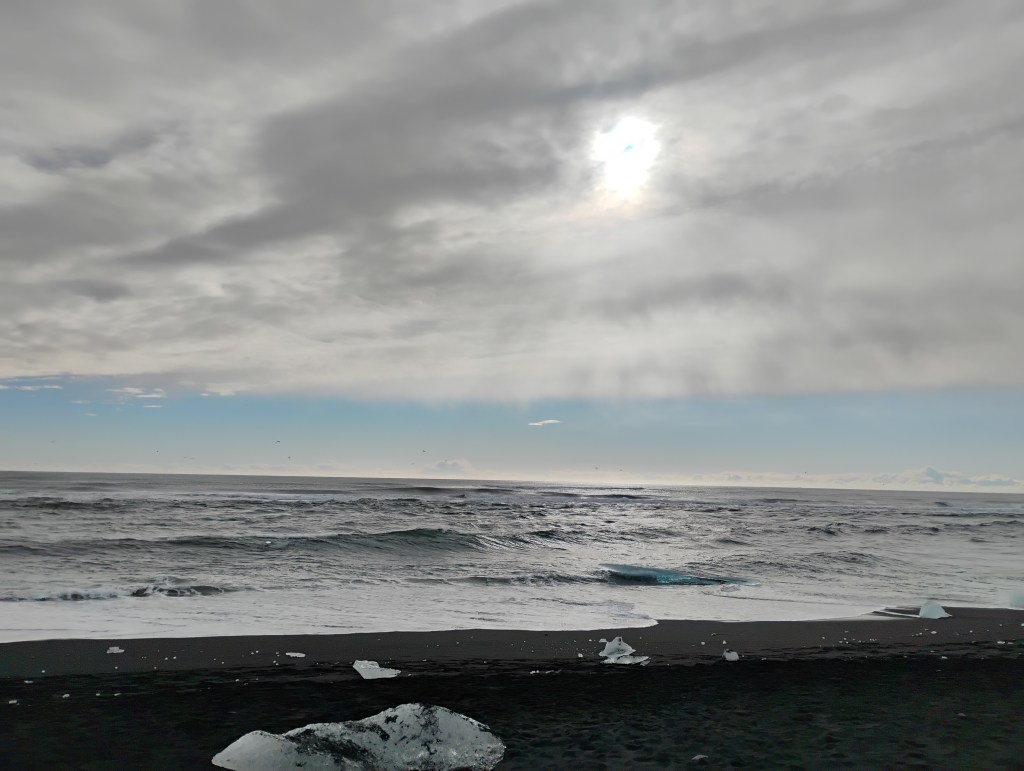
One thing that’s really unique about Jökulsárlón is that it’s parent glacier, Breiðamerkurjökull, used to extend all the way into the ocean. That mean that Jökulsárlón lagoon outlets into the ocean, giving you an amazing dual beach where the shores of the lake are strewn with ice and look like the picture above, while the oceanic side has an amazing black sand beach like the picture below, as well as washed-up ice that exited the lagoon. Jökulsárlón’s oceanic beach is actually known as Diamond Beach because of the polished, shining ice chunks that wash up on it.
The connection to the ocean means that the lagoon is a saltwater body, and that lets all sorts of animals swim into it. Herring, Capelin, and Arctic Char are some examples of the fish inside the lagoon, and seals will swim into the lagoon to hunt and hide from predators. We actually saw a seal cruising across the lagoon on an iceberg, but I wasn’t able to get a picture because it was too far away. Jökulsárlón was amazing to see, and I hope you enjoyed reading about it.
 Swanson School of Engineering