Touring the Hellisheiði Power Plant ended up being more interesting to me than I expected, mostly because it connected so clearly to some of the themes we talk about in International Development. At first, it just seemed like a tour of a renewable energy facility, but the more I thought about it, the more it felt like a case study in how access to energy shapes development.
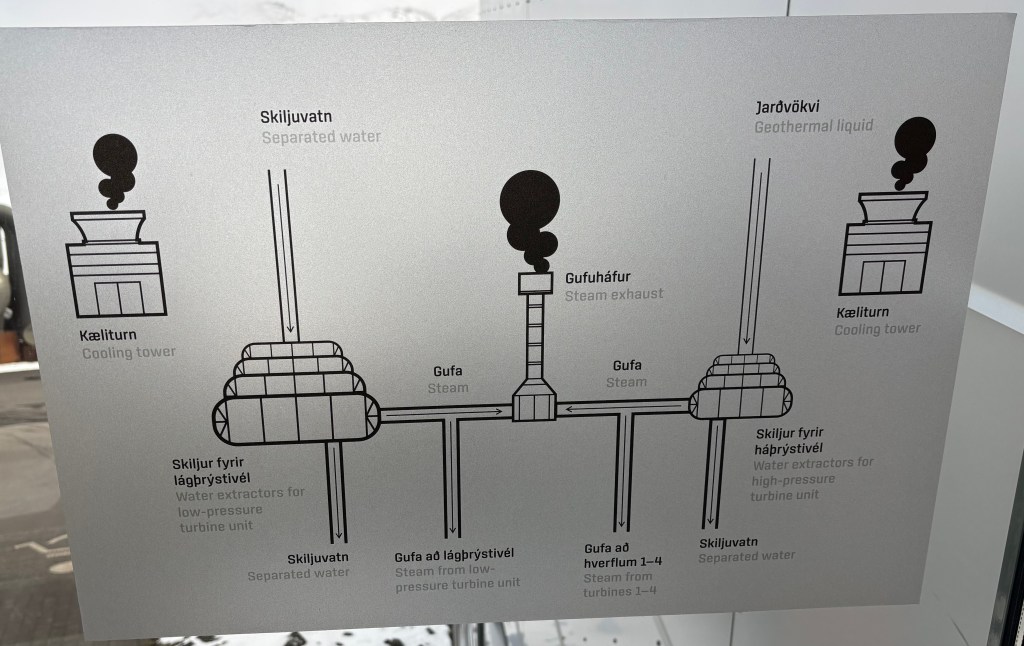
Hellisheiði sits on a geothermal field just outside Reykjavík, where wells drilled deep into the ground bring up extremely hot water and steam from underground reservoirs. The steam spins turbines to generate electricity, and the remaining heat is used for district heating before the water is reinjected back underground. Walking through parts of the plant and seeing huge pipes carrying steam across the landscape, it’s pretty clear how central geothermal energy is to Iceland’s infrastructure.
What I’ve been learning throughout this trip, though, is that Iceland’s level of development is actually relatively recent. For much of the early 20th century, Iceland remained a relatively poor and isolated country compared with much of Europe. The large-scale development of geothermal and hydropower resources played a huge role in changing that. Cheap, reliable energy supported industrial growth, improved living standards, and has allowed the country to modernize quickly.
During the tour, our guide briefly connected this to development issues elsewhere. In many parts of Sub-Saharan Africa, households still rely on biomass like firewood for cooking, and gathering that fuel often falls to women and girls. That can take hours every day, which directly affects things like education.
Standing in a place like Hellisheiði makes it easier to see how energy access fits into the bigger development picture. Infrastructure like this doesn’t just power cities: it shapes how societies grow, what opportunities people have, and how quickly countries can close development gaps.
 Swanson School of Engineering