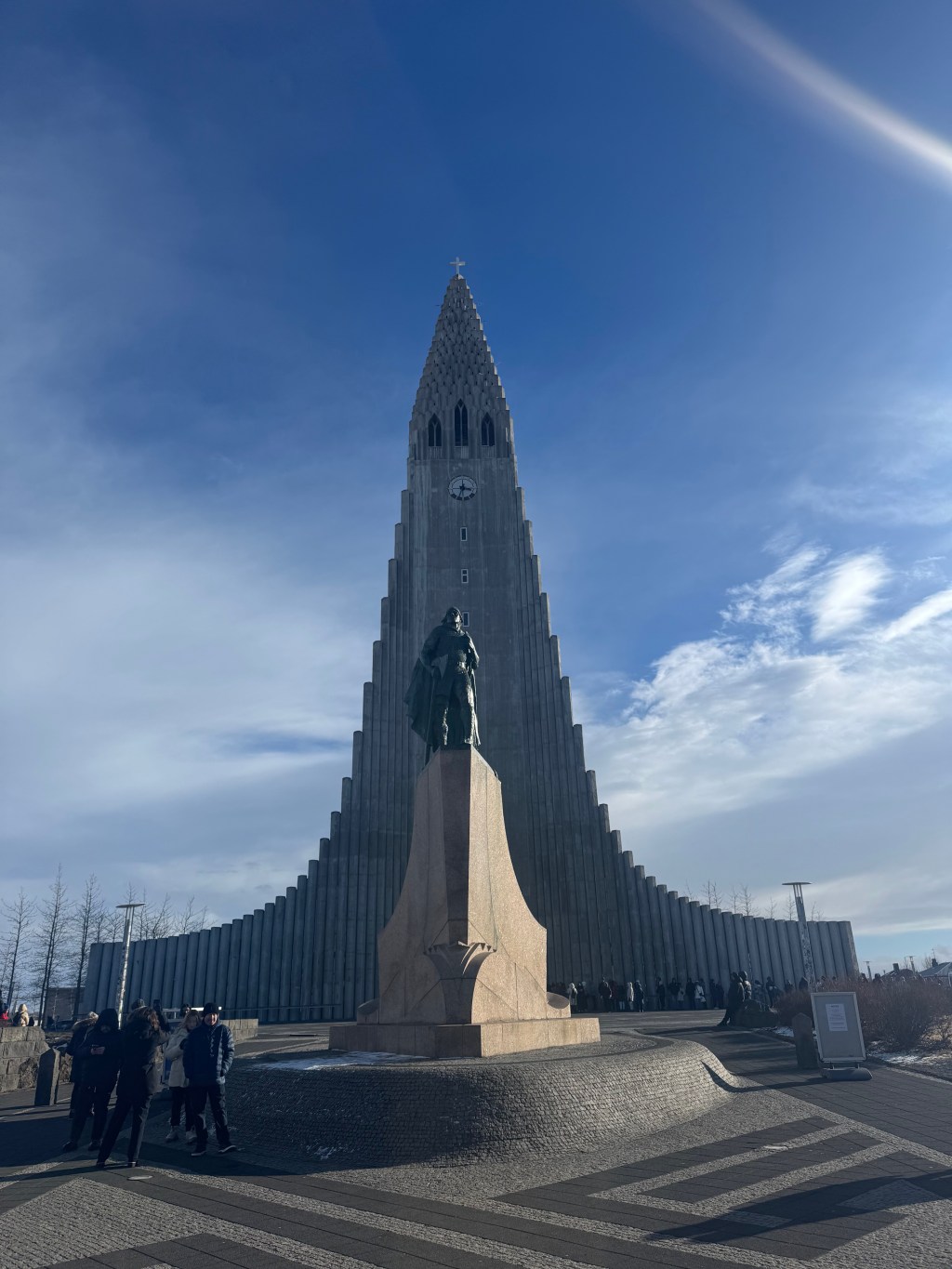
Dagur sjö! (Day 6!)
It is Friday and, sadly, our last full day here in Iceland. My brain has not fully processed that by tomorrow evening, I will be back in Pittsburgh. I would accidentally get stuck here, but sadly, I am almost halfway through my degree and have already tortured myself long enough. Also, they only get about one hour of darkness at night during the summer, and I think I would slowly lose my mind. So I fear I will be on the 5 PM flight back to the United States.
Today’s main event was a visit to Reykjavík University. As we walked in, we watched numerous college students loading onto a bus for a weekend ski trip to the north. First of all, I want that. BOO! Second, they seemed to be missing a critical part of their ski trip. Skis. Not a single pair in sight. The head of the engineering department told us that most of them own skis, so hopefully they have a plan. Otherwise, that is going to be a very scenic bus ride and not much else.
We started with a presentation about the university, especially their energy engineering bachelor’s and master’s programs. Their master’s program has roughly two Icelandic students for every eighteen international students. The program focuses on hydroelectric, geothermal, and wind energy. Their goal is to help build a knowledge base so students can return to their home communities and help clean energy grow and thrive. In another life, I would absolutely be a volcano eruption tracker and engineer in Iceland. (Technically, that job title would be geothermal energy engineer, but volcano tracker and whisperer sounds much cooler.) It is just such a vibe.
After the presentation, we visited several lab spaces. We saw a fully functioning sports science lab used for kinematics and biomechanics research, a civil engineering lab where they get to break things like civil engineers tend to do, and a lab that contains a full wind tunnel.
One thing that really stood out is that all first-year engineering students are required to be trained in the machine shop. This prepares them for future projects and research. Meanwhile, I am a sophomore and have only just gotten trained on the laser cutter, lathe, and mill because I am taking a junior-level class. Thanks, Pitt. I know you fear the power you might give us crazy engineers, but please let us enjoy the engineering arts and crafts machines.
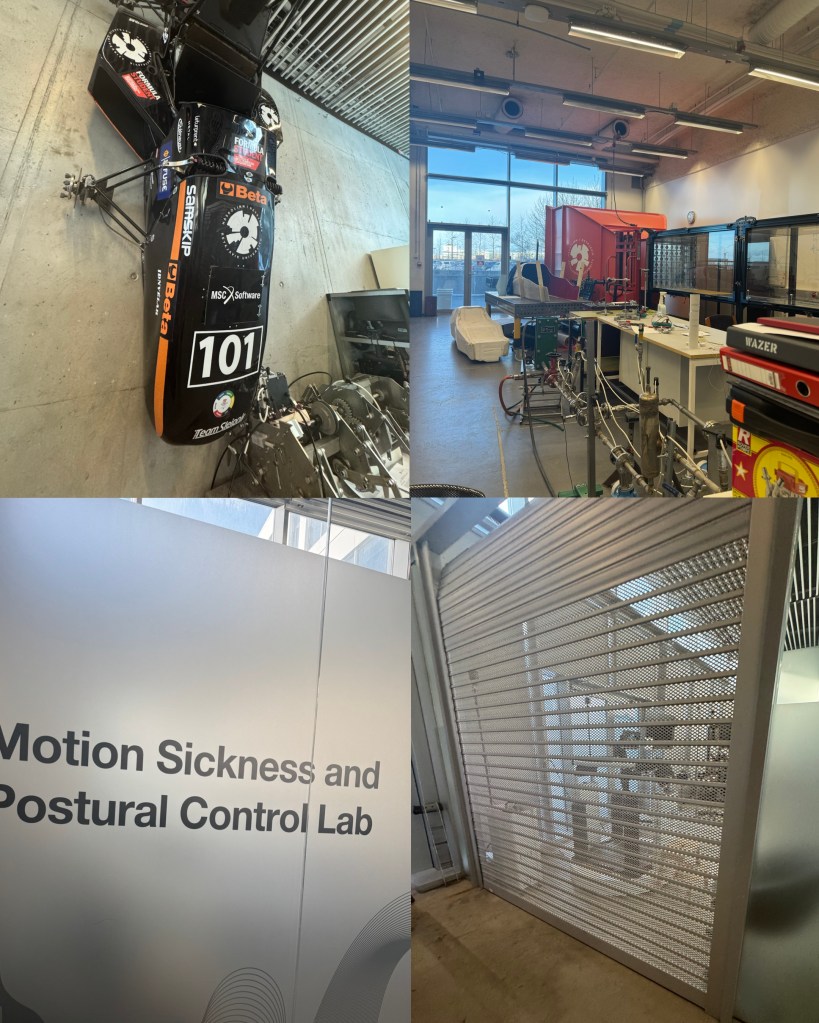
One of their interesting research projects involves a motion platform designed to simulate sea sickness. The machine helps researchers test how different conditions and demographics respond to motion. The professor offered to let us try it, but I do not think the Icelandic hot dogs and coffee would have appreciated that experience.
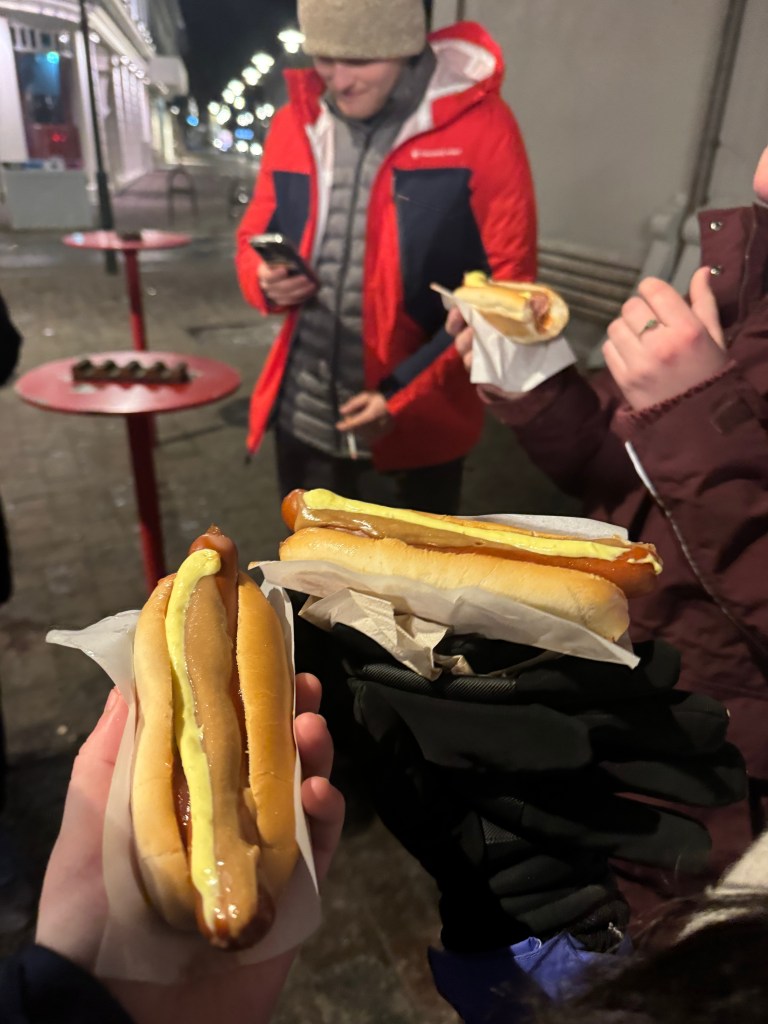
Quick side note. Icelandic hot dogs are incredible. I mean, truly amazing. They usually come with mustard, a sweet, crunchy sauce, lamb meat, and a few other secret ingredients. Trust me. If you visit Iceland, you must order a traditional hot dog. However, be careful with gas station hot dogs. They are really good, but maybe not ideal if you are about to continue a long road trip. Depending on your stomach’s sensitivity, you might need to use the bathroom sooner than expected. Just a friendly warning.
Back to the university:
After our tour, we listened to three graduate students present their thesis research. One student studies how home design and human behavior influence heat consumption. Another student is mapping geothermal reservoirs to locate subcritical pockets, which is basically gold mining for geothermal engineers. The final student studies seismic activity to help improve geothermal mapping. I do not think they were expecting our group to ask so many questions, but in my defense, I am a bioengineer, and I fully admit that I am often just trying to figure out what is happening, like everyone else.
To finish our visit, we attended a lecture on geothermal energy. This presentation built upon everything we learned throughout the week and gave us a broader view of how geothermal energy could be used outside of Iceland.
In theory, almost anywhere in the world can harness geothermal energy with the right technology. Iceland, along with places like Indonesia and Kenya, has ideal conditions because magma heats the ground close to the surface, the country sits along active tectonic plate boundaries, and the rock is naturally porous. In other words, Iceland basically won the geological lottery for geothermal power.
Other regions are not quite so lucky, but engineers are stubborn people and tend to solve problems by drilling deeper and inventing new technology. Today, we can create artificial porous rock structures through fluid injections and drill much farther down to access heat that was previously unreachable.
Geothermal energy has the potential to be a reliable and sustainable alternative to many traditional energy sources. Wind and solar power are great, but they depend heavily on the weather and location. Geothermal, on the other hand, just sits underground quietly doing its thing twenty-four hours a day like the most dependable coworker in the office.
Another bonus is that geothermal projects can sometimes reuse old oil and gas drilling sites once the fossil fuels are depleted. It is essentially the energy equivalent of renovating an old building rather than tearing it down.
Of course, there are still challenges and environmental considerations. However, as technologies like Carbfix continue to reduce emissions and improve environmental performance, geothermal energy could become an important part of the global clean energy transition.
And honestly, if geothermal energy can power one of the world’s largest algae-growing systems, we might one day live in a future full of renewable electricity and endless algae burgers. Whether that is exciting or slightly concerning probably depends on how adventurous you are with your food.
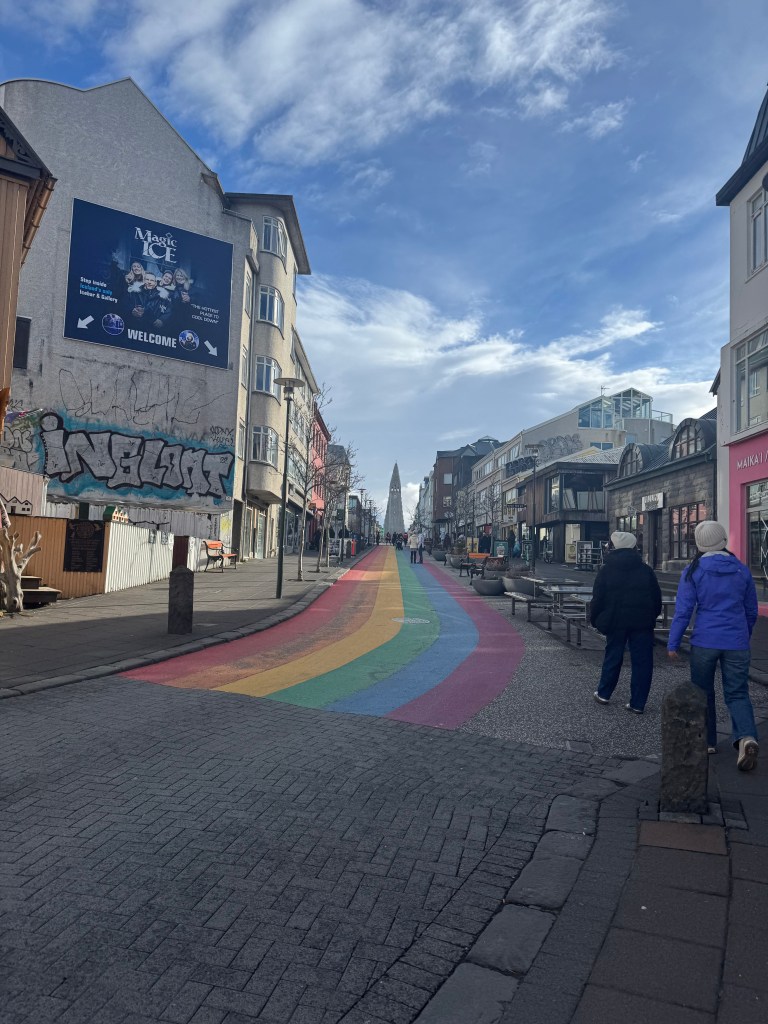
After our university visit, we stopped in downtown Reykjavík to see the rainbow road, the main church, and a few small shops. I spent several hours searching for an authentic Icelandic wool sweater, but unfortunately, the cheapest one I found was about 150 dollars. I cannot blame them for knowing their market, but all I wanted was a sweater with puffins on it.
Sadly, I am leaving Iceland completely puffin clothing free.
However, I did manage to acquire some lava rock earrings and a necklace, and of course, some sacred bones that bless travelers on their journeys. At least that is what I am choosing to believe. I know exactly what the shop owners are doing, but please just let me feel spiritually protected by mysterious Icelandic forces. It looked cool, okay.
It is my greatest sadness to announce that this will be my last post. I hope you enjoyed following along with my journey as I got to experience what the land of the Vikings looks like today. I already know I want to come back someday and see everything I did not get the chance to see this time around.
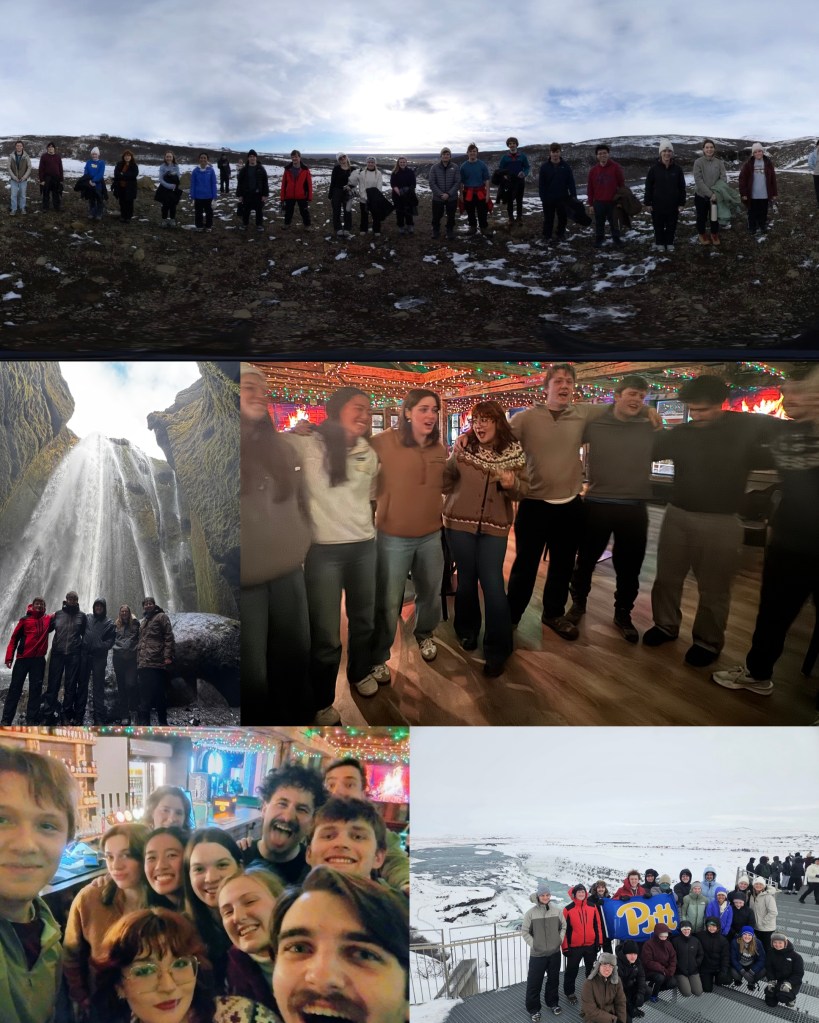
I made so many friends with my cohort, a few horses, and possibly some land spirits. Thank you to my cohort for joining me in random naps, hikes, and our shared love of juice boxes.
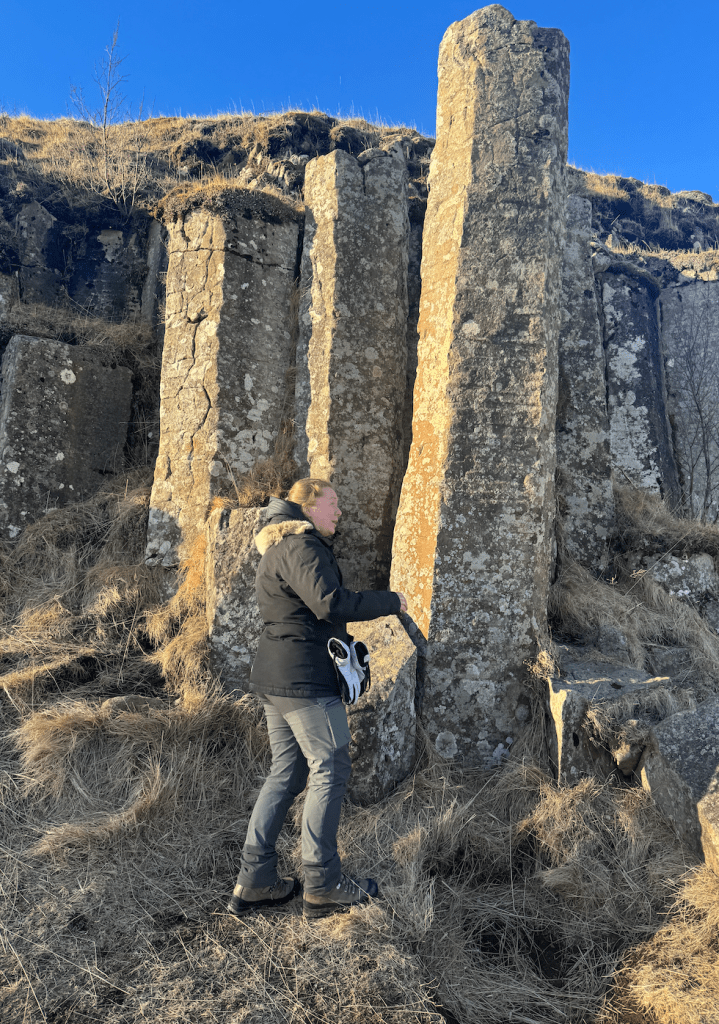
I want to thank Olof, our wonderful Icelandic guide. Thank you for teaching us about trolls, Norse gods, and just how alive Iceland truly is.
Thank you to our chaperones, Dr. Barry and Erin. Thank you for constantly counting us and making sure none of us wandered too far off when we inevitably got distracted by something cool or shiny. Even if you occasionally had to round the numbers a little.
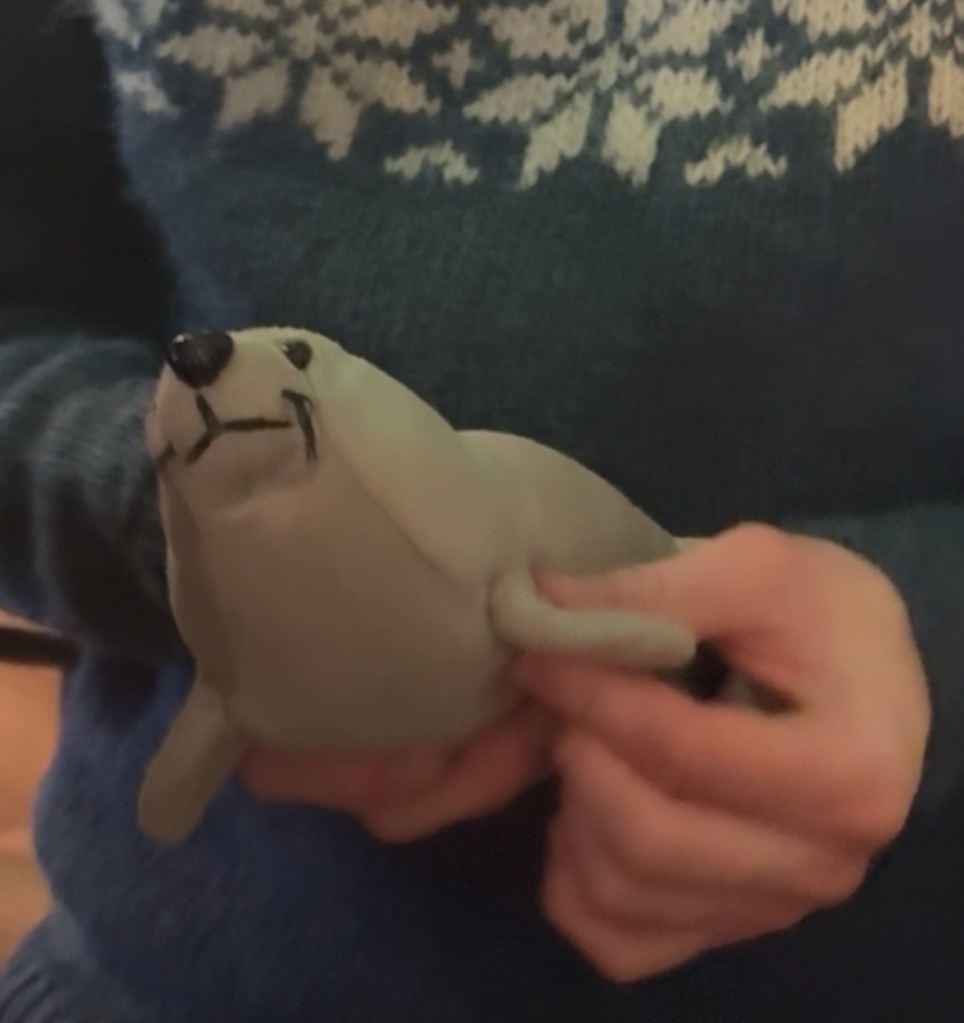
And lastly, but very importantly, thank you to Jæja, also known as “Yeah Yeah,” Josh’s seal, who taught us how to slow down and enjoy the moment.
And of course, thank you, readers, for being here and following along on the adventure.
Með hlýju og kærleika, bless! (With warmth and love, goodbye!)
 Swanson School of Engineering