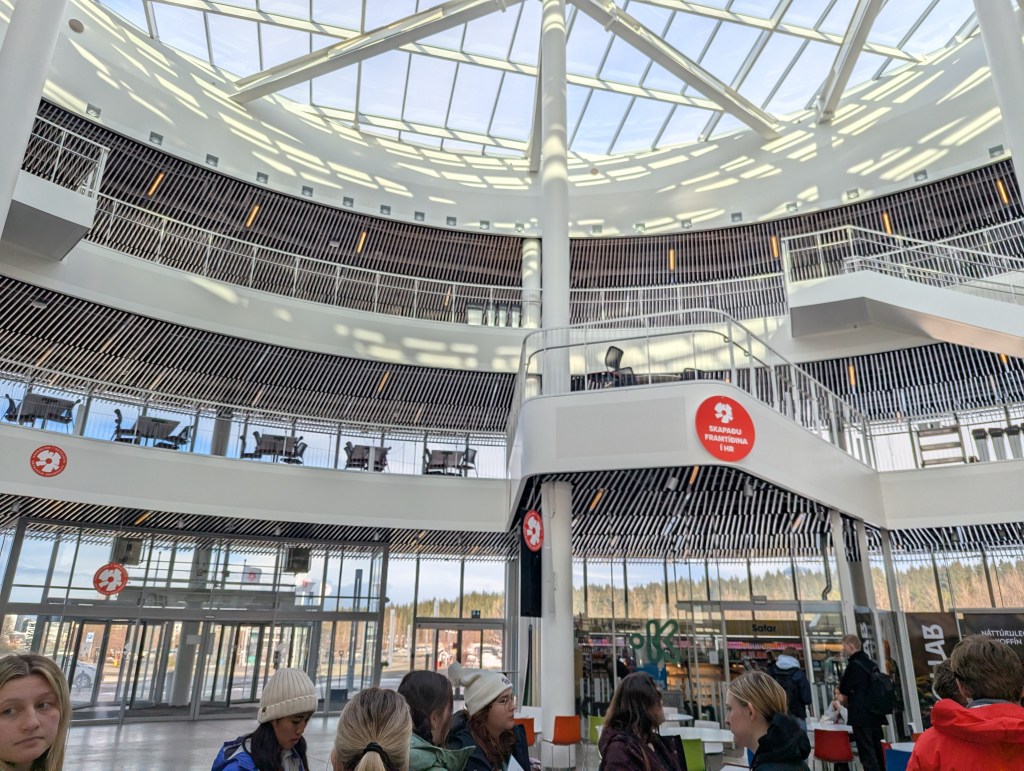
Visiting Reykjavík University was one of the most inspiring parts of the trip because it showed how technical innovation can directly support sustainable development. During the tour, we learned more about how Iceland has turned its natural geothermal resources into a reliable source of energy for both electricity and heating. What stood out most was how engineers and researchers approach energy not just as a technical challenge, but as a system that connects infrastructure, environment, and society.
Seeing the labs and hearing about geothermal research made it clear that solutions to global energy challenges often start with practical experimentation and local knowledge. Iceland is a powerful example: a small country that has developed expertise in geothermal energy and now shares that knowledge with other nations. This directly relates to international development because many countries have untapped geothermal potential but lack the technical capacity or infrastructure to use it effectively.
Universities like Reykjavík University play an important role in bridging that gap. By training engineers, conducting research, and collaborating internationally, they help turn renewable energy ideas into real systems. Walking through the department made it clear that sustainable energy development is not just about resources—it is about people, education, and the ability to apply knowledge to solve global problems.
 Swanson School of Engineering