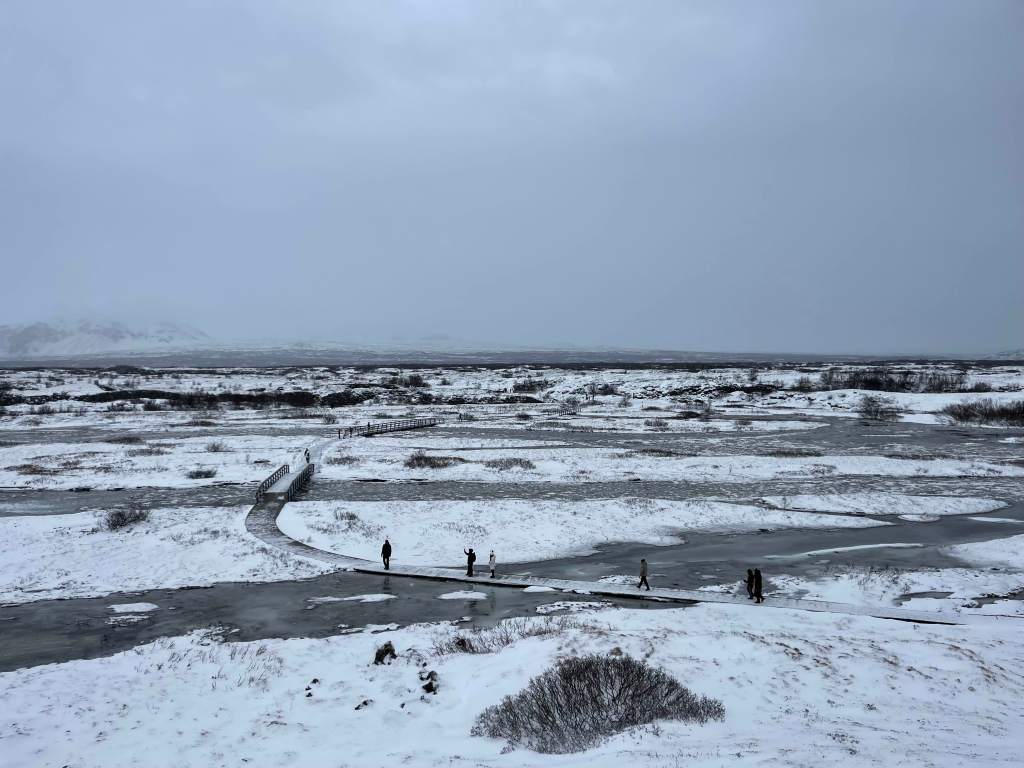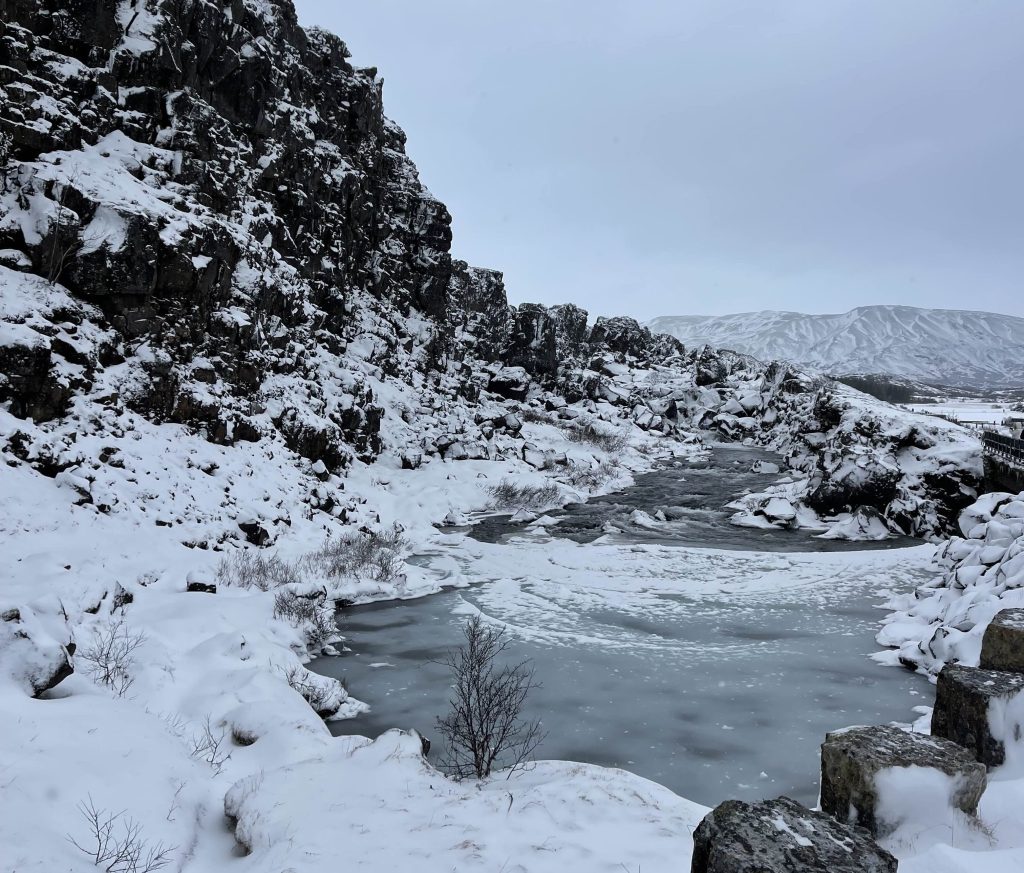
Iceland’s consideration of and appreciation for the environment is admirable. Choices regarding the land and bio life are clearly made with great intention, and they display the respect that Icelanders hold for the present, past and future state of the world. Today, as we walked through Þingvellir National Park, this reverence became even more apparent both due to the stunning natural features and the connection of the site to the country’s long-standing parliament, the Alþingi.
The Alþingi commenced in 930 CE when the regional leaders of Iceland came together to have a nation-wide discussion of Icelandic society and government for the first time. It is often considered the longest standing parliament, which is perhaps a surprising statistic given Iceland was only granted sovereignty in 1918 and only became the Republic of Iceland in 1944. In reality, there were 44 years where the Alþingi did not meet–and many more where they met to discuss only menial matters–but the statistic is still impressive. Regardless, the annual meeting of the Alþingi signifies the democratic nature of Iceland and their commitment to their culture even during years of foreign rule. When the festival once more gained impactful significance in the 1900s, it was a momentous event for Iceland and indicated their progress towards independence. Essentially, the Alþingi has always represented Iceland as a nation, and the restoration of its influential power validates their position as a state.
To see the meeting place of the Alþingi at Þingvellir National Park was to put into context the connection of Icelandic people not only within their community but also with the land on which they live. Simply the fact that their choice of meeting location was something as scenic as the park as opposed to the typical stifling building is enough of an indication of their dedication to the land (granted they have switched to meeting in Reykjavík, but that’s beside the point). The terrain of the park connects the governmental body with the people they preside over as well as the Gods that preside over them all, and offers a unique governmental structure where there is no divide between the geography and society, and they come together to form the true identity of Iceland.