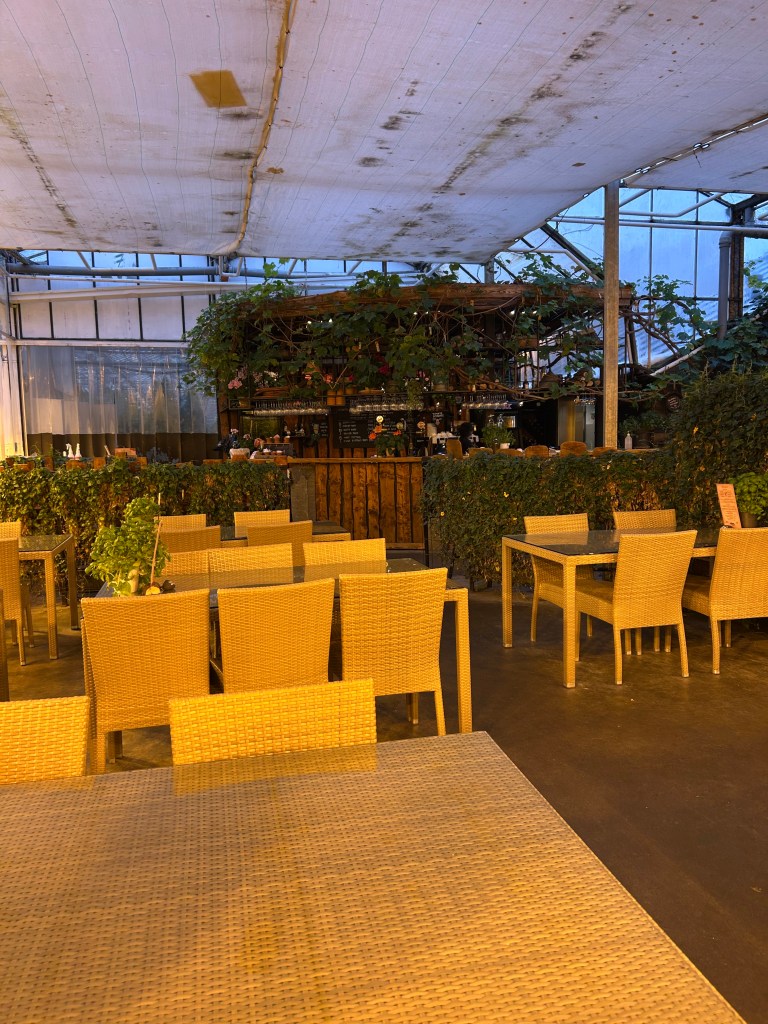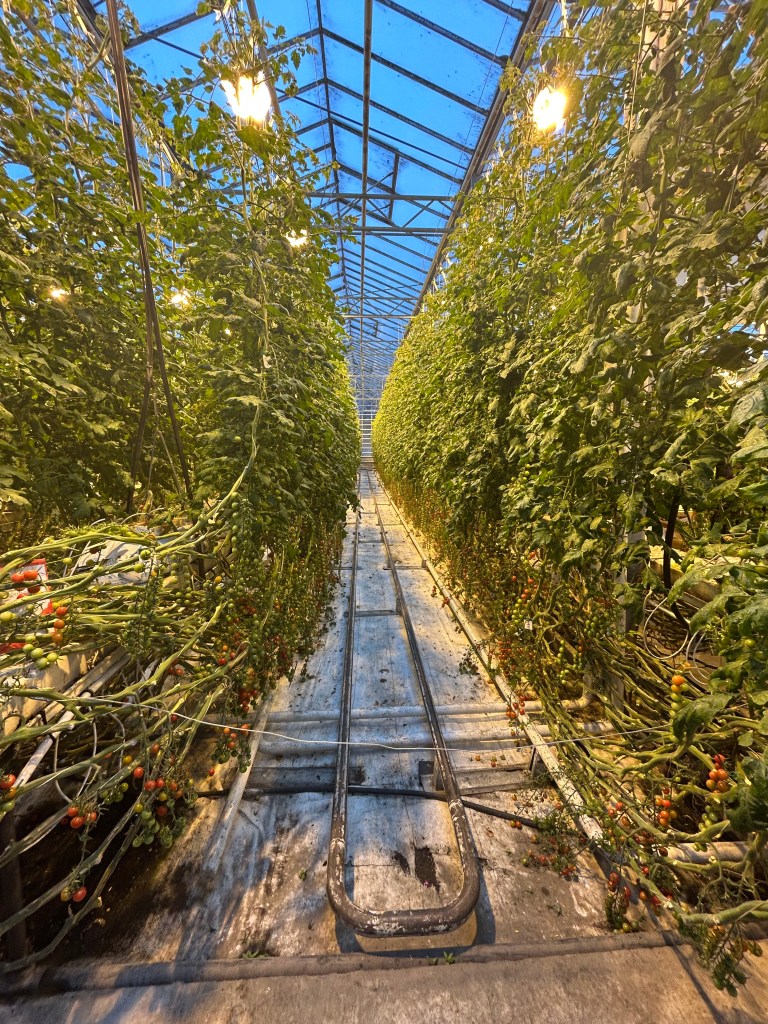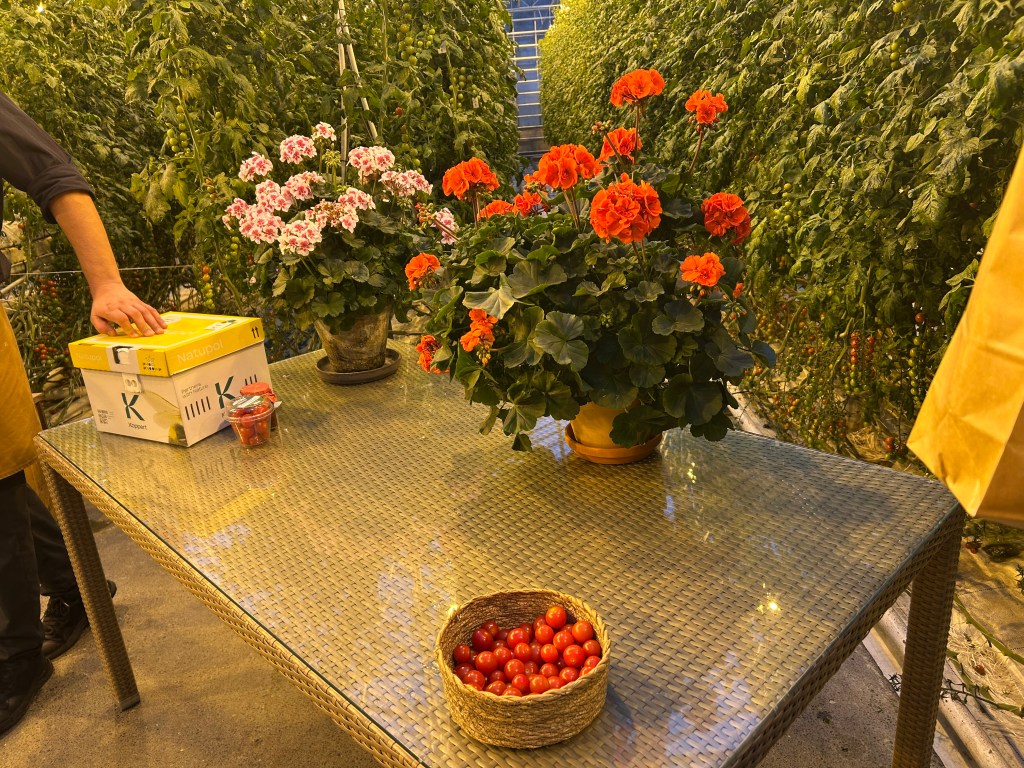
Today was a very big day for me and my special interests. We went to Friðheimar, a farm that specializes in sustainable farming. Their main crops are tomatoes, which grow in a greenhouse using a half and half hydroponics/soil method. At Pitt, I am very involved in the Hydroponics Club; I have my own system which I created and built, as well as help to maintain the other systems we have around Benedum. As one can imagine, I was very excited to visit this farm and get an insight into what hydroponics and sustainable farming looks like.
When we first got to the greenhouse and had a look around, I was shocked. They aren’t real hydroponic farmers, they use soil (eyeroll). Every 8-10 tomato vines were rooted in a bag of soil which sat on top of the system. Eventually the owner was able to explain that the soil was mostly for stability and the main nutrients were in the water, so I guess I’ll let this one slide. I really enjoyed seeing hydroponics being used in such a large-scale and successful way, with this farm supplying 40% of Iceland’s tomato production.
The most important aspect of this production is that all of the energy used by the farm comes from clean sources. Greenhouses take a massive amount of energy to run, so finding clean and sustainable sources for said energy is the only thing that will make greenhouses truly “green”. The energy that this greenhouse runs on it entirely from sustainable sources. The power comes from renewable energy sources nearby and the hot water comes from geothermally heated water from the ground. This farm is an important model of sustainable farming that can be used across Iceland. Crops can thrive while being shielded from the harsh environment of Iceland without consuming energy from harmful sources such as oil and gas. Iceland’s unique aptitude for geothermal power makes hydroponics greenhouse farming and very viable source for fresh produce across the country.