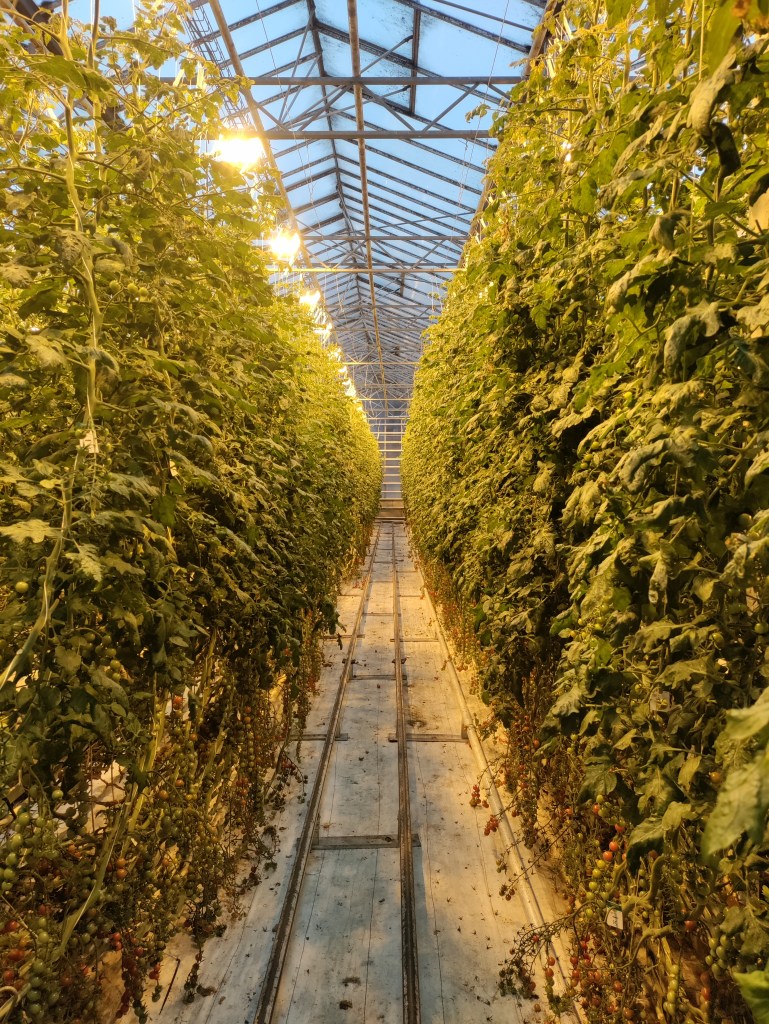
After visiting Thingvellir, Gullfoss, and the Geysers, we finally visited the Friðheimar greenhouse. This greenhouse is one of Iceland’s largest, according to the guide that led us around the facility. In fact, it has 40% of the market share of the tomato market. The complex is powered by geothermal energy; hot spring water is collected from nearby hot springs and then circulated through pipes to heat up the green house. Overhead lights provide lights for plants during the long winters and some supplemental heat, although the vast majority of heat is provided geothermally. I found that this was a surprisingly simple but clever way of using renewable energy resources; the greenhouse gets its heat from naturally hot water in the environment, and any electricity that is needed is simply generated either by geothermal or hydroelectric power, taking advantage of what is present in the landscape. The ability to heat greenhouses is particularly important in Iceland; the growing season is very short, and even the summers are fairly cool, meaning few crops can grow here. Food can be imported, but shipping is expensive given how remote the country is. Therefore, it’s very valuable that it is possible to cheaply heat greenhouses and grow most of the produce in the country itself.
 Swanson School of Engineering