Question 1:
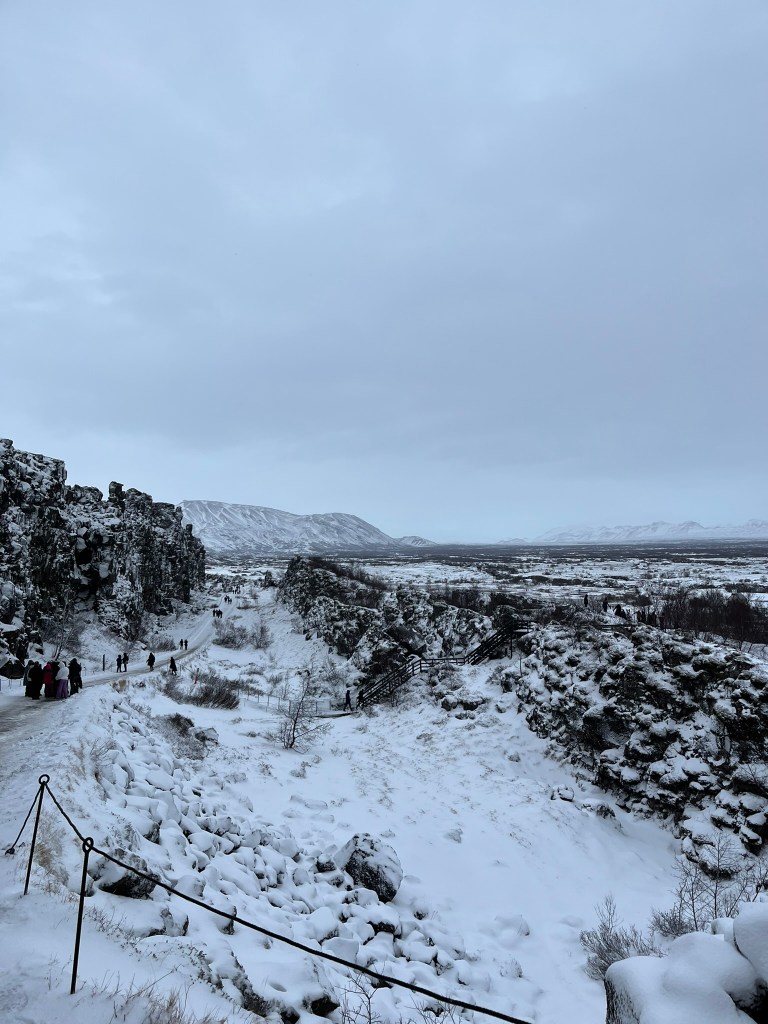
The Althing was the first formal government of Iceland. This governmental system lasted 641 years (until the 1800s). During the spring and fall, parliament was held by the godis of specific regions. In the summer, however, a national parliament was held in Thingvellir. This gathering saw over 40% of eligible Icelandic voters attend. A festival was usually held where both constituents and representatives could mingle. After the godis met together to discuss laws and settle disputes leftover from the fall/spring parliaments, the law speaker would preach the Icelandic laws into a rockface, called the law rock. The “law rock” was a cliffside within the Thingvellir canyon that echoed the speaker’s voice to thousands of people. 1/3rd of the laws were spoken to the crowd (1/3rd of laws were spoken every year for 3 years). The law maker was surrounded by other godis who formed a circle around him. Circles and the number 3 are very significant/sacred in Norse mythology. Godis were not only in charge of enforcing state legislation, but also religion. One of the laws established in summer parliament was implementing Christianity as the national language of Iceland.
The intersection of the state, Norse mythology, and religion present in are foundational to Icelandic culture. Since practicing Norse beliefs publicly was banned due to the Christianity decree, Iceland became increasingly more Christian. The effects of this are still felt today as Iceland is predominately Christian. However, Norse mythology was always still present in the culture, even if the stories were no longer attached to religion. Norse mythology was passed down orally and eventually by written means throughout Icelandic history. Norse influence is present in architecture, statues, and other art forms.
Question 2:
The geography and climate of Iceland pose significant challenges to farming. The soil is constantly wet throughout the year. It also constantly freezes and unfreezes with fluctuating temperatures. Because of this, the soil has large mounds, which makes it difficult to till with equipment. Due to high winds, the soil easily blows away and the plants, which do not have deep roots, also blow away.
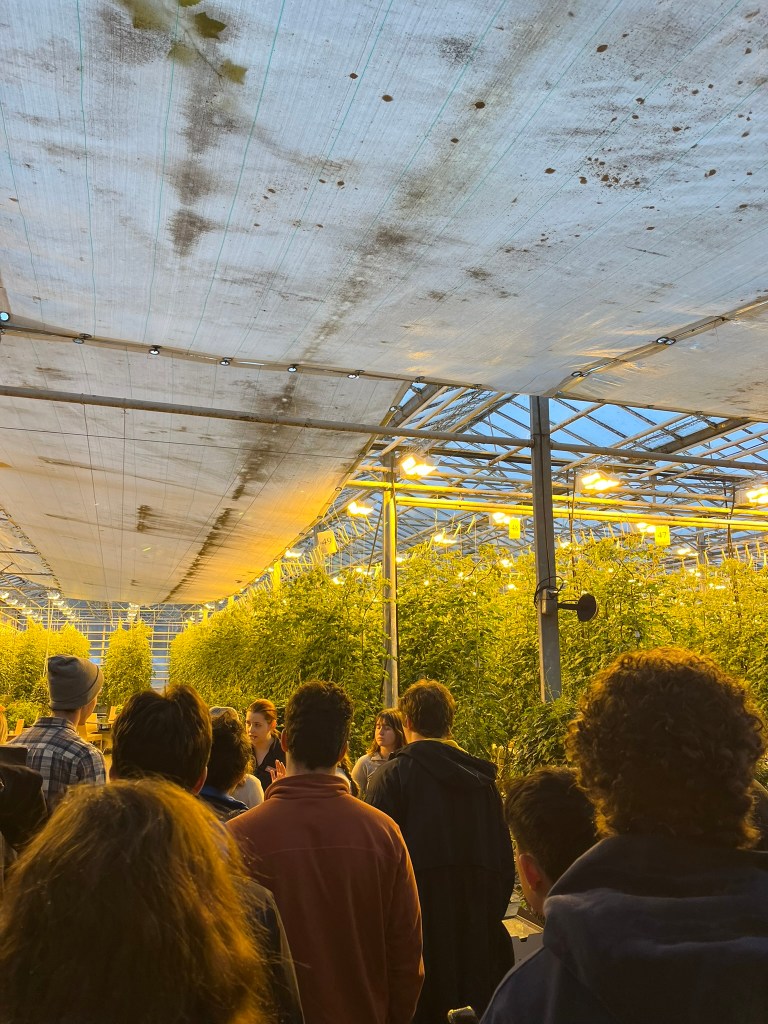
The owner of Fridheimar stated that they do not need to use pesticides as Iceland does not have mice. The only threat to plants are a species of fly. The hydroponic farm takes care of this by using larger flies to eat the pests. On top of the fertilizers and nutrient-enriched water pumped into the plants, the farm utilizes its own colony of bees to pollinate the plants. The same crops are grown year round in the hydroponic system. Workers hand pick every fruit/vegetable.
Traditional farming practices within the US are much different. Soil is easily tilled and rocks separated from the soil. Plants are able to be mass planted with machines as well. Many US farms utilize fertilizers and GMOs to enhance their plants. They also use pesticides to deter insects and rodents. Bees are not commonly used to pollinate large farms. Some farmers implement crop rotation to “rest” the soil. Soil needs to be “rested” because planting the same crops over and over again depletes the soil of specific nutrients. By rotating the crops, these nutrients are able to be replenished. While the hydroponic farm has 27,000 plants total, it is no where near the scale of mass farming in the United States. US farms also waste a lot of the product. Overripe plants are left to rot in the fields and can sometimes put nutrients back in the soil. Often, farmers do not pick the fruits/vegetables by hand and use a machine.
Sustainable practices that could be learned from the farm are harvesting every fruit. Additionally, conserving water or using less water in traditional farming could be transferred from hydroponic farming. The implementation of bees as pollinators is also a good sustainable practice.

