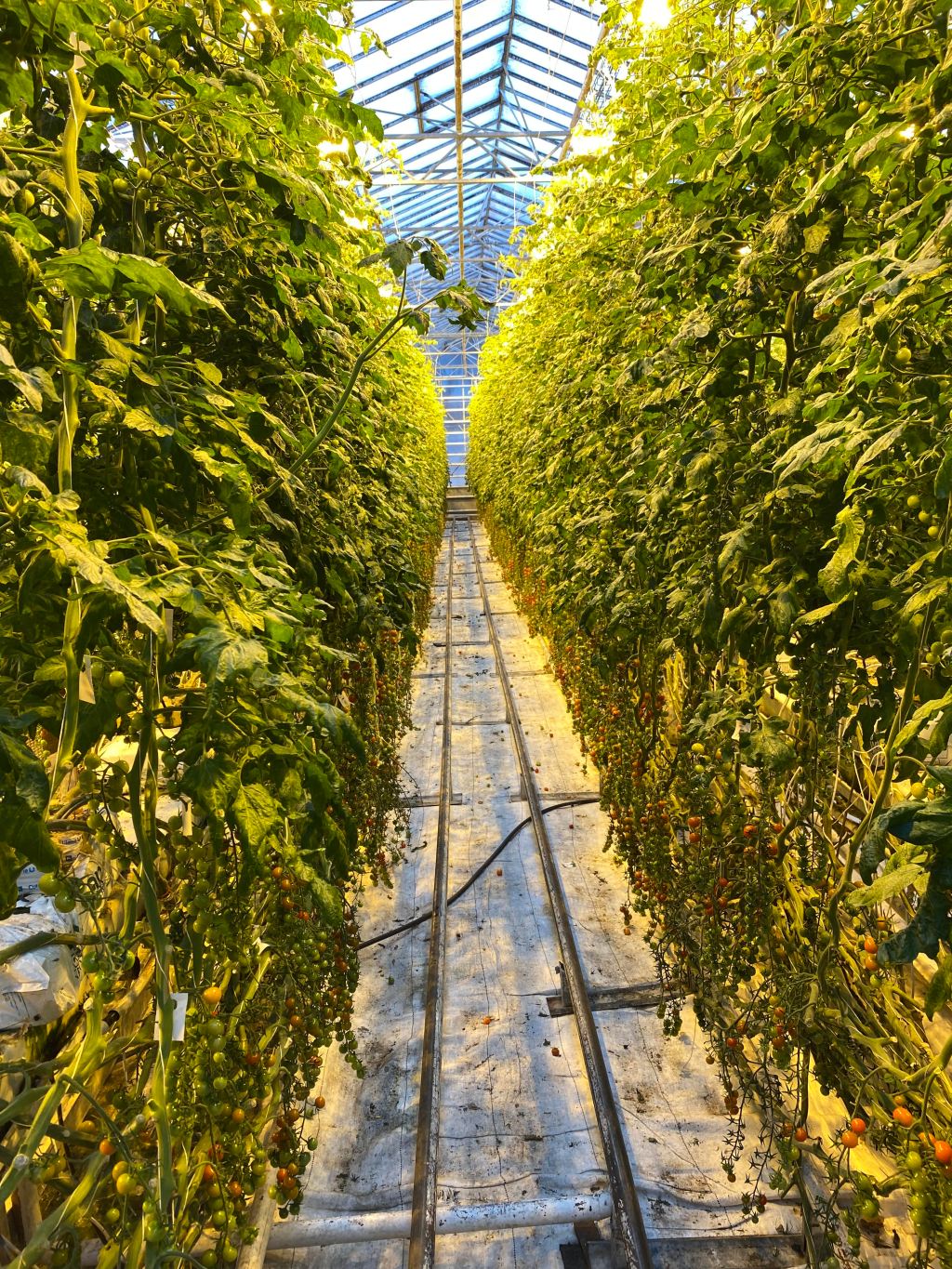
Today was Day 3 of my trip in Iceland, and once again it was very full of many fun activities. We visited the Gullfoss waterfall, a geiser, many natural parks, the site of the worlds first parliament (Althing) as well as a greenhouse farm: Friðheimar. All of these activities allowed me to further appreciate Iceland’s natural beauty and unique culture; however, this being a sustainable engineering course made me really appreciate the visit to the greenhouse farm.
The formation of the Icelandic Althing was very unique for this time period. As compared to other European and Scandinavian countries that relied on a monarchy or some type of centralized power for governance, the Althing would see the discussion and cooperation among free men in an almost democratic environment. Furthermore, the Althing and Icelandic society also differed from the rest of civilization at this point as decisions brought by this government were not enforced by a police force or army, rather by social pressure and “honor”.
The farm at Friðheimar uses many innovative solutions to be able to produce tomatoes in a country with such a harsh climate such as Iceland. Intuitively, tomatoes would not survive in Iceland (even in the summertime, let alone the winter). Therefore the farm at Friðheimar uses geothermal heating to heat its farm by passing hot water from deep underground through pipes that run the length of the farm. These pipes along with grow lights hanging from the ceiling keep the farm at 25-30 C at all times of the year, allowing for tomatoes to grow. This is very unique and sustainable as this method of heating is essentially free and has minimal environmental impacts. Furthermore, any electricity used by this farm also has a minimal environmental impact as all of Iceland’s energy grid depends on reusable energy.
Overall, this sustainable farming is very impactful as it is able to produce a significant amount of food (almost 9 greenhouses full of 4.5k tomato vines each!) with very little energy. Expanding this technology to other foods could potentially see a significant portion of the population fed with very little environmental impact.

