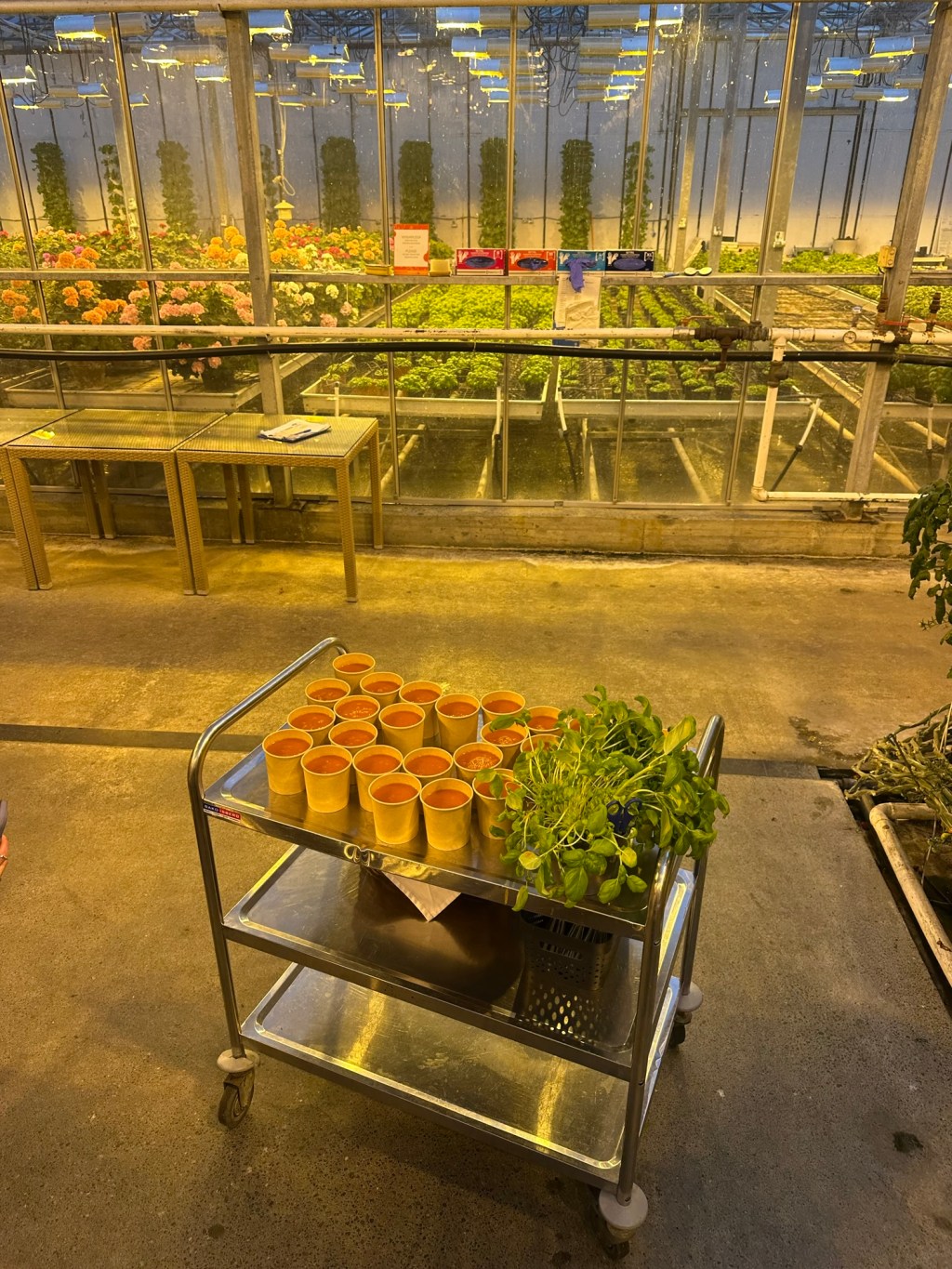
Today was one of the tours I was most interested in and looking forward to when I was home looking over the trip’s itinerary, the Friðheimar greenhouse. The greenhouse consists of cultivating a variety of vegetables, with a primary focus on tomatoes. They have 4400 tomato plants growing under artificial light year round; they focus heavy emphasis on their greenhouse maintaining fully green values and growing processes. The use of green energy that Iceland’s electricity is built upon, pure water, and no usage of pesticides allows them to produce high-quality, natural tomatoes within the harsh temperatures and weather that Iceland faces.
The farm has abundant supplies of geothermal water, which provides heat to the greenhouses in order to keep the tomatoes at their ideal growing temperature. Further, pure water is used in the process, as tomatoes are about 90% water, so the better the quality of irrigation water, the higher the quality of tomatoes!
I was surprised to learn that the bees that pollinate the tomatoes at their cultivation center have to stick to pollinating their specific type of tomato in order to produce a pure type of tomato, such as piccolo, plum, traditional, and heirloom. If not, the crossed pollination could result in hybrid varieties of tomatoes! I never realized that this occurred. I discovered that when bees pollinate different varieties of tomato plants, they can carry pollen from one plant to the flowers of another– when two genetically different varieties are pollinated by the same bee, the pollen from each variety mixes.
As we spoke to the owner, I loved that they truly prided themselves on the idea that they can call their greenhouse a fully “green” house due to their usage of geothermal energy from Iceland’s abundant geothermal resources rooting from volcanic activity caused by the tectonic plates beneath Iceland’s surface. These resources are utilized for both electricity generation and heating, providing clean, sustainable energy. Some of the greenhouses I have seen previously still rely on nonrenewable energy sources like natural gas and electricity from fossil fuels due to their geographic location and overall affordability.
Visiting Friðheimar allowed me to realize the truly beautiful possibilities of sustainable farming and the benefits of geothermal energy.

