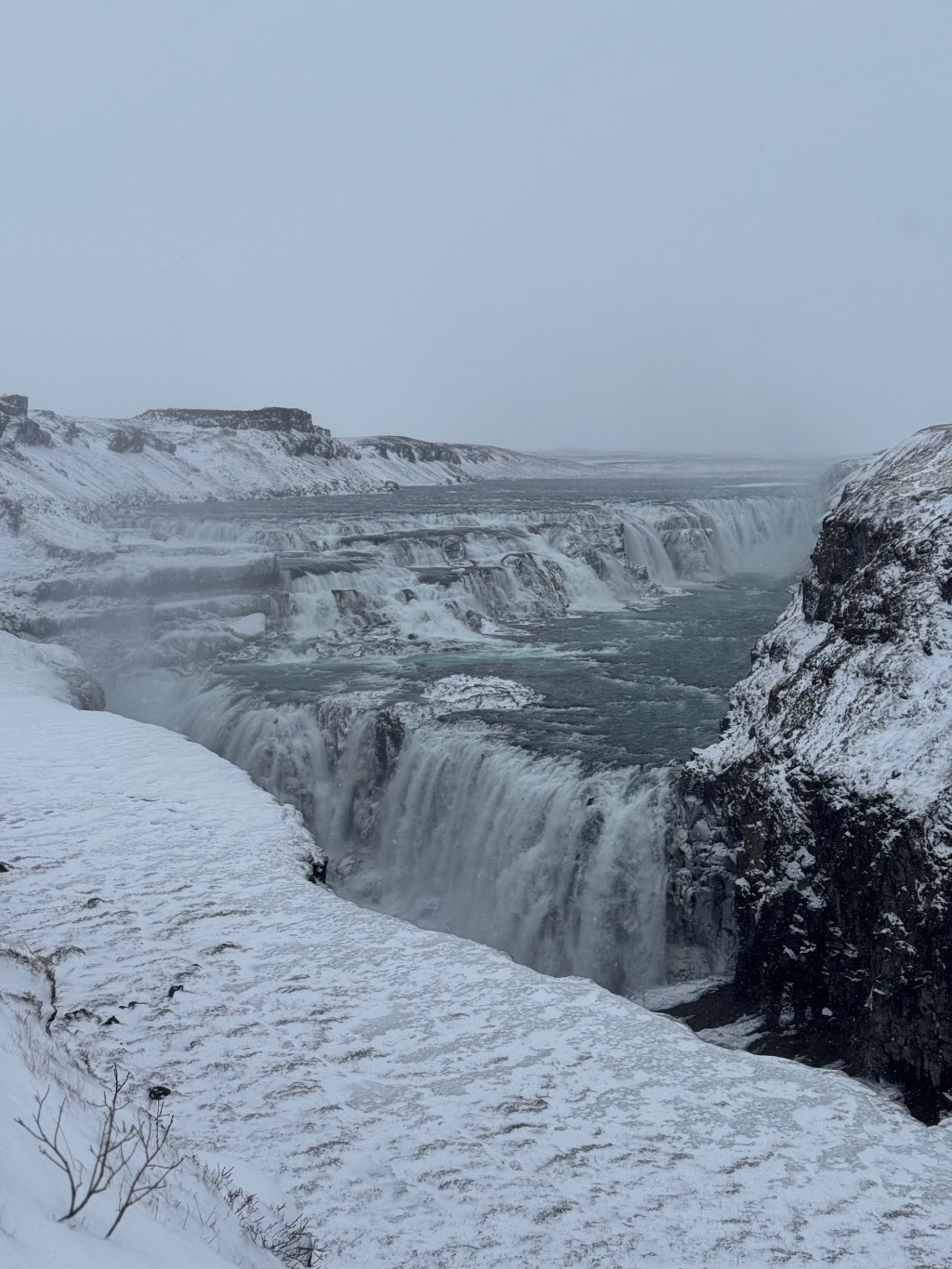
The landscape of Thingvellir has been crafted and shaped by the massive and powerful water flow through the canyon. The water has, for ages, carved a path in the rocks and created this beautiful monument and wonder of nature that we see today. The waterfall has shaped the park around it as large cliffs loom over the river after the waterfall and the rushing currents have created chips and secondary flows of water from other areas into the main river.
The ecosystem around the waterfalls is pretty barren, with only some small shrubs or stick-like plants on the cliff ledges or the shorter secondary cliff. But the ecosystem right now there was also pretty barren in the winter but a picture in Dr. Barry showed that in the summer, the cliffs have moss and little shrubs growing on the sides of the cliffs and rocks. I noticed that there was plenty of other paths around the waterfall that had been closed off, probably because the rock foundation was withered away from the constant flow of the water. But there were plenty of viewing points to see amazing angles and views of the waterfall and how it shaped the canyon that lots of tourists come to see.
This waterfall enhanced my experience of Iceland by showing how the Icelandic terrain was carved and formed from nature. Besides the lava flows and seismic activity, erosion is rarely talked about for forming some parts of Iceland. The constant heavy flow of water will chip away rocks and create new pathways for the water to follow. Iceland has plenty of waterfalls which contribute to the shaping of its landscape as well as other water-related geographical features like geysers, rivers, and lakes. These all contribute to the shaping of the landscape and affect the way people live around Iceland.

