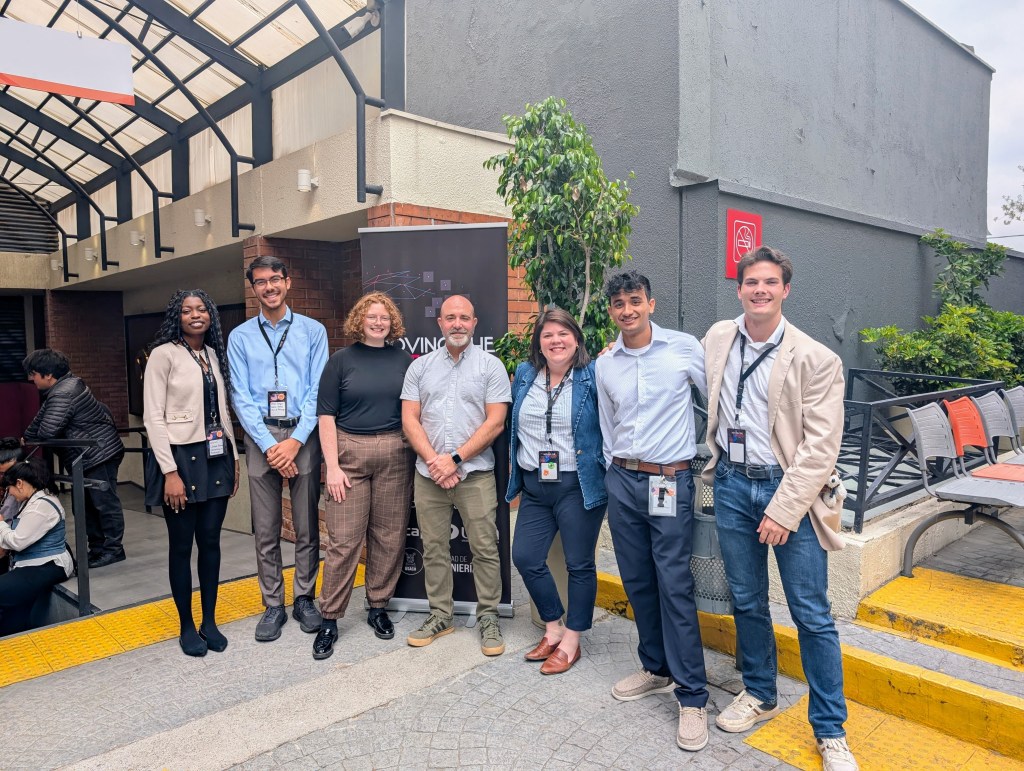
Entering into Moving the Cities, I did my best not to have any concrete expectations of what my takeaways from the program would become. I have gone into similar programs in the past with a strict itinerary in my mind and have almost always found myself to be profoundly incorrect. Turns out you cannot confidently know a whole lot about people or places until you have experienced them first hand. Who would have thought? So, I have given up on entering in with any sort of set expectations. Of course, I was beyond excited to be exploring a new place with new people. In the midst of doing that, I found Moving the Cities to be a crash course in open mindedness and challenging your own (often hidden) preconceived assumptions. I can confidently say that I emerged from the Moving the Cities program with a deepened personal, academic, and professional skillset.
There is nothing quite like developing and pitching an sustainability-focused innovative design project in a group of eight strangers from all over the world to teach you the power of effective communication. I found this to be one of the most valuable lessons to emerge from my time in Santiago. As a chemical engineering student, I am often in courses strictly with other individuals in my major. While this can be beneficial for subject mastery, it can also create a barrier to outside perspectives and exploring alternative ways to approach problems. By working with people of all different backgrounds, both in terms of culture and education, I was able to mingle with some non-engineers and become a more well-rounded engineer in the process. In particular, I enjoyed learning from one of my teammates who is studying marketing. While I often approached the issues at hand from a technical perspective, she was able to connect it directly back to people and evaluate whether the concept would hold up as a feasible business model. On top of this, navigating language and cultural barriers allowed me to fortify my communication skills. Presenting our final pitch to a diverse audience of educators, students, and industry professionals required us to deliver an impactful message in an easily digestible way. Teamwork and operating under a fail-fast mentality also emerged as important themes. Both of these are emphasized in my engineering coursework and were able to be applied in an impactful way through my team’s design work.
Above all, Moving the Cities reiterated the sentiment that engineering is a truly global profession. It is clear to me that in order to develop solutions that have the capacity to impact the world, you must first have awareness and respect for the people whom those solutions are impacting. Engineers can always benefit from broadening their horizons and my experience during Moving the Cities is proof of that.

