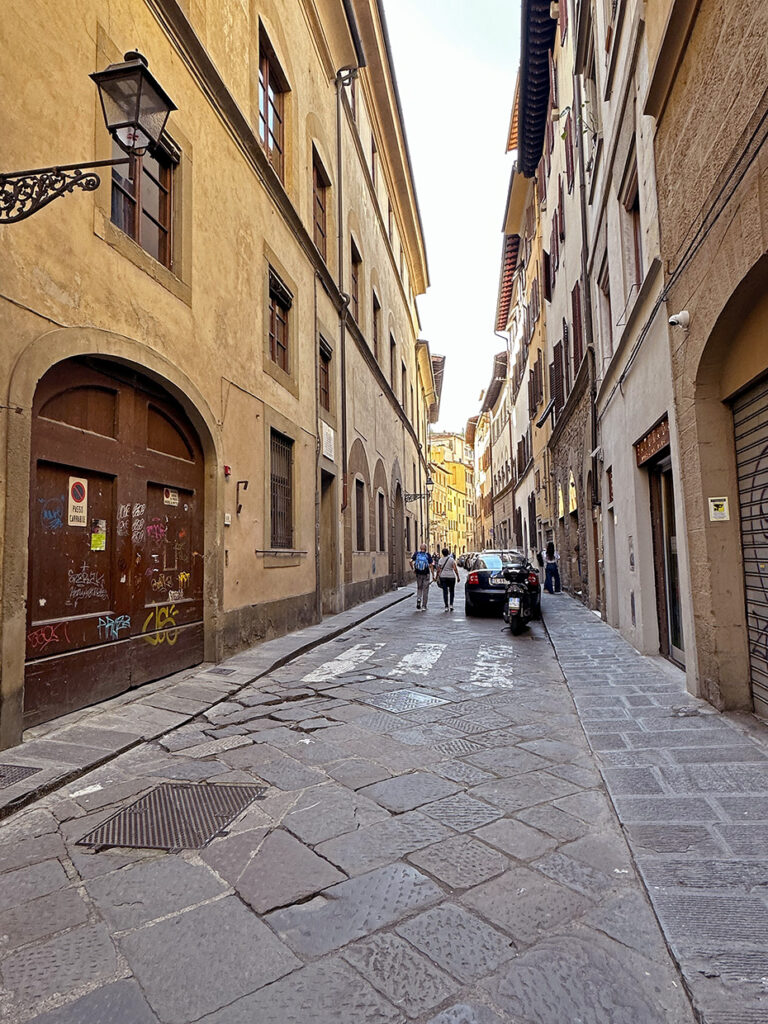
When I first arrived in Florence, I was surprised to see how small the sidewalks were. Since so many people walk to get places in Florence, shouldn’t spacious pedestrian infrastructure be a priority?
When we began discussing the history of Florence, I was able to shift my perspective and look at the blocks surrounding my apartment through the eyes of an urban planner from the Renaissance. Though the sidewalks do not allow for two people to easily walk next to or past each other, the roads are nearly always empty of cars and available for people to walk intermittently. If during the Renaissance the decision had been made to enlarge the sidewalks any more, either cars (or carts, back then) would not have been able to pass through the streets or the space taken up by the roads and sidewalks would have had to increase. Both of these options would have been unideal because carts were necessary for transporting goods during the Renaissance and optimizing space and resources (as it usually is) was a priority. Together, smaller sidewalks and roads allow pedestrians and carts/cars to comfortably navigate the streets of Florence while saving space and resources.

