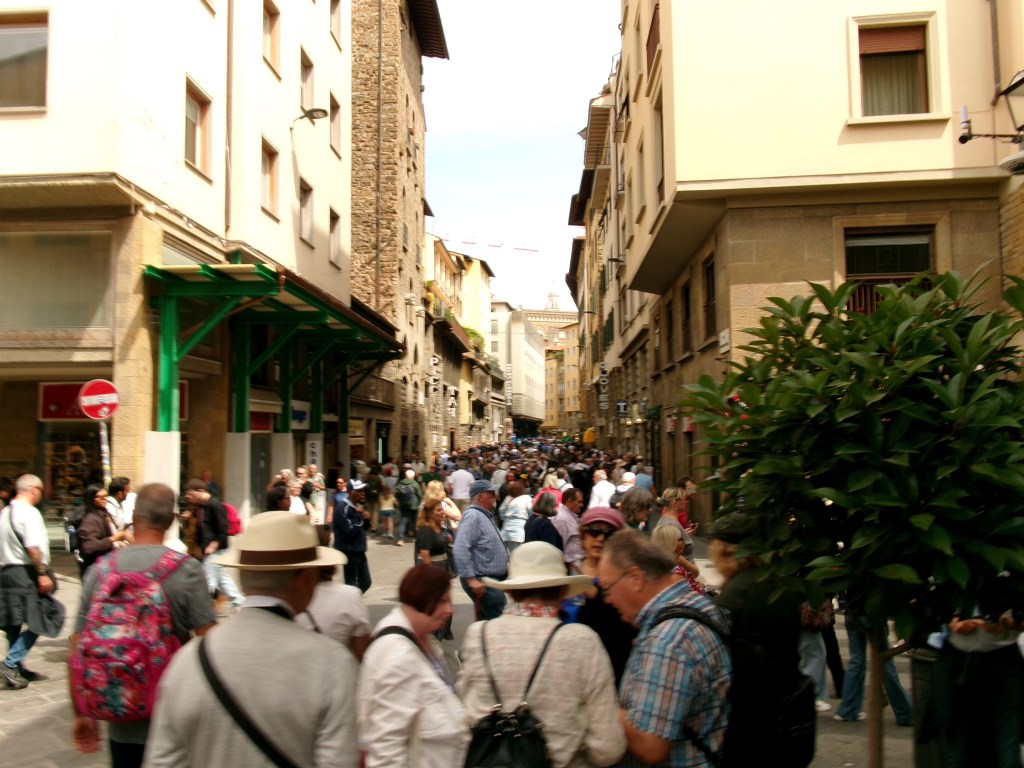
As I have settled into my apartment in Florence, it has been breathtaking to experience a world so different from America. The streets of Florence alone feel remarkable, and I often find myself wondering how a Renaissance urban planner would have viewed them.
The streets are clearly designed with people in mind, reflecting the Renaissance belief that urban spaces should support social and civic life rather than mechanized transportation. Their narrow proportions reveal that the city was built for the human scale, not for vehicles. As I walk through my neighborhood, the buildings create a strong sense of harmony through their consistent heights and organized layout. This orderliness supports clear visual perspectives throughout the city while rejecting the irregularity commonly associated with medieval urban design.
The buildings are also positioned directly along the street edge, forming a defined urban corridor that feels secure and human-centered. In addition, the neighborhood demonstrates a mixed-use character, with a supermarket and gelato shop located directly below residential apartments. This combination of commercial and residential activity encourages constant urban life and interaction.
Although the street is not a perfect reflection of the Renaissance “Ideal City,” since it is not completely symmetrical, its organized street edges and structured layout still suggest an effort to impose harmony and order within the realities of the city’s geography and growth.