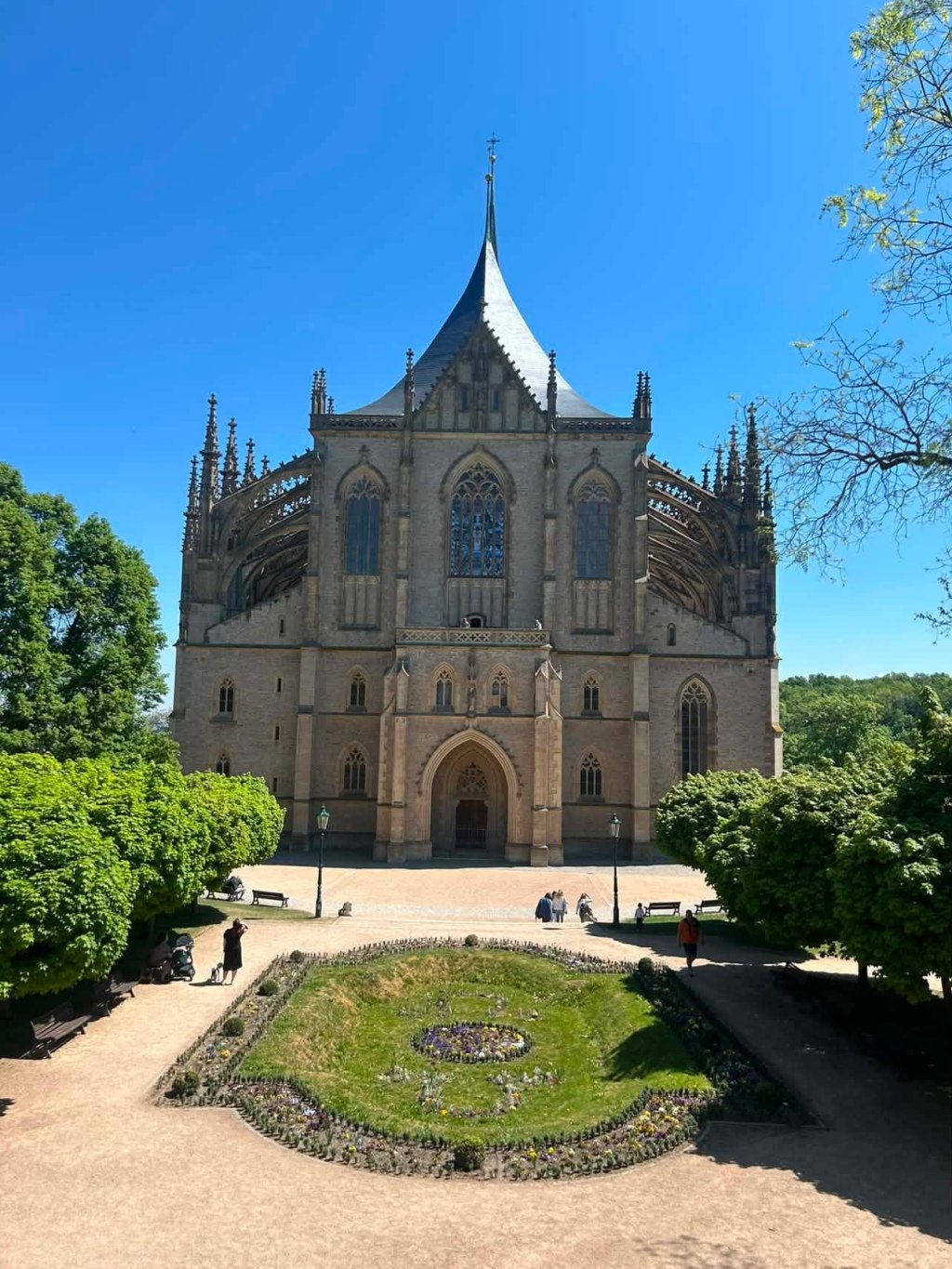
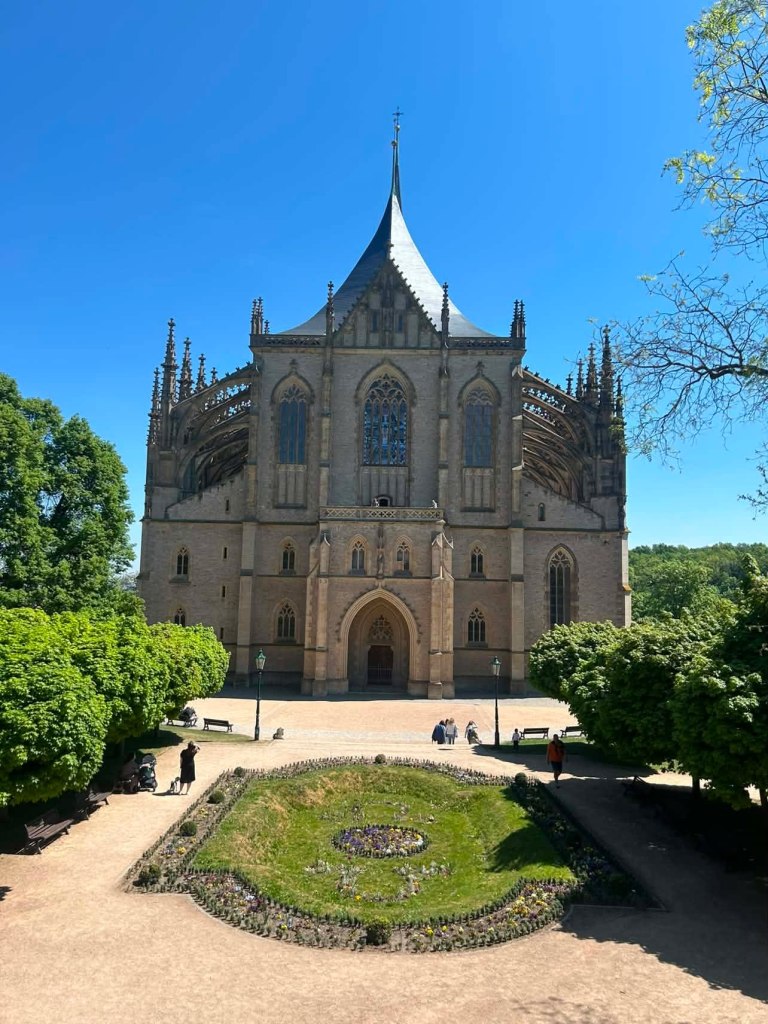
Today was less about historical events and more about looking closely at how historical things were built, and why.
At St. Barbara’s Cathedral, the flying buttresses were so unique. It’s one thing to know they exist; it’s another to stand underneath them and realize that the entire structure has been holding itself in a precise mechanical balance for centuries. Getting that equilibrium right, in stone, by hand, without modern technology, must have been an enormous engineering challenge. The fact that it’s still standing feels almost unbelievable.
The Sedlec Ossuary was something I didn’t expect to find peaceful, but it was. Knowing the church would spend so much time carefully labeling and cataloguing each bone before taking the arrangements apart for the first time just to respect the deceased showcased the ethical importance of engineering. That level of care reframes the whole space. It’s not morbid. It’s somewhere between art, engineering, and reverence. Then the silver mine, where medieval engineers solved drainage not with technology but with observation; reading slopes, tracking water patterns, working with the land rather than against it.
And somewhere in between all of that, I tried to order lunch. The system here works differently; the language barrier is real, and I stood there very much a fish out of water. Honestly, it was a good reminder that discomfort is part of the point of travelling and learning from different cultures but it constantly teaches me about communication.

