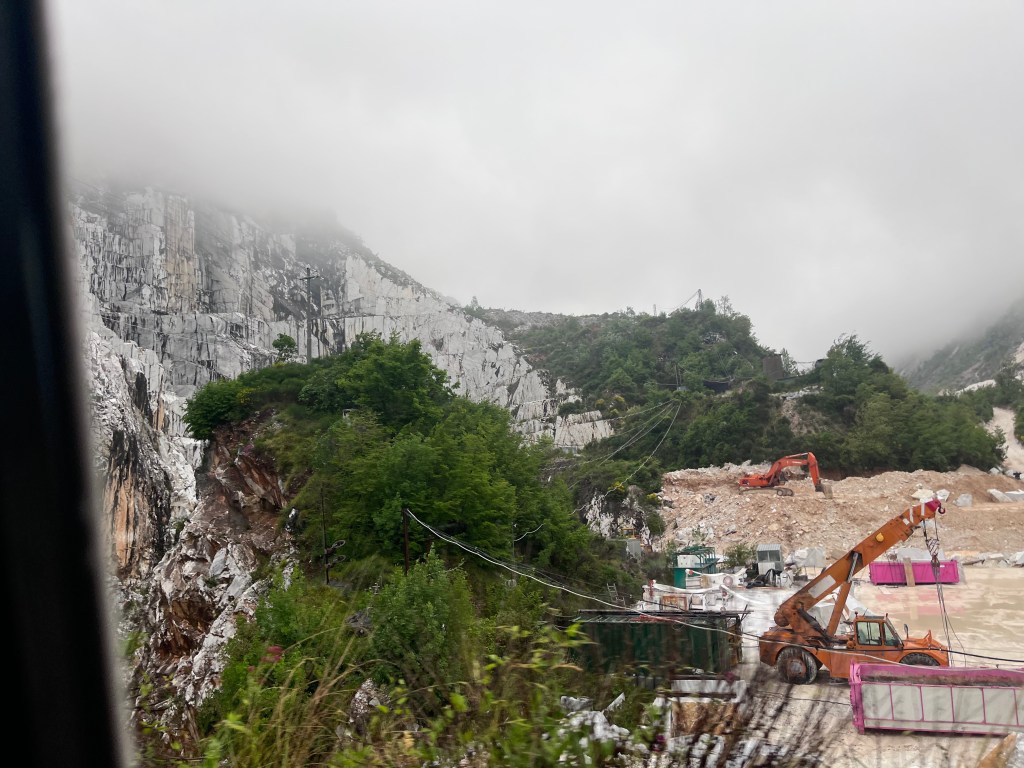
The Carrara Marble Mines are truly an amazing sight. The all-white mountains littered with marble blocks and stones is unlike anything I’ve ever seen. Equally as shocking as this sight, however, is the experience of a worker at this mine.
When we first got to Carrara, we got a tour of the little outdoor marble museum, explaining the history of the mines. Typically, boys would start working there at age 6 or 7 and wouldn’t retire until much older. A typical workday started before the sun rose and ended after the sunset. These workdays were at least 12 hours each day, usually more. Before modern machinery, accidents in the mines would happen daily. It was extremely common for workers to lose a hand or foot during the workday as well, due to time pressures and miscommunication. Now these accidents are limited to around once a year, but the risks are still ever present.
In the marble business, the workers bear all of the negative burdens associated with mining. They endure the long days, the risks, and the hazardous outputs like Marmettola. The transportation of marble is still precarious, due to its weight and size. The last accident that occurred at the mines happened while a worker was transporting a big block down the mountain. The consumer benefits from the dangers that the workers endure. Marble is more expensive due to how hard it is to extract and transport. Consumers pay more for a rarer stone, one that is tougher to mine, to keep up with fashion and show their wealth. Marble is not a necessity in homes, yet workers still put their lives at risk every day at the mines for it. Engineers need to take into consideration who is doing the work, and what that work entails when making decisions. For any design, engineers need to take into account how that material will be collected and distributed to the worksite. While getting marble at Carrara seems like a good idea due to it being a local material, the effect it could have on the workers could counter that.

