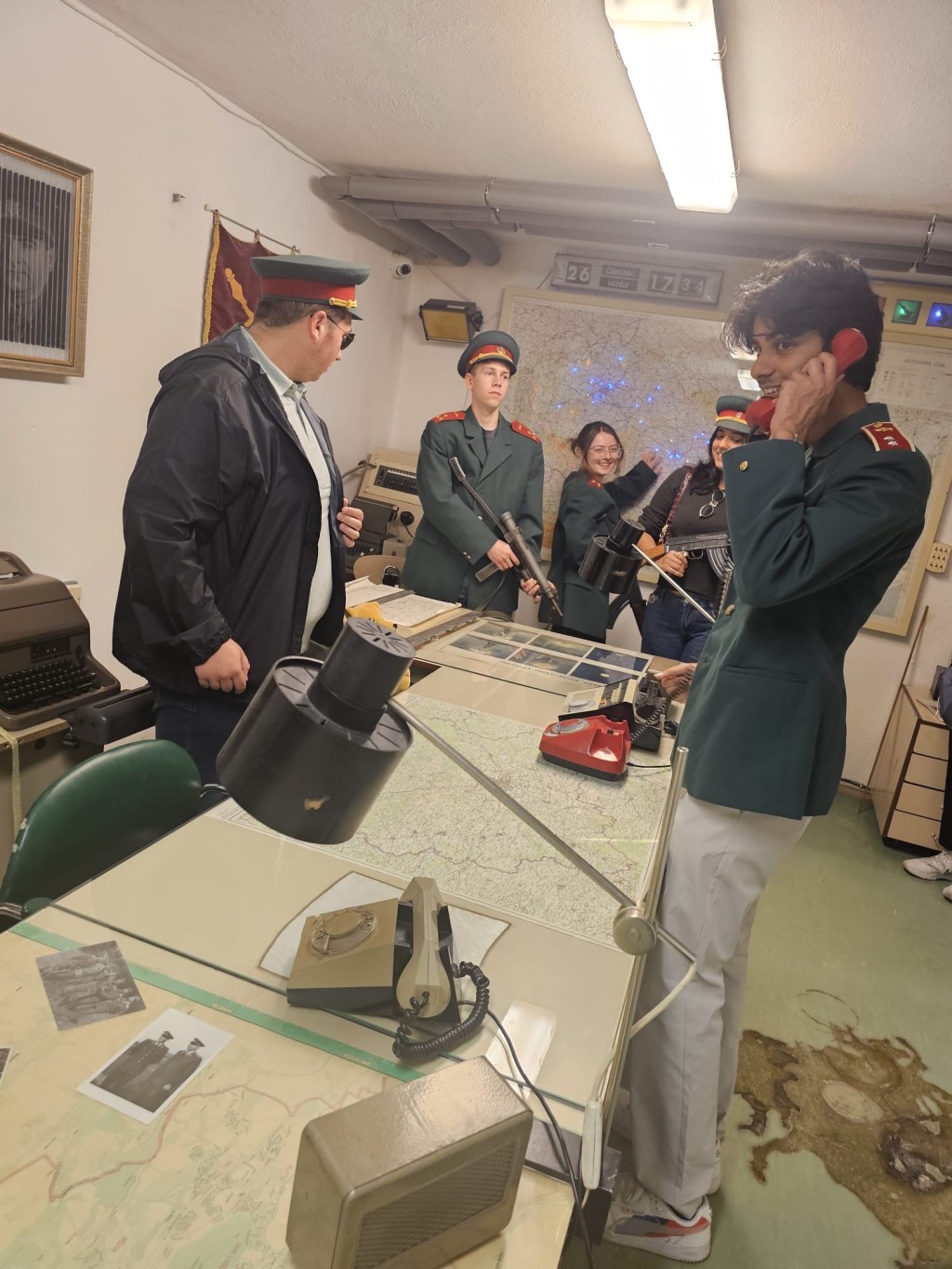
We began today with a visit to the Cold War Museum, which is a bunker built under a hotel, functioning as both a fallout shelter and spy facility for guests in the hotel. We learned about the design of the shelter, including the ventilation system and medical spaces. I would not have thought that a bunker would have had such intricate medical devices available, but as an engineer designing this space, it’s crucial to include this for specific scenarios where your comrade’s life is threatened. The ventilation system was well designed, with multiple options available depending on the specific scenario. For example, hand cranks could be used if the motor failed. Also, pure oxygen tanks were stored if complete isolation was needed, and a compound could be mixed with the oxygen to make it breathable (not pure oxygen). Charcoal could also be used in the air to capture radiation, which I was surprised they knew about and could use.
Places like the Cold War bunker and the Sedlec Ossuary remind us that the things we build and create today as engineers can exist for decades and even centuries. In the future, our products and innovations will be looked at as a symbol of our time in society. They can give snapshots into how we live life and the challenges and obstacles that we encountered.
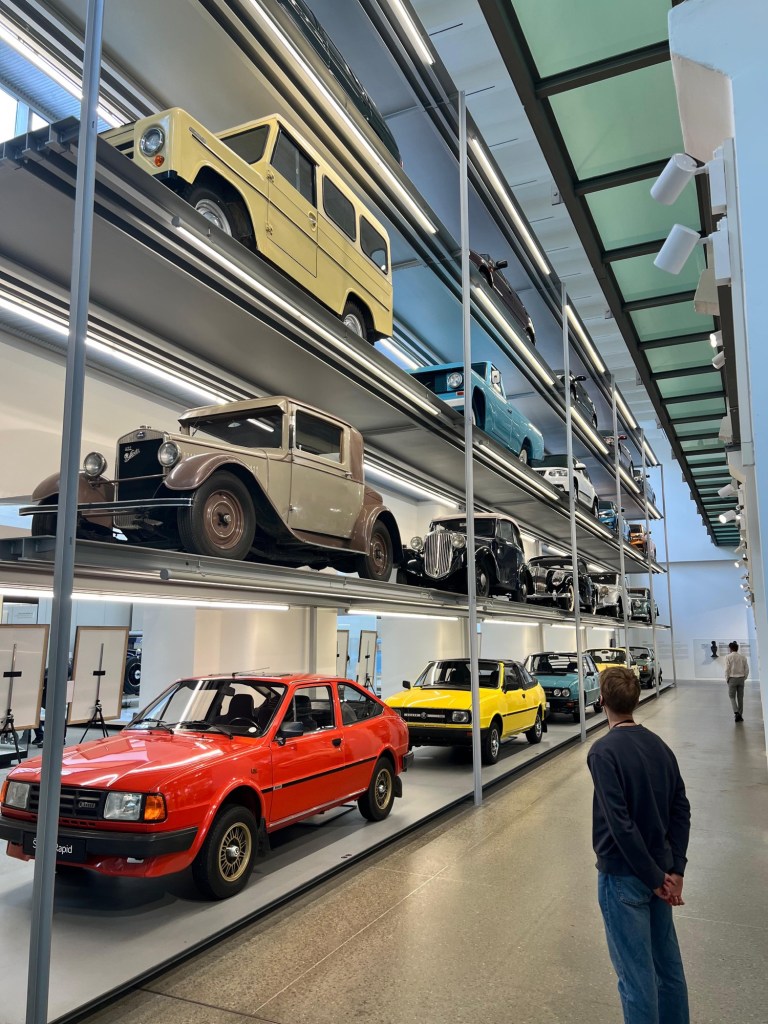
We then visited Skoda! It was neat to see such a large company operate and get inside next to the lines. I was surprised it was not more automated and seemed very demanding for the workers, producing a total of three cars every minute. This definitely seemed like Suhaas’s highlight of the trip.
 Swanson School of Engineering