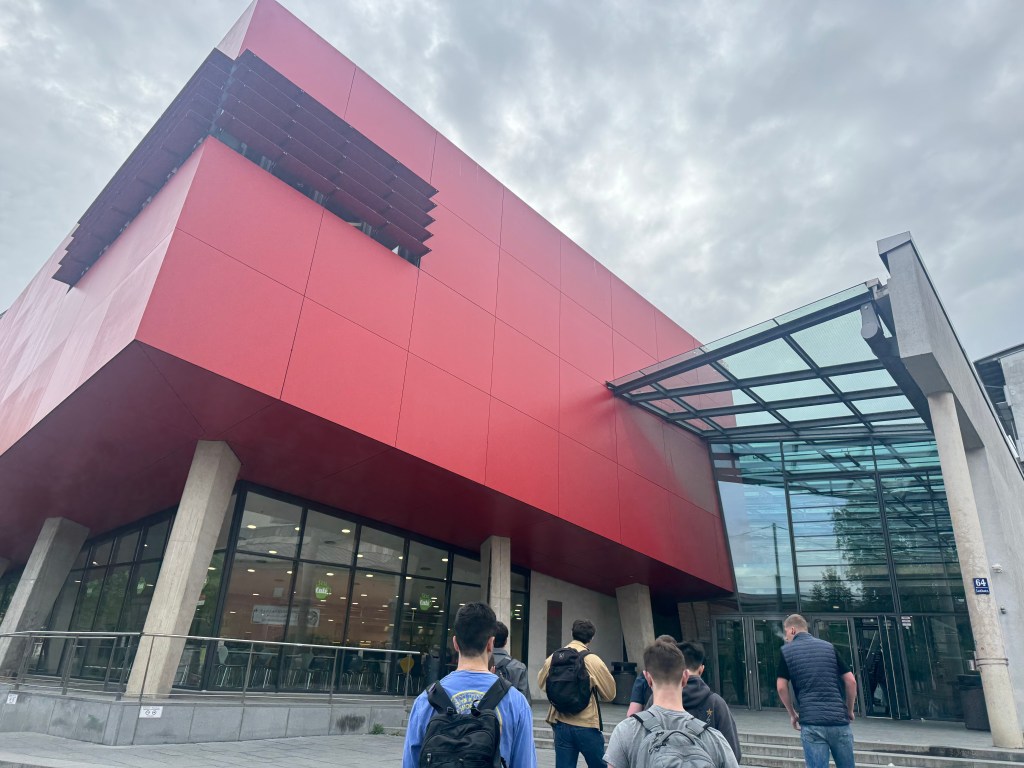
Most of our time during the day is spent in the classroom participating in lectures and group work. The way that academics are structured and dealt with here in Germany is quite different.
The major difference is the schedules between German and American students. In Germany, each class only meets once a week, however, the lecture lasts anywhere from two to four hours. Undergraduate students take five to nine classes each semester, each worth six credits. Considering the amount of classes they take and the length that each class meets for, students are in class from nine until five most days. This is vastly different in America where classes meet two or three times a week, for around an hour each time, and students only take four to six classes each semester. This allows students schedules to be very free, leaving a lot of time to pursue their other interests and be active in clubs and other organizations. In comparison, in Germany, being in various extracurricular groups is not emphasized as much for students.
For our program, we are following the typical German schedule, attending long lectures and having a different class every day. Although this change is good to experience, I most definitely prefer the American schedule. Not only do I enjoy having time outside of class for other activities, I also focus better in classes that are a little shorter, compared to trying to concentrate on the same subject for multiple hours at a time.
The way the lectures are formatted are very similar to lectures in America. Professors present slides and do not typically physically write anything down on the board. They also use participation to keep us engaged and interacting with the content.
In addition to lectures, we have two group projects where each team is a mix of German and American students. When working together, German students have a rather relaxed approach to their school work. The students are very hard-working and motivated, however, they are less quick to split up work and assign tasks to specific group members. Instead, they are more focused on group discussion and then working together, and the work will be split up at the end of the meeting if needed. This approach to group work is surely more collaborative than groups I have worked with in America, but it was not what I expected, just given some of the things I heard about German work settings. However, working with these students has been very rewarding. Not only am I getting to meet some great people, but they are also helping me broaden my view of what group work can look like.

