Today we got an inside look into Lego at their Kladno facility. Here, they take bricks which have already been molded and pack them into pre-pack bags. These are then gathered and packaged into each corresponding set before they are sent to the warehouses. I was most surprised with the precision that they use. Specifically, they use the weight of the pieces to ensure that each necessary piece is present. I would not have anticipated that the pieces and packs can be differentiated by weight to such accuracy that they are rejected for being underweight. The scale of the facility was also very impressive. They had so many different lines each running its own pre-pack. The planning and operations of the facility are also crucial for the success of the plant, and I can imagine how difficult it can be to manage each line and ensure that each set is accounted for.
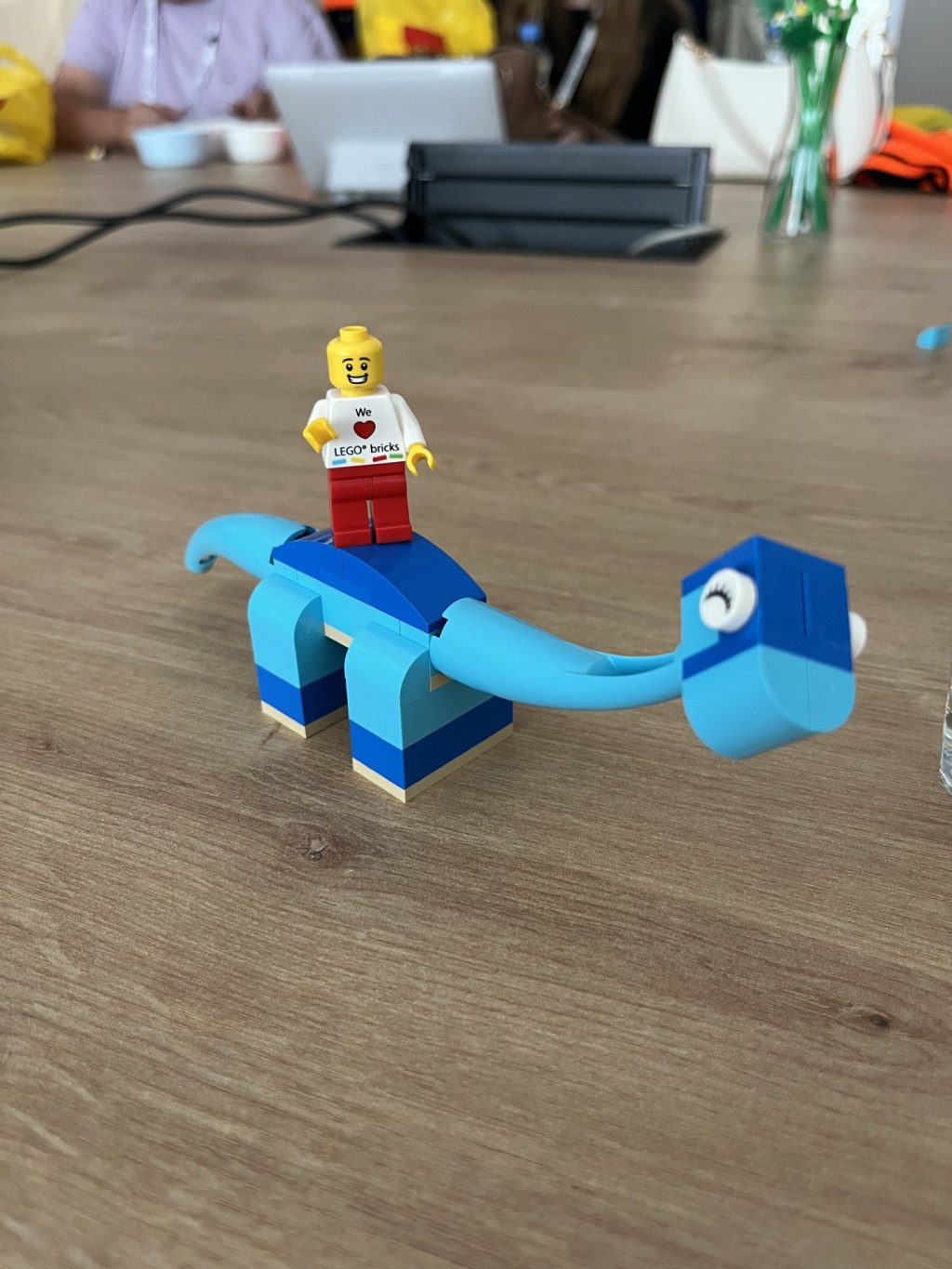
We also got to play with some legos, like making a dinosaur and playing with Duplo bricks. For Duplo, I was unaware of the strict sanitary conditions that go into their construction. While they are not made at the site we visited, we learned that they have to follow strict guidelines for toys (and even exceed those guidelines), which makes their production conditions similar to those of the pharmaceutical industry. This ensures that these bricks are safe for very young children.
As a company, Lego is trying to be as sustainable as possible. They minimize as much waste as they can and are moving towards more sustainable packaging (so no more plastic bag pre-packs). It was interesting that if a brick touches the floor, they cannot use it or even recycle it within their process. Instead, they melt it down and sell it to others who use plastics.
We ended the day with a visit to a Brownsfield development site, where new community buildings are being built on an old abandoned train station. Coming up tonight, we have a ghost tour and get to see the dungeons of Prague!
 Swanson School of Engineering