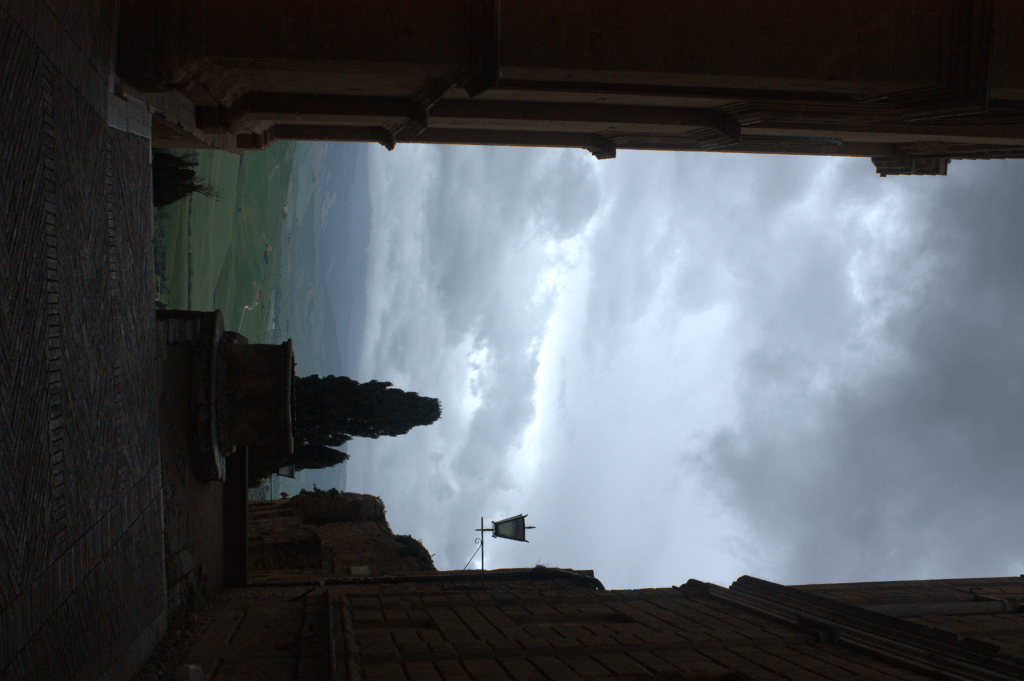
In Val d’Orcia, the most memorable thing I remember eating was the pecorino cheese served at Salcheto, the farm we visited outside of Pienza. It came with cured meats, including salami (I believe), and fresh bread. What stood out most was when they explained that none of the food was imported; everything came from their own land or the surrounding area. Earlier that day, I had driven through the same rolling hills where the sheep grazed and where vineyards stretched across the countryside. The view of the landscape was beautiful, especially with the town on the hillside in the distance. The cheese and meat were all products of the landscape sitting directly outside the window.
Later, walking through Pienza, I realized “local” here meant more than just nearby. It meant a closed loop between land, producer, and table, with almost no distance between where food was grown and where it was eaten. Replicating this at home would be extremely difficult, not because the ingredients are unavailable, but because the connection between the food, the people, and the place is hard to reproduce elsewhere. Compared to Pienza, we are extremely reliant on trade and other countries/states resources for our everyday life.

