On my free day in Munich, I took a little visit alone to the Deutsches Museum, only a short walk from our hotel. My main draw was that I knew there was an aeronautics section of the museum, and I wanted to see all the cool planes. But I was pleasantly surprised to see that almost every exhibit had translated English descriptions as well, which meant I could actually see what the German perspective was of everything presented. Oftentimes, it read just the way I would have expected out of an American museum, but sometimes the framing caught me a little off guard.
There were parts of the museum where there was an obvious feature of German pride, as I would expect. For example, the saxophone was designed and manufactured originally by a German, Adolphe Sax (who, for all his successes, seemed to have been a bit of an egoist as well). Because of this, the saxophone and all its variants had its own little corner of the music exhibit, with a neat deconstructed saxophone and more detailed information about Adolphe.
But then I got to the historical aeronautics section, where there was inevitably going to be a problem. Half the exhibit was made up of planes from the worst part of German history, where notably the Nazi party was never referred to as such, or at least not nearly so often as an American would say. Instead, it was simply the NSDAP, the acronym for its full name, the National Socialist German Workers Party. I was worried when I saw this that maybe the museum would try to glaze over other parts of this history, but again I was surprised. Despite the passive language around the NSDAP, it was still made extremely clear that these machines were weapons of war, used for terrible campaigns of destruction.
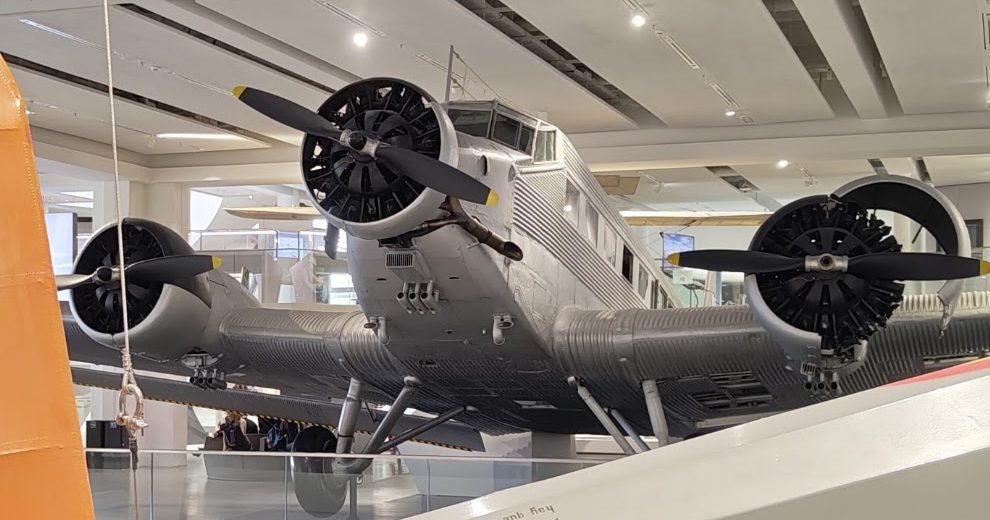
The V1 buzzbomb description specifically said that its use alone in the bombing of London resulted in almost 10,000 deaths of civilians. And they were not shy of the imagery either, the swastika on a plane’s tail was never painted over or covered. The planes themselves were front and center, not hidden in corners. A Ju-52, exactly the model of plane seen in Nazi propaganda films moving Hitler across Germany, was visible from almost everywhere. You could walk in, see the cockpit, read the technical specifications and still be informed that, no, this plane was not used for good intentions.
But this all felt more like a reminder, not pushing the message that the Nazis were bad. Everyone knows already that this part of Germany’s history is a stain, there are no ‘heroes of the time’ to tell stories of, so focus on the facts. These planes killed these many people. Participated in this bombing campaign. Were intended to transport these bad people.
It was very different from American museums. Rarely do I see, or feel, a twinge of remorse from visiting the Smithsonian, at least not for topics of this scale. Our World War 2 displays are heroic and prideful, sometimes even overshadowing the brutality of war with the glorification of those who fought in it. The Deutsches Museum, and I would hope other museums in Germany, understand that their displays are not just interesting teardowns of technology, but a reminder of the horrors of the past. Even the modern aircraft exhibit was either all consumer aircraft or the one military jet shown (an F-104 Starfighter) for which the main point of discussion was the flaw in its German-made engine that led to dozens of crashes. A reminder of a failure.
I liked the Deutsches Museum a lot, not just because of all the neat interactive displays of technology, but because it acknowledged the reality of the history behind it all. If I ever come back to Munich, I would be happy to come back to the Deutsches Museum to see what they have added, and how they approach the stories behind it all.

